How to Safely Use a Voltage Tester – Ensure Efficiency When Checking Electricity
Electrical repairs demand absolute safety, and knowing how to use a voltage tester correctly is crucial. Using the right method not only helps quickly identify power sources but also significantly enhances your safety.
With years of experience in material distribution, Ha Thanh Tools Co., Ltd. Ho Chi Minh City Branch will provide detailed step-by-step instructions for using voltage testers, helping technicians optimize their workflow effectively.

Contact us now: 0902 8888 02
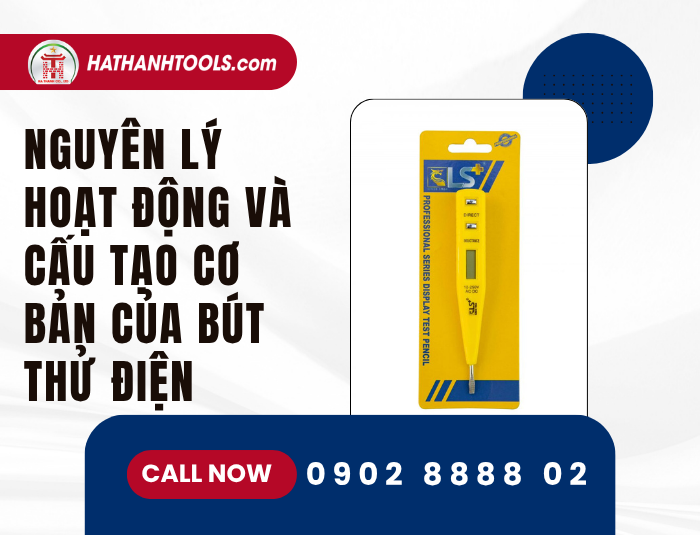
Operating Principle and Basic Structure of a Voltage Tester
Detailed Understanding of Voltage Testers
Before you start, it's essential to understand the construction of a voltage tester. This device works by using the human body's capacitance to create a closed circuit, illuminating an internal neon bulb.
By understanding the components of a voltage tester, technicians can:
-
Safely grip the insulated handle.
-
Touch the metal clip in the correct position to test for electricity.
-
Clearly perceive the brightness of the indicator light.
-
Effectively control occupational safety on site.
Preparation Steps Before Using a Voltage Tester
Whether you have a high-end electronic voltage tester or a basic one, preparation always requires:
-
Standing on a dry, non-damp surface.
-
Wiping the handle clean before testing for electricity.
-
Checking the outer plastic casing for cracks or damage.
-
Clearly identifying the voltage range of the device to be tested.
-
Testing it first on a live power source to see if the light illuminates.
Thorough preparation will help the voltage tester fully utilize its warning function.
Contact us now: 0902 8888 02
Standard Operating Steps for Testing Electricity with a Voltage Tester
Placing the Metal Tip and Gripping the Voltage Tester
Insert the flat tip into the socket so that the metal tip makes full contact with the copper core or the wire to be tested with the voltage tester:
-
Hold the tester perpendicular to the contact surface of the socket.
-
Place your finger on the top of the metal clip.
-
Ensure your hand does not touch the exposed shaft.
-
Slowly insert the tip so the probe correctly contacts the wire core.
At Ha Thanh Tools Co., Ltd. Ho Chi Minh City Branch, all technicians purchasing tools are thoroughly instructed on safe gripping techniques.
Reading Signals with a Voltage Tester
Observe the indicator light on the voltage tester carefully, keep your finger on the metal tip, and wait 1-2 seconds for the signal to illuminate clearly.

Contact us now: 0902 8888 02
Removing the Tester and Disconnecting Power with a Voltage Tester
After the test indicates light, slowly pull the body out of the socket, maintaining your posture for safety, then:
-
Pull out with a smooth, gentle, straight motion.
-
Avoid yanking the tip, which could damage the socket's copper contact.
-
Grip the plastic body firmly to prevent dropping the tester.
Careful operation of the voltage tester ensures the wiring system remains in a completely safe state.
Important Notes During Electrical Testing with a Voltage Tester
Controlling Hand Position on the Voltage Tester
Many new technicians make the mistake of holding the tester incorrectly. When testing electricity with various types of voltage testers, ensure:
-
Only one finger touches the metal cap at the end.
-
Your finger does not slide down close to the probe shaft.
-
The grip is firm, not loose or shaky.
-
Do not force the probe deeper if the socket feels stuck.
-
Maintain a comfortable standing posture with a stable stance.
A precise contact is all that's needed for the voltage tester to easily detect leakage current.

Contact us now: 0902 8888 02
Absolutely Do Not Use a Voltage Tester on High-Voltage Systems
Household electrical testing tools have voltage limitations. Using a voltage tester on a transformer substation can cause:
-
Arc flash, which is lethal.
-
Burning out the neon bulb inside.
-
Short-circuiting the protective resistor of the device.
-
Cracking the insulating plastic casing.
Use the voltage tester only for its designed purpose to protect your life.
Technique for Checking for Electrical Leaks on Appliance Casings with a Voltage Tester
To check a washing machine casing for leaks, locate an uninsulated metal point and adjust your grip on the voltage tester:
-
Maintain a very firm, fixed grip with your thumb.
-
Touch the metal tip to various points on the casing.
-
Observe carefully to gauge the intensity of the light.
Advantages of Applying Technical Standards for Voltage Testers at Ha Thanh
Enhancing Professional Electrical Repair Skills
Ha Thanh Tools Co., Ltd. Ho Chi Minh City Branch always shares the best tips for using voltage testers with its customers.
Mastering electrical testing skills allows you to operate quickly and confidently handle even the most challenging electrical leakage issues.
You will easily master:
-
The skill of using a voltage tester to differentiate between live and neutral wires.
-
How to accurately locate points of hidden wire breaks.
-
Experience in protecting the indicator bulb for maximum longevity.

Contact us now: 0902 8888 02
Preventing Risks of Fire and Electrical Shorts
Incorrect testing techniques can cause short circuits and major accidents. Mastering the art of using a voltage tester will reduce the risk of electric shock to almost zero.
Ensuring the Durability of Voltage Testers
Proper handling prevents bending the probe tip, allowing your voltage tester to maintain its excellent sensitivity for years.
Common Mistakes to Avoid When Using a Voltage Tester
Not Cleaning the Voltage Tester Handle Before Testing
Having wet or greasy hands reduces insulation. When touching the voltage tester's metal tip, technicians are prone to experiencing unpleasant hand shocks.
Pressing the Voltage Tester Tip Too Hard into Tight Spaces
Forcibly prying with the voltage tester's tip can scratch the protective plating, causing the contact surface to oxidize and quickly degrade.
Forgetting to Re-test the Voltage Tester's Functionality
Failing to test on a live source makes technicians complacent if the voltage tester's bulb is faulty, leading to unfortunate accidents.
How to Maintain Your Voltage Tester After Each Repair Job
Overall Cleaning of the Voltage Tester Tool
-
Use compressed air to blow away dust from the clip groove.
-
Wipe sweat off the ABS plastic body.
-
Use a dry cloth to polish the metal tip surface.
Protecting the Probe Tip and Indicator Light System of the Voltage Tester
Store the device in a small box or tool bag. For electronic models, remove the batteries to prevent leakage that could damage the circuit board.
Store in a Dry, Well-Ventilated Place
Although voltage testers have good insulating plastic casings, it's still best to store the device in a cabinet, away from humid environments that could damage the internal resistor coil.
Troubleshooting Common Issues with Voltage Testers
Dim or Non-Illuminating Voltage Tester Indicator Light
This issue is usually caused by a broken resistor or a loose spring. Simply open the rear cap of the voltage tester and stretch the spring to ensure a tight contact with the bulb.
-
Clean the two contact points if they are dusty.
-
Replace the neon bulb or electronic battery periodically.
-
Do not overtighten the cap, which can strip the plastic threads.
Voltage Tester Probe Tip Not Receiving Electrical Signal
This is due to a rusty tip or a wire core with a tightly adhered insulation layer. The only solution is to clean the tip or purchase a new, genuine voltage tester.
Intermittent Signal When Testing with a Voltage Tester
Check your grip to ensure it's not overly insulating, or if the floor you're standing on is too well-insulated with thick rubber boots.
Dedicated Voltage Tester Support from the Distributor
If you're still hesitant about using the device, the technical team at Ha Thanh Tools Co., Ltd. Ho Chi Minh City Branch is always ready to assist and provide detailed guidance on operating voltage testers.
Customers purchasing voltage testers from our system receive accompanying tutorial videos demonstrating safe electrical fault-finding techniques from leading electromechanical experts.
Mastering these operations not only optimizes the functionality of various types of voltage testers but also leads to superior repair efficiency and saves technicians time during their shifts.
Visit Ha Thanh Tools Co., Ltd. Ho Chi Minh City Branch to experience the sensitivity firsthand and practice testing with the latest voltage testers available today!
10 Frequently Asked Questions About Voltage Tester Usage Techniques
1. Does a voltage tester light up when testing a neutral wire?
Answer: With proper technique, when a voltage tester touches a neutral wire, the light will not illuminate because there is no voltage difference.
2. Why do I sometimes feel a slight shock when testing with a voltage tester?
Answer: This can happen if you are standing barefoot on a wet floor, or if your hands are wet when touching the metal tip of the voltage tester, causing a small current leakage and a mild shock.
3. How often should the bulb in a voltage tester be replaced?
Answer: It's recommended to check and replace the neon bulb inside the voltage tester shaft every 2-3 years of continuous use to ensure consistent brightness.
4. Can I replace the spring in a voltage tester at home?
Answer: Yes, you can easily do this by unscrewing the cap at the end of the voltage tester, removing the old spring, and installing a new one.
5. What is the technique for testing for electricity within walls using a voltage tester?
Answer: Testing within walls is challenging. When using a voltage tester inductively, you must sweep it closely along the wall following the conduit path, moving your hand steadily.
6. Can I use a voltage tester to tighten screws under load?
Answer: Absolutely not. The tip of a voltage tester is only for light screw adjustments; do not use it for tightening rigid screws, as this can break the device's tip.
7. Does Ha Thanh provide video tutorials for using voltage testers?
Answer: Yes, Ha Thanh Tools Co., Ltd. Ho Chi Minh City Branch always provides practical video demonstrations for using voltage testers, especially for new technicians.
8. What should I do if the indicator light on my voltage tester is loose?
Answer: Gently tighten the metal cap at the end of the voltage tester with your hand to ensure the spring makes firm contact with the bulb inside.
9. Can a voltage tester detect a tiny 12V current?
Answer: Yes, but you need to use an electronic voltage tester with an LED screen to accurately detect low voltages like 12V safely.
10. How can I prevent the voltage tester's probe tip from rusting?
Answer: Avoid exposing the voltage tester tip to acidic chemicals and always dry off hand sweat from the device after each use.
Contact Information
-
Ha Thanh Tools Co., Ltd. Ho Chi Minh City Branch
-
Hotline: 0902 8888 02
-
Address: 35 Nguyen An Khuong, Cho Lon Ward, Ho Chi Minh City
-
Email: cskh@hathanhls.com
-
Tax Code: 0100108529-006
-
Website: https://hathanhtools.com