Professional Pruning Shears for Gardeners – The Secret to Effective Plant Care
In the gardening toolkit of any farmer, bonsai artist, or plant enthusiast, a high-quality pruning shear is an indispensable tool. More than just a cutting instrument, choosing the right professional pruning shear directly impacts the plant's growth, recovery, and prevention of diseases transmitted through cuts. A sharp, decisive cut helps the plant heal quickly, while a dull shear will crush the bark cells.
In today's agricultural tool market, the variety of shears – from pointed tip, curved tip, bypass, to anvil types – can leave many gardeners confused. Understanding the operating principles of each blade type and the leverage mechanisms can allow you to prune for hours without hand fatigue.
With extensive experience in providing professional agricultural equipment, Ha Thanh Co., Ltd. HCMC Branch will provide a detailed analysis to help you identify quality pruning shears, enabling you to choose the most durable companion for your garden.

Contact us now: 0902 8888 02
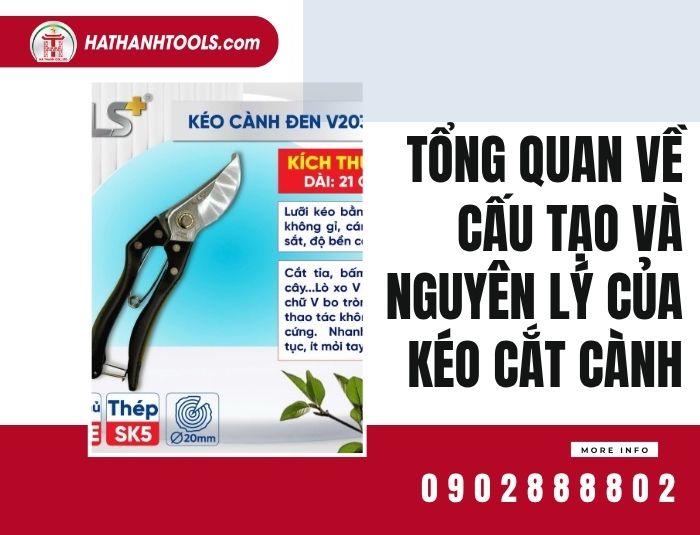
Overview of Pruning Shear Construction and Principles
Blade Structure and Leverage System
In terms of basic design, a professional pruning shear always consists of three parts: a carbon steel blade system, a pivot (clamping shaft), and a handle with a return spring. The key difference that adds value lies in the material – SK5 steel or solid stainless steel – and the curvature of the blades that hug the branch, preventing slippage when strong squeezing force is applied.
By understanding this mechanical structure, gardeners gain the following advantages:
-
Creates a smooth, flat cut surface, avoiding bark scratches or capillary crushing.
-
Saves up to 40% of wrist force thanks to the well-elasticated leverage mechanism.
-
Prevents blade slippage, ensuring finger safety when cutting thicker branches.
-
Ensures the tool remains rust-free and wear-resistant after multiple harvesting seasons.
Determine Actual Needs Before Buying Garden Shears
Whether you are tending to orchids on your balcony or managing a fruit tree farm, clearly defining your needs will help you find the most suitable genuine pruning shears:
-
Are you primarily cutting young branches, flowers, or old, hard woody branches?
-
What is the maximum branch diameter you typically work with?
-
Do you need a compact pocket shear or a long-handled shear to reach high branches?
-
Does your hand size lean towards large or small, to choose a handle of appropriate size?
-
Do you work in environments with sticky plant sap that can jam the blades?
Answering these questions will make browsing the agricultural tool market incredibly simple and straightforward.
Contact us now: 0902 8888 02
Detailed Classification of Popular Pruning Shear Types Today
Bypass Pruning Shears – For Sharp, Clean Cuts
Representing precision, the Bypass type pruning shear, like a pair of scissors, features one sharp blade sliding past a thicker one. This is the perfect tool for pruning young, fresh branches or ornamental flowers, as it provides the cleanest cuts:
-
Absolutely prevents bark damage, thus preventing fungal infections through open wounds.
-
Ability to reach deep into dense branch junctions for precise bud nipping.
-
Curved blade design firmly grips the branch, preventing slippage during squeezing.
-
An essential tool for bonsai artists and floral arrangers.
However, this type will struggle and easily chip its blade if you attempt to cut woody branches that exceed its capacity.

Contact us now: 0902 8888 02
Anvil Pruning Shears – Experts at Crushing Dry Wood
In contrast to bypass shears, anvil shears have a sharp blade that presses down onto a flat metal surface (the anvil). This type of assisted-cut shear is designed to "destroy" dead branches and hard, dry wood:
-
Extremely strong cutting force, crushing dry wood structures without risking blade chips.
-
Ideal for clearing dead branches after storms or rough hedge trimming.
-
Not recommended for pruning live branches, as the anvil will crush the bark on the underside.
-
Often designed with longer handles to double the leverage from the wrist.
Long-Handled Snips – For Delicate Flower Buds
Characterized by their sharp, straight, and delicate blades, snips are designed for harvesting fruits (like oranges, tangerines, grapes) or precise flower bud trimming. The sharpness of the tips allows for accurate work in dense clusters of fruit without accidentally scratching neighboring fruits.
Important Notes for Maintaining Your Super Sharp Pruning Shears
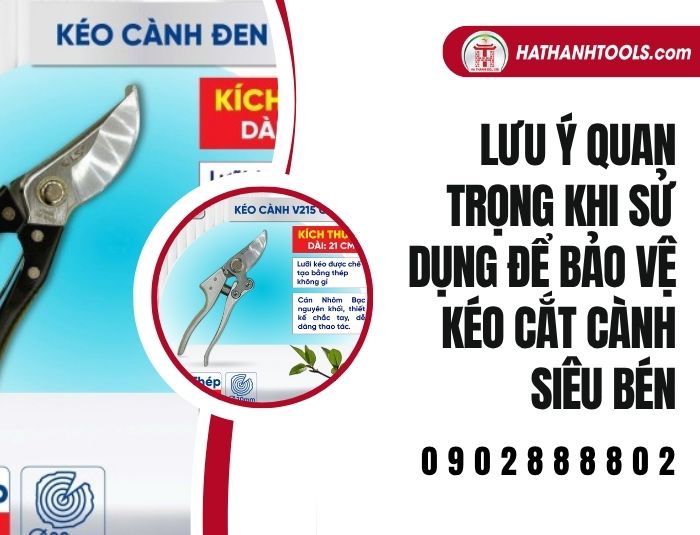
Never Twist the Blades While Cutting
A very common mistake among gardeners facing tough branches is to twist or rock the shear handle to force a cut. This action creates a sideways bending force, severely damaging the central pivot and permanently chipping or breaking the steel blade:
-
Only squeeze vertically, with force applied from the handle to the cutting blade.
-
If one squeeze doesn't cut it, release, reposition the shear, or try a different angle.
-
For branches exceeding the shear's capacity (typically larger than 2cm), use a folding saw instead.
Contact us now: 0902 8888 02
Do Not Use Pruning Shears for Metal or Hard Plastic
No matter how high-quality the steel blade of your garden shears, their microscopic bevel is optimized for the cellulose fibers of wood. Conveniently using pruning shears to cut bonsai wire, fencing mesh, or plastic pipes will completely ruin the tool's sharpness.
-
Always have dedicated wire cutters in your bonsai toolkit.
-
Notches in garden shear blades from cutting wire cannot be re-sharpened to their original state.
Always Lock the Safety Catch When Moving
All professional pruning shears have a spring-loaded safety lock. Getting into the habit of immediately locking the blades after use protects them from chipping due to impact in your tool bag and prevents accidental cuts.
The Excellent Benefits of Purchasing Great Value Pruning Shears at Ha Thanh
Increase Productivity and Efficiency for Long Gardening Sessions
Ha Thanh Co., Ltd. HCMC Branch always selects and advises on the best assisted pruning shears. With a sharp tool and comfortable rubber grips, gardeners can harvest fruit continuously for 8 hours without getting blisters or hand fatigue.
Protect the Overall Health of Your Garden
Thanks to the sharp carbon steel quality, cuts made with Ha Thanh shears are always smooth and clean. This allows plants to quickly exude sap to seal open wounds, preventing rainwater from collecting and causing rot or pest infestations.

Contact us now: 0902 8888 02
A Worthwhile Investment for Long-Lasting Durability
Instead of buying super cheap shears that rust and dull after just a few rainy days, a high-quality garden shear made from SK5 alloy can be your companion for many years. With proper cleaning, this tool will be the most profitable investment for any plant enthusiast.
Common Mistakes That Cause Pruning Shears to Deteriorate Quickly
Leaving Plant Sap Adhered Without Cleaning
Plant sap (especially from jackfruit, fig, or rubber trees) is mildly acidic and highly adhesive. If you toss your shears in a corner after work, this sap will dry and harden, jamming the pivot and gradually corroding the anti-rust plating on the steel blade.
Sharpening Garden Shears at the Wrong Angle
Pruning shears (especially Bypass types) should only be sharpened on the outer bevel at the factory-set angle (usually 20-30 degrees). If you use a file to sharpen the inner side (the flat side that meets the other blade), the shears will have a gap, crushing the branches instead of cutting them cleanly.
Leaving Shears Outdoors Exposed to the Elements
Many people habitually leave their professional pruning shears under trees after finishing their work. Temperature fluctuations, night dew, and soil moisture will cause the return spring to rust and become brittle, and the steel blade will quickly become dull and stained.
Tips for Cleaning and Maintaining Your Pruning Shears to Keep Them Gleaming
Thoroughly Clean Plant Sap with Solvents
-
Use a scouring pad dipped in RP7, alcohol, or kerosene to scrub the steel blade surface.
-
Absolutely avoid using coarse sandpaper, as it will scratch the Teflon non-stick coating.
-
Wipe dry with a soft cloth to ensure the shears are perfectly clean.
Periodically Lubricate the Pivot and Spring with Oil
The smoothness of your shears depends entirely on the central pivot screw. Every few weeks, apply a drop of clean oil to the pivot screw slot and the ends of the spring. Lubrication reduces friction, prevents rust, and maintains the satisfying spring action.
Use a Fine Sharpening Stone When Blades Become Dull
If your shears start to cut branches with a ragged edge, lightly hone the outer bevel with a fine-grit oil stone, following the original angle. This meticulous care will restore 99% of the cutting power to your shears.
Troubleshooting Common Issues with Pruning Tools
Shears Get Stuck, Spring Fails to Return Handles
This issue is 90% caused by plant sap in the hinge area or a rusted spring from water exposure. Solution: Spray RP7 generously into the pivot, squeeze and release repeatedly dozens of times to dislodge debris. If the V-spring breaks, replacement springs are inexpensive and readily available.
Shear Blades Are Loose, Crushing Branches Instead of Cutting
After thousands of cuts, the central pivot screw may loosen. Use a wrench or screwdriver to tighten the screw appropriately. Be careful not to overtighten, which would prevent the shears from opening. Tighten only to the point where the blades meet snugly but still slide smoothly.
Rubber Grip Handles Come Loose or Feel Sticky
Hand sweat's acidity and UV rays degrade the plastic coating on the handles. You can clean off sticky residue with alcohol, or reapply with electrical tape or heat shrink wrap to restore a comfortable grip.
Visit Ha Thanh to Purchase Imported, Ultra-Sharp Pruning Shears
If you are still unsure about which type of shear is suitable for your garden, contact Ha Thanh Co., Ltd. HCMC Branch immediately. Our knowledgeable agricultural tool staff will guide you through testing sharpness, feeling the leverage spring, and choosing a handle size that fits your hand perfectly.
The ultra-sharp pruning shears selected by Ha Thanh are guaranteed to be forged from high-quality Japanese or Taiwanese SK5 carbon steel, maintaining their sharpness for a long time and resisting deformation under strong pressure. From mini trimming shears to lopper-style shears for large branches, all your needs will be fully met.
A vibrant, lush garden cannot thrive without the attentive care of a gardener and the accompaniment of a perfect cutting tool. Choosing the right pruning shear is like sowing the seeds for your plants' growth and flourishing.
Visit the showroom of Ha Thanh Co., Ltd. HCMC Branch to acquire durable, premium agricultural tools. We are committed to offering retail prices equivalent to wholesale, protecting the rights and passion for gardening of all our customers.
10 Frequently Asked Questions About Selecting and Maintaining Garden Shears
1. What is the maximum branch size for professional pruning shears?
Answer: Handheld (pocket) pruning shears typically cut branches with a maximum diameter of 1.5cm to 2cm smoothly. For larger branches, use long-handled pruning shears or a pruning saw.
2. Should I buy Bypass or Anvil pruning shears?
Answer: For pruning live branches, harvesting fruit, and trimming leaves, Bypass shears are essential to protect the bark. For clearing hard, dry branches, Anvil shears offer the strongest cutting power.
3. What is SK5 steel for pruning shears?
Answer: SK5 is a high-grade Japanese carbon steel, renowned in the cutting tool industry for its high hardness, wear resistance, and ability to retain sharpness for a very long time.
4. I accidentally used my shears to cut bonsai wire, and the blade chipped. What should I do?
Answer: The blade's bevel structure is damaged. If the chip is very small, you can try to re-hone it with a fine sharpening stone. If the chip is large, you will need to buy new shears, as excessive sharpening will create a gap that prevents clean cuts.
5. Why do my shears crush and tear the bark of vines when cutting?
Answer: There are two reasons: The blades are too dull, or the central pivot screw has loosened, causing the blades to no longer meet tightly, thus failing to create a proper shearing force.
6. Should I wash my shears with plain water after use?
Answer: It is not recommended to wash with plain water unless you can dry them immediately. Use a cloth with kerosene or spray RP7 to clean the shears to prevent rust and pitting.
7. Does Ha Thanh company sell long-reach pruning shears?
Answer: Yes, Ha Thanh Co., Ltd. HCMC Branch distributes a variety of long-reach pruning shears (with extendable aluminum poles of 3-5m) for harvesting fruit and trimming high branches of trees like banyan and Ficus.
8. Why do garden shear blades often have a black or gray coating?
Answer: This is a Teflon or zinc anti-stick coating. It makes plant sap less likely to adhere to the blade and also reduces friction, allowing for smoother cuts through wood.
9. Can the spring on pruning shears be replaced?
Answer: Absolutely. The coil spring or V-spring is a wear-and-tear part. You can purchase replacement springs at agricultural supply stores and easily install them yourself.
10. Where can I reliably buy high-quality steel pruning shears with die-cast aluminum handles?
Answer: Visit the store of Ha Thanh Co., Ltd. HCMC Branch directly to purchase genuine pruning shears from Taiwan and Japan, guaranteed to cut cleanly with just one squeeze.
Contact Information
-
Ha Thanh Co., Ltd. HCMC Branch
-
Hotline: 0902 8888 02
-
Address: 35 Nguyen An Khuong Street, Cho Lon Ward, Ho Chi Minh City
-
Email: cskh@hathanhls.com
-
Tax Code: 0100108529-006
-
Website: https://hathanhtools.com