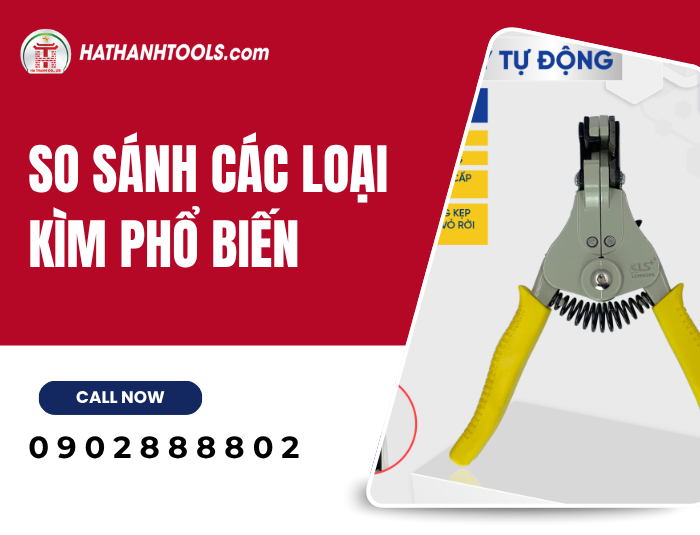
Comparison of Common Pliers – How to Choose the Right Tool for Every Practical Need
Among the hand tools widely used today, Pliers are always a familiar tool for electricians, mechanics, repair technicians, and even homeowners. However, not everyone fully understands the differences between common pliers like electrician's pliers, cutting pliers, needle-nose pliers, wire stripping pliers, locking pliers, or crimping pliers. Each type of plier is designed with a specific function, suitable for different usage scenarios. Therefore, a proper comparison of each plier type will help you invest accurately, operate efficiently, and avoid waste from purchasing the wrong tool.
With extensive experience in the field of technical tool distribution, Ha Thanh Company Limited (Ho Chi Minh City Branch) will help you gain a clearer perspective on the advantages, disadvantages, and practical applications of each plier type. From there, users will know which plier type is most suitable for their work, hand strength, operating environment, and long-term usage purposes.
Contact us now: 0902 8888 02
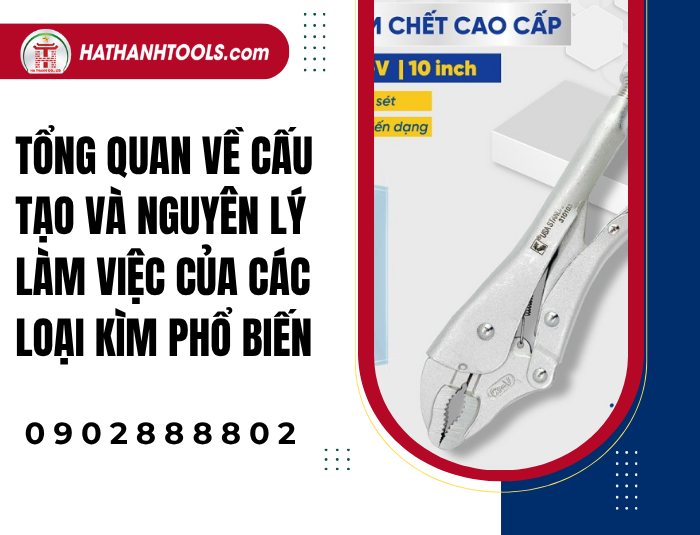
Overview of the Structure and Working Principles of Common Pliers
Detailed Look at Pliers and the Differences Between Each Type
In terms of general structure, most pliers consist of handles, a pivot or central joint, and the working head. However, the most significant differences between plier types lie in the shape of the jaw, jaw opening range, cutting edges, gripping design, and the force applied during operation. These factors determine which plier is suitable for cutting, which for gripping, which is specialized for small details, and which is designed for forceful tasks.
By understanding the differences between plier types, users will easily achieve:
-
Selecting the right plier for the specific task at hand.
-
Optimizing operational efficiency and reducing unnecessary wear and tear on the tool.
-
Avoiding damage to the blades or bending of the plier jaws due to incorrect usage.
-
Saving costs by not having to repurchase due to incorrect product selection.
Key Criteria to Determine Before Choosing the Right Pliers
Whether you are buying Pliers for home use, electrical or mechanical work, installation, or professional repair, it is important to first clarify a few key factors:
-
The primary task: cutting, gripping, holding, bending, stripping wires, or tightening fasteners.
-
The typical operating space: wide open areas, confined spaces, deep recesses, or difficult-to-reach angles.
-
Frequency of use: occasional household tasks versus daily professional work.
-
The main materials to be handled: soft electrical wires, small metal components, or harder materials.
-
Whether you need pliers with insulated handles, non-slip grips, or leverage assistance.
Once your needs are clearly defined, comparing common plier types will become much easier and help you make more accurate and effective choices in practice.
Contact us now: 0902 8888 02
Detailed Comparison of Commonly Used Pliers Today
Electrician's Pliers – The Versatile Pliers for Many Basic Needs
Electrician's pliers are among the most familiar types on the market. Their outstanding feature is the ability to perform multiple tasks such as gripping, twisting, bending, and cutting wires at a basic level. This is a suitable choice for household users, general electricians, or those who need a flexible plier to handle various jobs with a single tool:
-
Can perform multiple operations like holding, twisting, and cutting within a single plier.
-
Suitable for general electrical, plumbing, and household repair work.
-
Easy to use, familiar to the hand, and suitable for beginners.
-
Often designed with plastic-coated or insulated handles for increased safety.
At Ha Thanh Company Limited (Ho Chi Minh City Branch), electrician's pliers are a product line chosen by many customers for their convenience, ease of use, and suitability for various everyday repair situations.
Cutting Pliers – The Pliers Specialized for Fast and Clean Cuts
While electrician's pliers are versatile, cutting pliers excel in their ability to make decisive cuts. These pliers are designed to handle electrical wires, copper wires, plastic wires, zip ties, or small components that require a clean, fast, and precise cut. This is a highly suitable plier type for those who frequently work with wires or need better cutting performance than a general-purpose plier.
Contact us now: 0902 8888 02
Needle-Nose Pliers – The Pliers Optimized for Small Details and Tight Spaces
Needle-nose pliers feature long, tapered, and pointed jaws, allowing users to easily access deep, narrow spaces or work with small components. Compared to electrician's pliers and cutting pliers, these pliers are not designed for brute force but excel in flexibility and precision. This is a highly suitable plier type for electronics work, fine mechanics, detailed repairs, or bending wires in tight areas.
-
Easily insert the plier jaws into small gaps, deep locations, or tight corners.
-
Very suitable for holding, pulling, or bending small, delicate components.
-
Provide higher precision when delicate and intricate manipulation is required.
However, needle-nose pliers are not the optimal choice if you need strong cutting power or frequently work with hard and thick materials.
Important Considerations When Comparing Common Pliers Before Buying
Do Not Choose Pliers Solely Based on Name or Appearance
Many people, when buying Pliers, only look at the shape or product name without truly understanding the main function. When comparing common plier types, you must ensure:
-
You clearly know the type of work you perform most frequently each day.
-
You accurately assess the cutting, gripping, holding capabilities, and flexibility of each plier type.
-
You carefully observe the material of the blades, the joint, and the sturdiness of the handles.
-
You consider whether the plier size is suitable for your hand strength and working environment.
-
Do not choose a multi-purpose plier if your work requires high specialization.
A suitable plier is one that effectively solves your actual work problems, not just one that is popular or has an attractive design.

Contact us now: 0902 8888 02
Absolutely Do Not Misuse the Function of Each Plier Type
Each plier type is designed to be optimal for one or a few specific groups of tasks. Using needle-nose pliers to cut hard wires, cutting pliers to continuously twist materials, or using electrician's pliers to replace all other specialized plier types will cause the tool to deteriorate quickly, be difficult to operate, and easily reduce work efficiency.
-
Easily chip the blades, bend the plier jaws, or loosen the joint.
-
Increase the risk of slipping and damaging the component being worked on.
-
Cause the user to exert more effort because the tool is not used for its intended function.
-
Affect the speed of work and the finish of the task.
Use the right type of plier for the right job to ensure efficiency, durability, and safety during long-term operation.
Consider Material, Size, and Handle Type When Comparing Pliers
In addition to the primary function, comparing common plier types should also include considering the steel material, blade hardness, load-bearing capacity, overall size, and handle design. A plier with good material, a sturdy joint, precise working jaws, and a good non-slip handle will offer a far superior user experience compared to a cheap product that wears out quickly or lacks stability.
-
Prioritize pliers with strong steel, wear resistance, and durability.
-
Choose comfortable, grippy handles to reduce fatigue if working extensively.
-
Consider the plier size that suits your working space and handling habits.
Advantages of Understanding Common Pliers at Ha Thanh
Increase Work Efficiency by Choosing the Right Pliers
Ha Thanh Company Limited (Ho Chi Minh City Branch) always assists customers in clearly distinguishing between plier types to avoid purchasing the wrong function. By truly understanding the differences between electrician's pliers, cutting pliers, needle-nose pliers, and other specialized types, users will operate faster, more accurately, and with less effort for each specific task.
Understanding the characteristics of each plier type will help you easily master:
-
How to choose the right plier based on your daily practical usage.
-
The ability to operate quickly, accurately, and save effort.
-
Experience in making the right product investment for stable, long-term use.
Contact us now: 0902 8888 02
Save Investment Costs by Not Buying Excess or Incorrect Pliers
When users clearly understand each plier type, building a toolset becomes much more rational. You will know which types are truly necessary, which are suitable for frequent use, and which should only be purchased when the job requires specialized tasks, thus significantly saving on investment costs.
Ensure Durability for Each Plier Type When Used for the Intended Purpose
When each plier type is used for its intended function, the entire blade, jaws, pivot, and handles operate under the most suitable conditions. As a result, the tools are more durable, experience less wear, and maintain stable performance over time.
Mistakes to Avoid When Comparing and Purchasing Pliers
Assuming a Multi-Purpose Plier Can Completely Replace All Other Pliers
This is a common but inaccurate belief. Although electrician's pliers or multi-purpose pliers can handle many basic tasks, they cannot completely replace cutting pliers, needle-nose pliers, or specialized pliers for jobs requiring specific precision or force.
Only Caring About Price and Ignoring the True Functionality of Pliers
A cheap plier that is not suitable will make work more difficult, wear out faster, and ultimately cost more in replacements. When comparing plier types, price should only be a reference point; the most important factor remains suitability for the intended use.
Overlooking Technical Advice When Needing to Select Multiple Pliers for a Tool Kit
If you are looking to build a comprehensive toolset, getting technical advice before purchasing can save a lot of time and money. Selecting even a few wrong plier types can render the entire tool kit inefficient or contain products that are not truly needed.
How to Maintain Pliers After Use for Durability and Stability
Clean Each Plier Type Thoroughly After Each Use
-
Wipe off dirt, grease, or metal shavings clinging to the plier jaws.
-
Keep the central pivot clean for smooth opening and closing.
-
Inspect the cutting edges, jaws, and handles to detect wear in time.
Protect the Blades, Jaws, and Pivot of Pliers
After use, store pliers in a clean and dry place, avoiding strong impacts with other metal tools. If used frequently, you can apply a small amount of oil to the pivot to maintain smoothness and prevent rust during long-term use.
Store in a Dry and Ventilated Area
Whether it's electrician's pliers, cutting pliers, or needle-nose pliers, they should be stored in a dry, well-ventilated environment with low humidity. This helps prevent oxidation of the metal parts, extends the life of the handles, and ensures the tools are always ready for the next use.
Troubleshooting Common Issues with Long-Term Plier Usage
Pliers Become Stiff or Do Not Open/Close Smoothly
This condition is usually caused by accumulated dirt, dried oil, or metal shavings at the central pivot. Users only need to thoroughly clean this area and apply a light lubricant, and most cases can be significantly improved in terms of the opening and closing feel of the pliers.
-
Regularly wipe the hinges and pivot points after work.
-
Apply a moderate amount of oil to ensure smooth and stable plier operation.
-
Do not force the pliers when they are stuck or excessively stiff.
Plier Blades Become Dull, Chipped, or Jaws No Longer Grip Tightly
The common causes are using pliers for functions they are not designed for or using them on materials beyond their design capacity. To prevent recurrence, users should carefully compare the functions of each type from the beginning and always use the right plier for the specific task.
Current Pliers Are Unsuitable, Making Operations Inconvenient
If you find your pliers too large, too small, difficult to cut, hard to grip, or lacking flexibility in daily tasks, it's likely that the current plier type is not suitable for your actual needs. In such cases, reviewing and correctly comparing common plier types will help you adjust your toolset more appropriately.
Dedicated Consultation on Pliers Selection from a Distributor
If you are still uncertain when comparing common plier types, the consulting team at Ha Thanh Company Limited (Ho Chi Minh City Branch) is always ready to provide detailed assistance. We will base our recommendations on your intended use, work intensity, operating environment, and budget to help customers choose the most suitable plier type.
When purchasing pliers from our system, customers not only receive price consultations but also clear explanations of the pros and cons, functional differences, and practical suitability of each plier type. This is crucial for users to select the right product from the start and use it effectively in the long run.
Understanding the characteristics of Pliers will enable users to operate more flexibly, reduce errors from using incorrect tools, and enhance daily work efficiency. This is the essential foundation for building an optimal, durable toolset that suits various professional fields.
Visit Ha Thanh Company Limited (Ho Chi Minh City Branch) for consultations, hands-on experience, and to select high-quality pliers that best meet your needs. We are always ready to accompany customers from the selection process through long-term use.
10 Frequently Asked Questions About Comparing Common Pliers
1. What is the difference between electrician's pliers and cutting pliers?
Answer: Electrician's pliers are more versatile, capable of basic gripping, holding, and cutting; while cutting pliers focus primarily on fast, clean, and decisive cutting capabilities.
2. When should I choose needle-nose pliers?
Answer: You should choose needle-nose pliers when you need to operate in deep, narrow spaces or need to hold and bend small components that require high precision.
3. Can a multi-purpose plier replace all other types of pliers?
Answer: No, multi-purpose pliers are only suitable for basic tasks. Specialized jobs still require the correct specialized plier for optimal results.
4. What types of pliers should I buy for household needs?
Answer: For basic household needs, you can prioritize an electrician's plier and a cutting plier to handle most common tasks.
5. Which pliers are best for electronics repair?
Answer: Needle-nose pliers and small cutting pliers are often the suitable choices as they offer precise and flexible manipulation in small spaces.
6. How do I know if I am using the wrong type of plier?
Answer: If you find operations difficult, require excessive effort, yield poor results, or the tool wears out quickly, you are likely using the wrong type of plier for the actual task.
7. Does Ha Thanh offer consultation to choose the right pliers?
Answer: Yes, Ha Thanh Company Limited (Ho Chi Minh City Branch) always provides detailed consultations to help customers choose the right plier type based on their actual usage needs.
8. Besides functionality, what else should I consider when buying pliers?
Answer: You should also pay attention to the steel material, joint durability, blade sharpness, handle design, and plier size to ensure long-term use.
9. Is it advisable to buy cheap pliers for temporary use?
Answer: If used infrequently, it might be considered, but for frequent work, you should choose high-quality pliers for safe operation and better durability.
10. Where should I buy pliers to get proper advice and ensure long-term durability?
Answer: You should choose a reputable seller like Ha Thanh Company Limited (Ho Chi Minh City Branch) to receive accurate advice for your needs and ensure product quality.
Contact Information
-
Ha Thanh Company Limited – Ho Chi Minh City Branch
-
Hotline: 0902 8888 02
-
Address: 35 Nguyen An Khuong, Ward Cho Lon, Ho Chi Minh City
-
Email: cskh@hathanhls.com
-
Tax Code: 0100108529-006
-
Website: https://hathanhtools.com