Genuine Glass Suction Cups – Super Powerful Suction, An Effective Lifting Solution for Glass, Tiles, and Stone
During the installation of glass, ceramic tiles, granite, or other flat materials, lifting and moving always require a firm grip, proper technique, and appropriate supporting tools. Especially with tempered glass, decorative glass, or large stone slabs, using only bare hands to grip the edges directly often makes handling much more difficult.
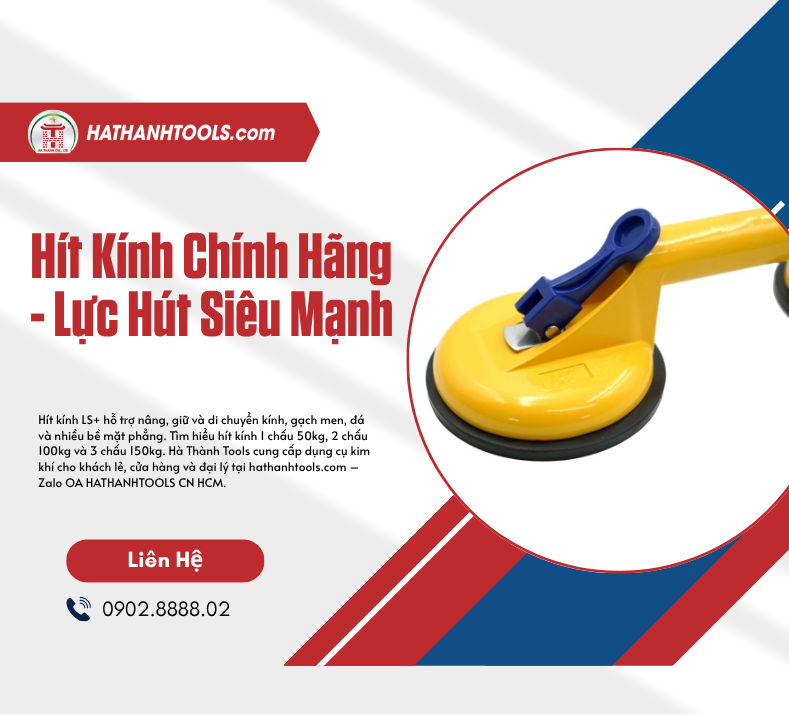
This is why genuine glass suction cups are becoming increasingly popular in installation, repair, and construction finishing works. Thanks to the rubber base that creates an airtight seal on smooth surfaces combined with a locking mechanism, glass suction lifters provide a more convenient grip point, supporting users in lifting, moving, and positioning materials.
Within the LS+ glass suction cup product line, Hathanhtools.com currently offers various configurations, from single-cup to triple-cup types. These products share a suction pad diameter of 118mm but differ in body material, number of cups, and declared load capacities. This allows users to select the right glass suction tool for the size, weight, and actual installation requirements.
What Is a Glass Suction Cup? Why Should Glass Technicians Equip Them?
Terms like "glass suction cups", "glass lifters", "suction cup handles", "tile suction cups", "tile lifters", "tempered glass", and "granite" are commonly used to describe tools that utilize a rubber surface combined with a locking mechanism to grip relatively flat, smooth surfaces.
In principle, the rubber base of a genuine glass suction cup is pressed against the material surface. When the locking mechanism is engaged, the air pressure beneath the suction pad is reduced, creating a pressure differential that secures the pad to the surface. Users can utilize the handle to establish a firm grip instead of directly squeezing the edges of the material.
It is crucial to understand that glass suction cups are not automated lifting devices. They are manual hand-held tools designed to assist user operations. The holding capacity depends on many factors, such as surface cleanliness, flatness, smoothness, the condition of the rubber pad, locking mechanism engagement, and the direction of force applied.
For professionals who frequently work with glass, tiles, or stone, equipping a suitable suction cup handle makes handling more active and convenient.
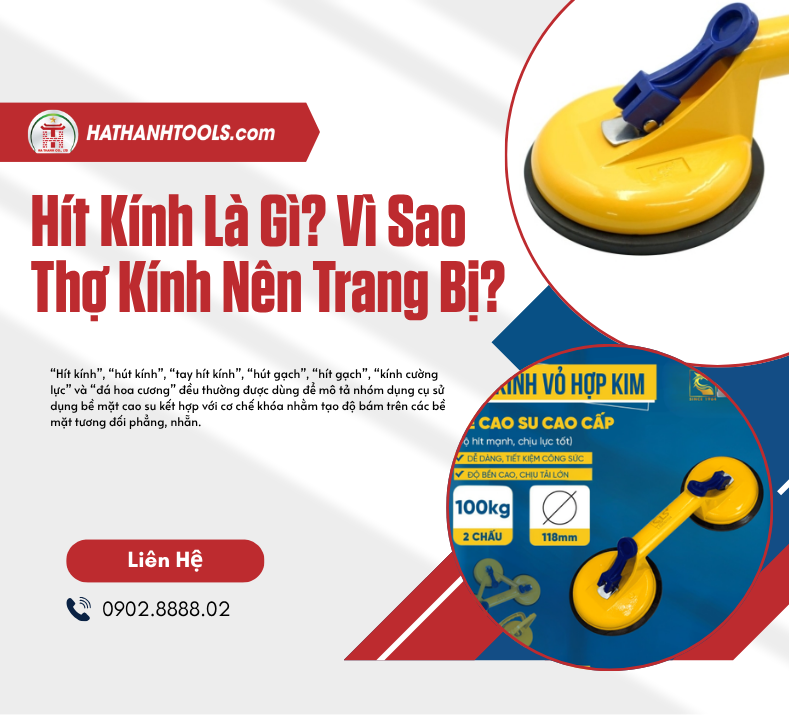
Uses of Glass Suction Cup Handles
The most common use of glass suction cup handles is to provide an additional grip point on materials with flat, smooth surfaces that are otherwise difficult to handle directly.
In glass installation, this tool can support:
-
Lifting and moving glass panels.
-
Positioning glass before and during installation.
-
Assisting work with tempered glass.
-
Helping workers gain better control over the materials.
-
Supporting the transport of smooth-surfaced panels within a suitable range.
Not limited to glass, tile suction cups are also a popular application. When tiling with relatively flat-surfaced tiles, the suction handle can provide a more convenient grip, especially for large-sized tiles or slabs.
For stone, glass suction lifters can also support handling natural stone, engineered stone, or granite when surface conditions are met. For tasks requiring lifting granite, users must select the appropriate number of cups and load capacity for the material, and carefully test the grip strength before lifting.
Additionally, glass suction cups can be used on some metal sheets or other flat materials, provided the surface meets the sealing requirements of the rubber base. It should not be assumed that all materials can be lifted, as suction effectiveness depends heavily on surface characteristics.
How Do Glass Suction Cups Differ from Lifting by Hand?
When carrying glass directly by hand, users usually have to hold onto the edges or margins of the glass panel. With large panels, this grip makes handling difficult, particularly when moving or aligning materials.
Genuine glass suction cups create a gripping point directly on the material's surface. Users can apply force through the handle instead of relying solely on fingertip grip strength.
Some prominent benefits include:
-
Creating a more convenient grip point.
-
Avoiding direct squeezing of glass edges.
-
Assisting in controlling movement directions.
-
Providing more convenience in positioning materials.
-
Reducing physical effort when working with suitable flat panels.
However, glass suction cups do not completely replace proper installation techniques. Users still need to evaluate material weight, surface conditions, lifting posture, and the number of people involved. In particular, the declared load capacity of the product should not be assumed as usable under all conditions.
Who Should Use Glass Suction Cups?
Glass suction cups are suitable for many user groups who regularly work with flat, smooth materials, such as:
-
Glass technicians.
-
Aluminum and glass installers.
-
Interior fit-out contractors.
-
Tiling specialists.
-
Glass door installation teams.
-
Finishing material installation crews.
-
Stone fabrication and installation workshops.
For professional users, choosing genuine glass suction cups also makes it easy to verify product specifications, cup configurations, body materials, and load capacities before starting work.
Currently Available Types of LS+ Glass Suction Cups
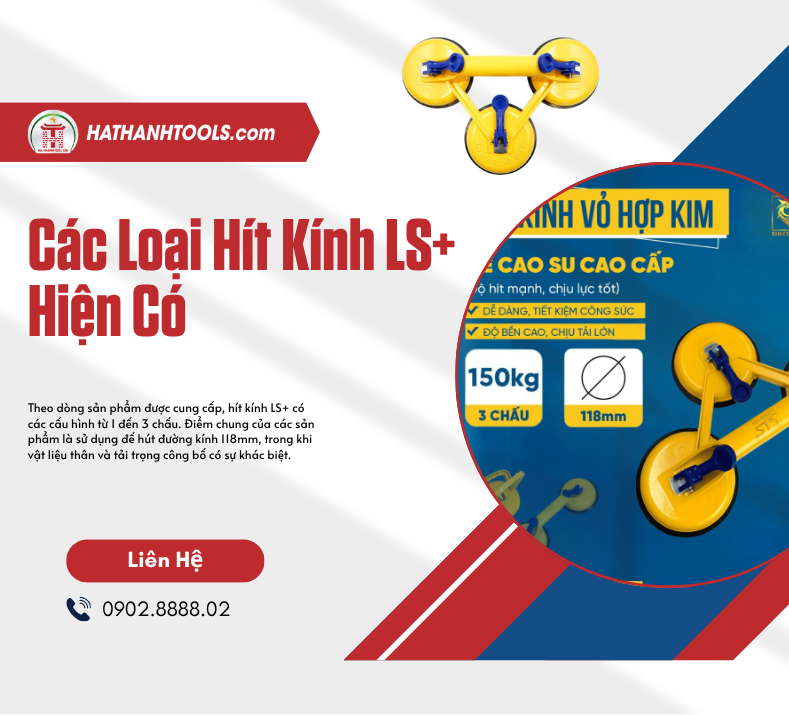
Based on the provided product line, LS+ glass suction cups are available in configurations from 1 to 3 cups. The common feature of these products is the use of a 118mm diameter suction pad, while the body material and declared load capacity differ.
|
Product |
Cups |
Body |
Pad Ø |
Declared Load Capacity |
|
LS+ Glass Lifter |
1 |
ABS Plastic |
118mm |
50kg |
|
LS+ Glass Lifter |
2 |
Alloy |
118mm |
100kg |
|
LS+ Glass Lifter |
3 |
Alloy |
118mm |
150kg |
2-Cup Alloy Glass Suction Cup 100kg
LS+ 2-Cup Alloy Body Glass Suction Cup
The 2-cup alloy glass suction cup 100kg is a configuration geared towards more professional usage compared to the 1-cup series.
The product features an alloy body, a 118mm rubber base, and a dual-cup design. The official specification lists a load capacity of 100kg, while the descriptions mention a holding capacity of 110–120kg. When selecting and using the product, users should refer to the declared 100kg load capacity as a safer benchmark and evaluate actual surface conditions.
The dual suction points provide more contact points with the material than the single-cup configuration. This helps distribute force and control panels during operation.
This product is suitable for reference when looking for a 100kg glass lifter, tile suction tool, or working with larger flat materials, provided that their weight and surface conditions are within the appropriate usage limits.
Key features:
-
Alloy shell/body.
-
Dual suction cups.
-
118mm suction pad.
-
100kg declared load capacity.
-
Good grip rubber base.
-
Easy-to-use safety latches.
-
Convenient handle.
For tasks requiring more suction points, the LS+ 3-cup alloy body glass suction cup 150kg is the series with the highest declared load capacity in the discussed product group.
The product features an alloy body, a 118mm diameter rubber base, and a 3-cup design.
The main declared specification is 150kg – 118mm. While the product description mentions a holding capacity of 160–180kg, users should consider the 150kg limit as the primary reference when choosing the tool.
The three cups create more contact points, supporting holding capacity and material stability in tasks requiring a larger tool configuration.
This is an ideal product for users searching for a 3-cup glass lifter 150kg, heavy-duty suction handles, or tempered glass lifting tools.
Main features include:
-
Sturdy alloy body.
-
3-cup design.
-
118mm pad diameter.
-
150kg declared load capacity.
-
Secure grip rubber base.
-
Oxidation-resistant body shell.
-
Easy-to-operate safety latches.
When using the 150kg glass suction cup series, users still need to thoroughly inspect the surface, rubber condition, locking mechanism, and the actual weight of the material. The greater the load, the more attention must be paid to operational procedures.
Why Can the Actual Grip Strength of Glass Suction Cups Vary?
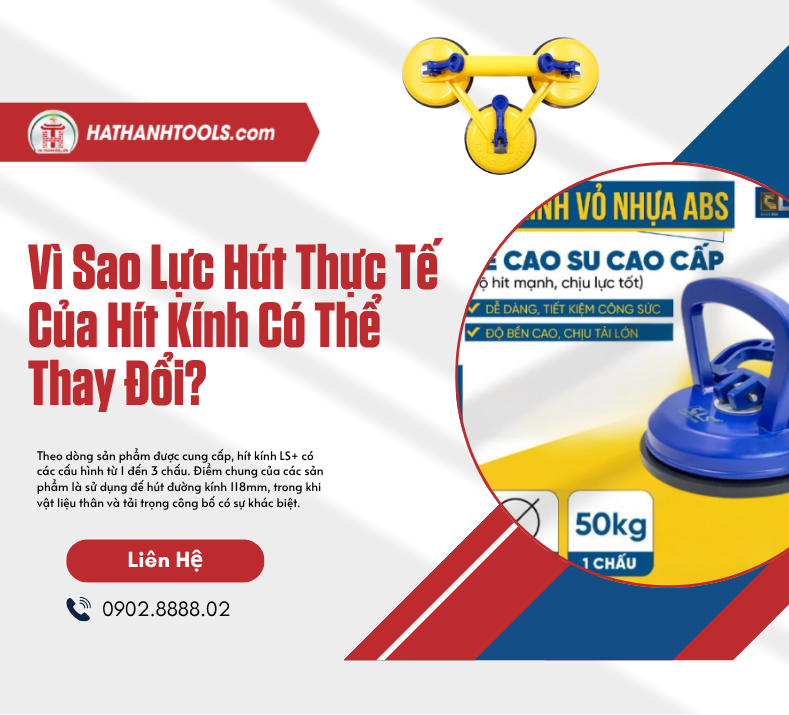
One of the most common misconceptions when purchasing genuine glass suction cups is believing that simply looking at numbers like 50kg, 100kg, or 150kg can determine the exact lifting capacity in every scenario.
In reality, the declared load capacity is an important reference parameter but should not be interpreted as a guarantee that the tool will always sustain that exact weight under all conditions.
The actual gripping capacity depends on the surface, suction cup seal tightness, rubber pad condition, force direction, and the user's operation.
The Surface Must Be Flat and Clean
This is the first element to check when using glass suction lifters.
The rubber base needs to seal properly against the surface. If there is dust, oil, water, or small particles between the pad and the material, the airtight seal may be compromised.
Before attaching the glass suction handle, clean the contact area and check for foreign objects.
For glass, the surface usually has the flatness and smoothness ideal for suction principles. However, glass with dust, oil, or moisture can still affect grip reliability.
Smoothness of Glass, Tiles, or Stone
Not all flat materials provide the same suction performance.
Tempered glass with a smooth surface is generally highly favorable for vacuum suction mechanisms. Glossy ceramic tiles can also be suitable if the surface is sufficiently flat and clean.
Conversely, surfaces that are overly rough, have deep grooves, textured patterns, or many gaps can prevent the rubber pad from establishing the necessary seal.
Therefore, when performing tempered glass lifting, tile handling, or granite lifting support, a surface assessment is always required before executing the work.
Lifting Direction Also Affects Gripping Performance
For the same LS+ glass suction cup, material holding capacity can vary depending on the direction of applied force.
When force is applied in different directions, the actual load on each suction cup can differ. Thus, you should not solely rely on nominal load capacities for all lifting positions.
Especially when moving heavy or large-sized materials, force distribution, the number of helpers, and placement of suction handles must be carefully planned.
Users should treat the declared load capacity as a benchmark for product selection, not an arbitrary limit for any situation.
Inspect the Suction Lock Before Every Lift
Before lifting materials with a genuine glass suction cup, perform this brief inspection checklist:
-
Clean the material surface.
-
Verify that the rubber base is not cracked, deformed, or damaged.
-
Place the entire suction pad flat against the surface.
-
Engage the locking mechanism.
-
Observe the pad's grip.
-
Check the handle and safety latches.
-
Apply slight force as a test before actual lifting.
-
Do not exceed the declared load capacity.
-
Ensure proper assistance for large or heavy materials.
This checklist is especially vital for the 100kg and 150kg glass suction cup series, as increased weight demands stricter control over operations.
How to Choose and Buy Genuine, Strong-Suction Glass Lifters
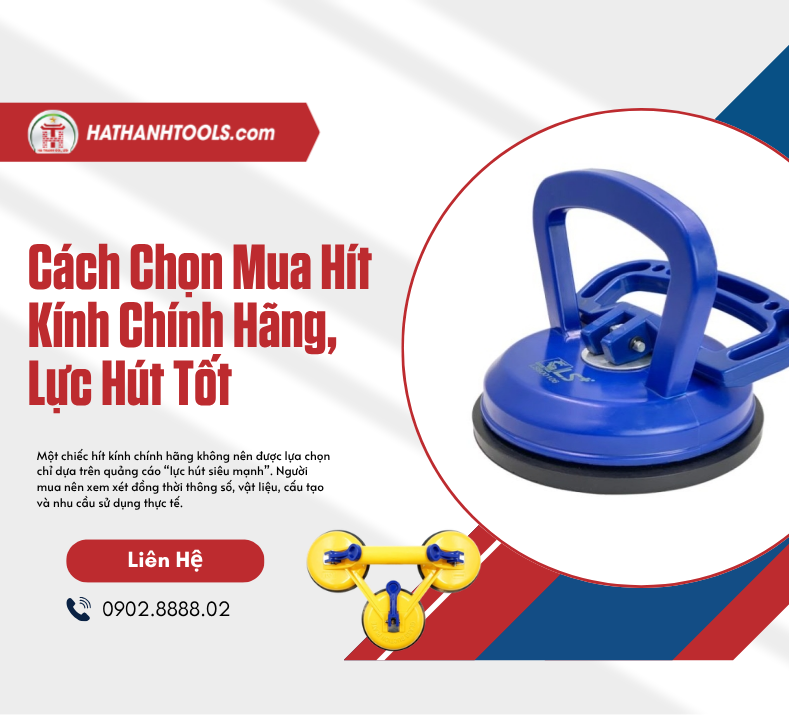
A genuine glass suction cup should not be chosen solely based on advertisements claiming "super powerful suction." Buyers should concurrently examine specifications, materials, construction, and actual job requirements.
Verify Load Capacity Specifications and Pad Diameter
First, determine the average weight of the materials you regularly handle.
For the 1-cup ABS series, the declared load capacity is 50kg. The 1-cup alloy series is described to support about 50–60kg. The 2-cup series has a declared capacity of 100kg, and the 3-cup series has a declared capacity of 150kg.
All listed products utilize a pad with a 118mm diameter based on the provided information.
Matching the load capacity before buying helps users avoid picking a tool that is too small for heavy materials or overpaying for a product that exceeds actual needs.
Inspect the Rubber Pad and Locking Latches
The rubber pad directly contacts the material, so it plays a critical role.
When choosing a glass suction lifter, buyers should check if the rubber pad is fully intact, free of tears, hardening, or deformation.
Additionally, the locking mechanism must be tested. A good hand-held glass suction cup not only needs a suitable pad but must also feature a smooth and reliable locking operation.
The LS+ glass suction cup series is provided with lightweight and easy-to-use safety latches as per product info.
Select the Number of Cups Based on Material Weight
The number of cups is one of the most recognizable factors in classifying LS+ glass suction lifters.
The 1-cup series is ideal for providing a single grip point. The 2-cup series adds an extra suction point and addresses higher load requirements. The 3-cup series offers the maximum suction point configuration in this group.
Frequently Asked Questions About Glass Suction Cups
Can glass suction cups lift ceramic tiles?
Yes, glass suction cups can be used on ceramic tiles if the tile surface is flat, smooth, clean, and complies with the sealing principles of the rubber pad.
It should not be assumed that all tile types offer identical grip performance. Tiles with overly rough surfaces, deep grooves, or unique textures may not be compatible.
How many kilograms can the LS+ 1-cup glass suction cup hold?
The LS+ 1-cup ABS plastic body series has a declared load capacity of 50kg.
Additionally, the 1-cup alloy series is described to have a holding capacity of about 50–60kg in the product details.
In practice, it is recommended to choose based on the declared load capacity and specific surface conditions.
What is the load capacity of the LS+ 2-cup glass suction cup?
The LS+ 2-cup glass suction cup has a declared load capacity of 100kg, a 118mm pad diameter, and an alloy shell.
The product description notes a holding capacity of 110–120kg, but users should rely on the 100kg official specification as a safe reference during selection.
What is the load capacity of the LS+ 3-cup glass suction cup?
The LS+ 3-cup glass suction cup has a primary declared specification of 150kg – 118mm.
The description mentions a capacity of 160–180kg. When choosing the product, prioritize the 150kg declared load limit and do not exceed the threshold appropriate for actual conditions.
Can glass suction cups be used on rough surfaces?
Rough surfaces should not be considered standard applications for glass suction cups.
The working principle relies on establishing an airtight seal between the rubber base and the surface. The rougher, more grooved, or uneven a surface is, the harder it is to secure an airtight seal.
Hence, glass lifters, tile lifters, or stone lifting suction tools should only be operated on surfaces compatible with the product's design.
Should I choose a 1-cup, 2-cup, or 3-cup glass suction cup?
This depends on the weight and task requirements.
If you need a compact tool for lighter loads, refer to the 1-cup series. When more suction points and higher load capacities are required, consider the 2-cup or 3-cup models.
In the LS+ glass suction cup range, the declared load capacities are 50kg, 100kg, and 150kg respectively for the main configurations.
Do glass suction cups completely replace professional lifting equipment?
No.
Glass suction cups are hand tools designed to assist users in creating a grip point to handle flat materials. The product should not be understood as an automated lifting device or a complete replacement for professional heavy-duty lifting systems.
For exceptionally large or heavy materials, or projects with specialized lifting requirements, proper engineering methods must be deployed alongside strict construction safety guidelines.
Contact Information
Ha Thanh One Member Company Limited – Ho Chi Minh City Branch
Hotline: 0902 8888 02
Address: 35 Nguyen An Khuong, Ward 15, District 5, Ho Chi Minh City
Email: cskh@hathanhtools.com
Website: hathanhtools.com
Tax Code: 0100108529-006