How to Choose the Right Combination Wrench Size – Full Reference Guide
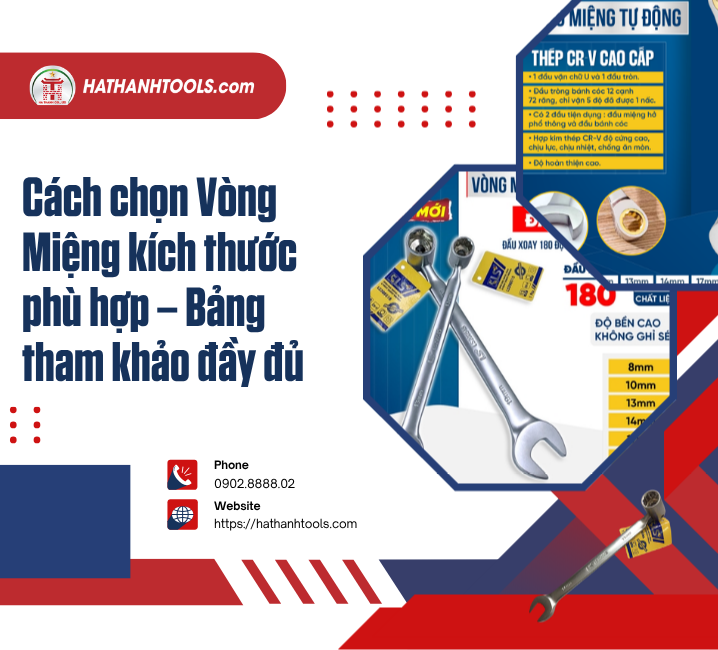
When working with bolts and nuts in motorcycle repair, automotive maintenance, or machinery assembly, mastering how to choose the right combination wrench size directly determines operational efficiency and safety. Many people still select tools based on rough estimation, leading to stripped bolt edges, damaged tools, or unnecessary wasted time. This article provides a detailed guide, a complete wrench size chart, and practical experience to help you make the right choice from the start, while introducing high-quality LS+ product lines distributed at Hathanhtools.com.
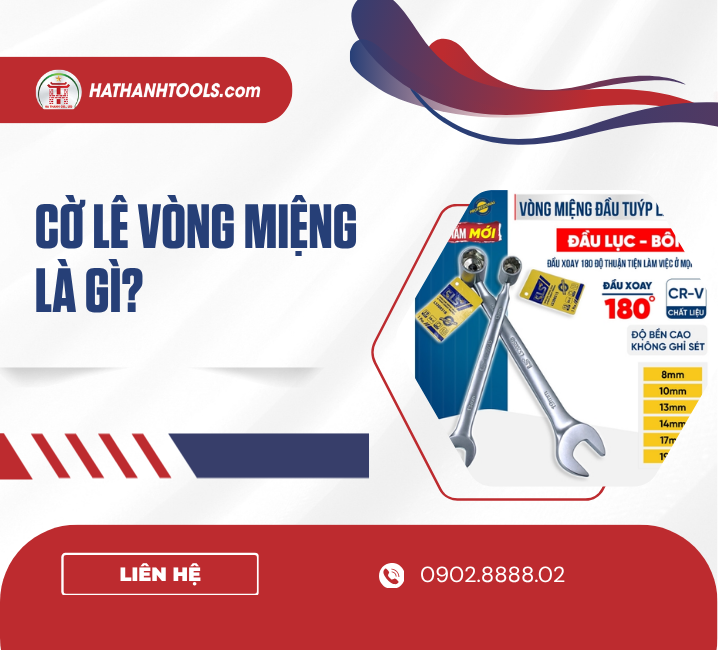
What is a Combination Wrench?
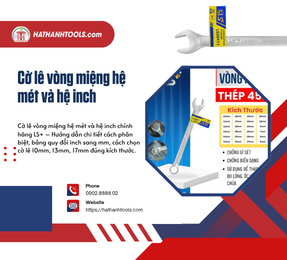
A combination wrench is a specialized hand tool featuring two different ends on a single handle: an open U-shaped end and a closed box end with multiple points. The open end allows for quick access in easy-to-reach areas, while the box end grips more points of the nut, providing stable torque transfer and reducing slippage. This is exactly why combination wrenches are a popular choice in almost all technical work.
The question “what is a combination wrench” often comes with the need to understand how to use and select sizes. Unlike adjustable tools, combination wrenches have fixed sizes manufactured precisely for each bolt size. Therefore, once you master how to choose the right combination wrench, your work becomes much faster, safer, and more professional.
What Tasks Are Combination Wrenches Used For?
The open end of a combination wrench allows for quick operation in easily accessible locations, while the box end grips more points of the nut, making it suitable when stable torque is needed. Thanks to this combination, the tool performs well in various working environments.
In motorcycle repair, combination wrenches in sizes 8mm, 10mm, 12mm, and 13mm are frequently used to assemble and disassemble clutch bolts, exhaust bolts, and brake bolts. In automotive maintenance, larger sizes like 17mm and 19mm support work on the engine, chassis, and suspension system. Industrial machinery assembly, mechanical fabrication, and plumbing/electrical installations also require combination wrenches for their high precision, minimizing damage to bolt heads. Even for home repairs, from furniture assembly to home appliance maintenance, a complete combination wrench set is always a convenient solution.
Understanding what tasks combination wrenches are used for helps you not only choose the right size but also select the right type for your working frequency and environment. This is also an important first step in how to choose an effective combination wrench.
How Does a Combination Wrench Differ from an Adjustable Wrench?
Many beginners often confuse combination wrenches with adjustable wrenches. In reality, these two tools have distinct uses. A combination wrench has a fixed size, precisely machined to match each size, while an adjustable wrench can have its jaw opening adjusted to fit various nut sizes.
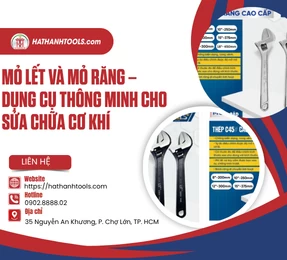
A wrench grips the fastener more precisely, distributes force evenly, and is less likely to round off nut corners. On the contrary, an adjustable wrench offers flexibility when dealing with multiple sizes but can easily slip if over-tightened or improperly adjusted. In jobs requiring high precision, such as motorcycle repair or machinery maintenance, choosing a combination wrench is always preferred over an adjustable wrench. Adjustable wrenches should only be used when the correct wrench size is not available or for temporary tasks.
Understanding this difference helps you make the right decision when buying tools, avoiding waste and improving work efficiency.
Common Combination Wrench Size Chart
One of the key factors in choosing a combination wrench is mastering the wrench size chart. Most products on the Vietnamese market follow the metric system, but there are still some product lines in the SAE (inch) system. Properly distinguishing between systems and selecting the correct measurement helps avoid using “approximate” tools that can damage fasteners.
Metric Size Reference Chart
Metric and SAE (inch) wrenches differ fundamentally in how size is noted. Metric sizes are marked in millimeters (e.g., 8mm, 10mm, 13mm), while SAE sizes are marked in fractions of an inch (1/4, 5/16, 3/8…). You should not use a close equivalent size from the other system if there is any play, as using the wrong system can easily round off nut corners and shorten tool life.
| COMMON BOLT THREADS | RECOMMENDED WRENCH SIZE |
|
M5 |
8mm |
| M6 | 10mm |
| M8 | 13mm |
| M10 | 17mm |
| M12 | 19mm |
| M14 | 22mm |
| M16 | 24mm |
| M18 | 27mm |
| M20 | 30mm |
| M22 | 32mm |
This is a general reference table; users should directly measure the distance between flat surfaces of the nut head, as bolt standards may vary.
The wrench size chart above helps you quickly cross-reference when buying. Sizes 8mm, 10mm, 12mm, 13mm, 17mm, and 19mm appear most frequently in standard toolsets. When choosing a 14-piece combination wrench set, most of these sizes are fully included.
How to Measure Nut Head Size
To determine exactly what size combination wrench is needed, you must correctly measure the distance between the two opposite flats of the nut. The process is simple but critical:
Use calipers or a high-precision ruler. Measure the distance between the two flat parallel sides, not diagonally. Choose the wrench that matches the measured number. Test the fit before applying torque. If there is even a little play, do not use it as it may easily round off the bolt edges.
This measurement method applies to both metric and SAE systems. Once mastered, you will no longer have to guess “what size is this combination wrench” every time you encounter an unfamiliar bolt. This is also a fundamental skill that makes choosing a combination wrench much more professional.
Common Types of Combination Wrenches
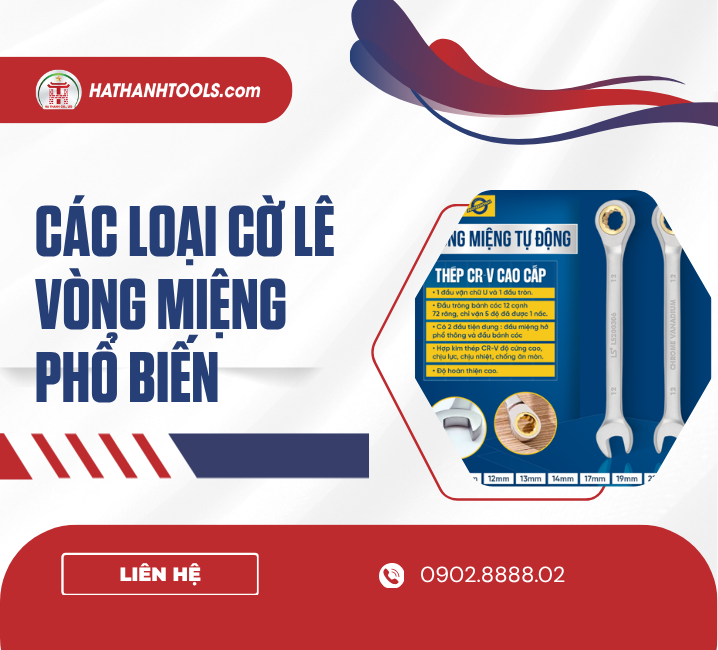
The market currently offers various types of combination wrenches, ranging from standard types to ratchet (automatic), flex-head, and socket wrenches. Understanding each type helps you make the right choice based on your actual needs.
Standard Combination Wrench Sets
Standard combination wrench sets have a simple structure, are easy to use, and are suitable for many industries. The products come in various sizes and are convenient to store in pouches or specialized cases. Why choose a combination wrench set instead of individual pieces? When regularly working with multiple types of bolts, a complete set saves search time and individual purchasing costs.
The 45# steel combination wrench LS+ line belongs to this category, manufactured from high-strength 45# steel, suitable for general, household, and basic mechanic repairs. With an affordable price and stable durability, this is an economical choice when building your initial toolset.
Ratcheting Combination Wrenches
Ratcheting combination wrenches differ from standard combination wrenches due to their ratcheting mechanism. The box end features a gear mechanism, eliminating the need to lift the tool off the bolt after each turn. Consequently, operations are noticeably faster, making them particularly suitable for narrow spaces and increasing assembly/disassembly speeds.
The Ratcheting combination wrench LS+ line is designed to meet the demands of mechanical maintenance, motorcycle/car repairs, and machinery assembly. In comparison, the ratcheting type reduces wrist fatigue and boosts work efficiency compared to standard wrenches. This is an important step forward in choosing combination wrenches for professionals.
Flex-Head Ratcheting Combination Wrenches
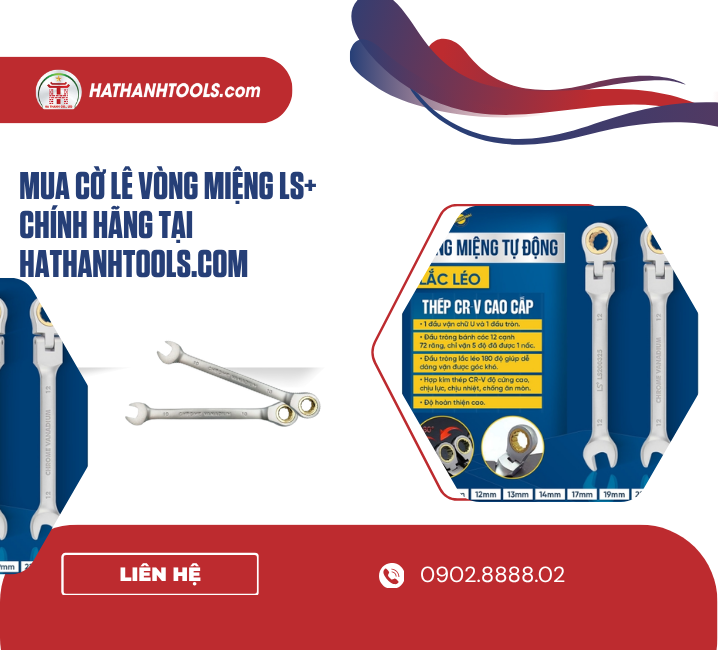
Flex-head ratcheting combination wrenches differ from standard ratcheting ones by their ability to change the working angle of the box end. The flexible pivoting mechanism makes operations easy in tight gaps, hidden areas, engine bays, or awkward angles.
The Flex-head ratcheting combination wrench LS+ line offers distinct advantages when working in confined spaces. The rotating head prevents the user from having to reposition the entire tool, reducing wrist strain and accelerating job completion. This is an ideal choice for advanced technicians requiring high flexibility.
Flex-Head Socket Combination Wrenches
A socket combination wrench is used when there is a need to combine the functions of a wrench and a socket for tightening and loosening in hard-to-reach areas. Compared to flex-head ratcheting wrenches, the socket-style is more versatile due to its compatibility with different socket heads.
The difference between a 6-point (hex) and a 12-point (bi-hex) socket head is crucial to avoid choosing the wrong bolt style. The 12-point head is suitable for 12-point fasteners, while the 6-point hex head tightly grips hexagonal bolts, delivering better torque and reducing slippage. The Flex-head 12-point socket combination wrench LS+ and Flex-head 6-point hex socket combination wrench LS+ lines meet both of these needs. Properly distinguishing them ensures a more accurate choice, preventing damage to both tools and fasteners.
How to Choose a Combination Wrench Based on Your Needs
Your specific needs heavily dictate the type of wrench you should choose. Below are key criteria to help you make the right decision.
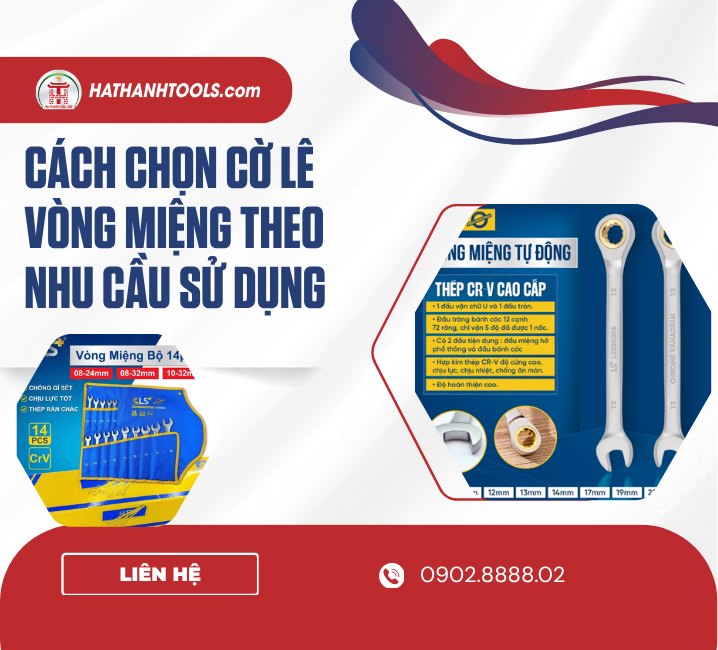
Should You Choose Individual Wrenches or a 14-Piece Set?
Choose individual wrenches when you only need a few fixed sizes, need to replace a lost piece, or do specialized work that requires specific sizes. On the contrary, opt for a 14-piece set when you perform repairs frequently, work with various bolt sizes, equip a workshop or garage, and require a uniform toolset.
The LS+ 14-piece combination wrench set includes the most common sizes, neatly organized in a specialized storage pouch, saving costs compared to buying individually and making it easy to carry. This is the optimal choice for most users, from repair technicians to garage owners.
Choosing by Steel Material
The steel grade directly affects durability and strength. 45# carbon steel provides good strength at an affordable price, suitable for general home repairs. CR-V (chrome-vanadium alloy) steel is higher grade, offering superior torque resistance, high hardness, deformation prevention, and effective rust resistance on the surface.
CR-V steel wrenches are commonly used in heavy-duty jobs and harsh environments. When choosing, consider your usage frequency and the torque required. This is a critical factor in selecting a combination wrench to ensure a long lifespan.
Check the Finish Before Buying
Before deciding to purchase, carefully inspect the following elements: clearly engraved sizes, a symmetrical open end, an undistorted box end, a smoothly functioning ratcheting mechanism (for ratcheting types), a tight pivot joint, and a crack-free surface. These minor details determine durability and safety during use.
After inspecting, you can decide between standard or ratcheting types based on your actual needs. A thorough inspection prevents purchasing substandard goods and ensures your wrench selection brings long-term value.
| Application / Need | Recommended Type |
| Common tasks | Standard combination wrench |
| Repeated tightening/loosening | Ratcheting wrench |
| Tight spaces | Flex-head ratchet |
| Working with sockets | Socket combination wrench |
Using Combination Wrenches Correctly
Correct usage not only extends tool life but also ensures workplace safety. Position the wrench perpendicular to the bolt to distribute force evenly and prevent slipping off the bolt head. Prioritize using the box end when high torque is required, as the box end grips more points, supporting safer force transmission than the open end.
Never use a hammer or arbitrarily extend the handle. This practice can easily crack the tool, bend the shaft, damage the ratcheting gear, round off bolt heads, and cause safety hazards. Always choose the correct size, tighten gradually, and periodically inspect tool condition to maintain optimal performance.
Buy Genuine LS+ Combination Wrenches at Hathanhtools.com
Hathanhtools.com is the official website of Ha Thanh One Member Co., Ltd - HCMC Branch, specializing in distributing genuine LS+ combination wrenches and hardware tools. Contact us for size consultations, wholesale quotes, and nationwide delivery policies. When purchasing here, you are guaranteed clear product origins, consistent quality, and dedicated technical support.
Our Distributed Product Catalog
Currently, Hathanhtools.com distributes a full range of lines:
-
45# Steel Combination Wrenches LS+
-
Ratcheting Combination Wrenches LS+
-
Flex-Head Ratcheting Combination Wrenches LS+
-
Flex-Head 12-Point Socket Combination Wrenches
-
Flex-Head 6-Point Hex Socket Combination Wrenches
-
14PCS Combination Wrench Set LS+
Each product line is designed with durability, precision, and practical flexibility in mind, meeting needs ranging from household repairs to professional engineering tasks.
Wholesale Customer Policies
Wholesale customers at Hathanhtools.com enjoy numerous benefits: a wide selection of sizes, volume discount support, various policies and programs for hardware stores, doorstep delivery, and nationwide distribution. This is a significant advantage that helps retail shops and mechanical workshops optimize costs and secure a stable supply source.
Contact Information
Ha Thanh One Member Company Limited – HCMC Branch
Hotline: 0902 8888 02
Address: 35 Nguyen An Khuong, Ward Cho Lon, Ho Chi Minh City
Email: cskh@hathanhtools.com
Website: https://hathanhtools.com
Tax Code: 0100108529-006