Drill Bit Selection Guide – Differences Between Wood, Metal, and Concrete Drilling
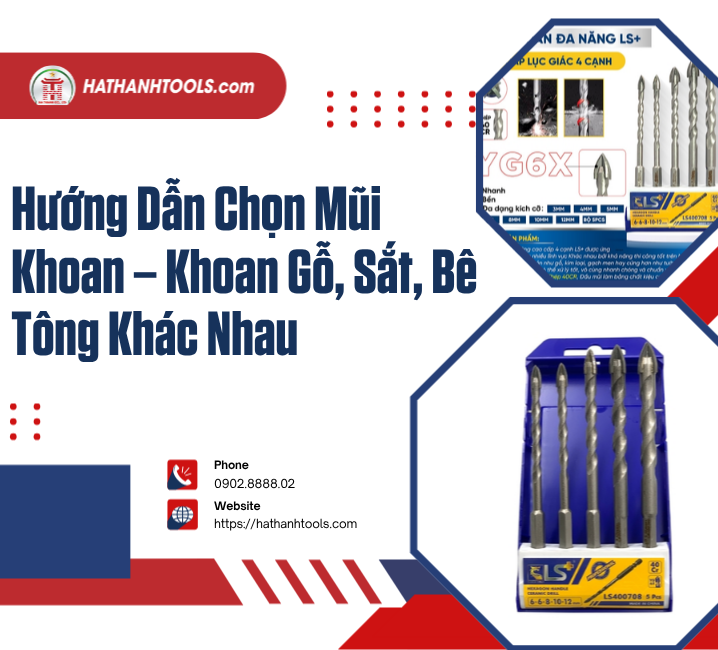
The drill bit is the accessory that directly determines the quality of the hole, the speed of execution, as well as the lifespan of your power drill. However, many users still use one type of drill bit for various materials, leading to premature dulling, imperfect holes, material damage, or even motor overload. Therefore, this drill bit selection guide is essential knowledge for mechanics, construction workers, plumbers, furniture makers, and DIY enthusiasts. Understanding the differences between wood, HSS metal, concrete, or multi-purpose drill bits will help you optimize work efficiency, save costs, and improve precision in every task.
The market currently offers many common types of drill bits with different designs, materials, and functions. Some lines are specialized for drilling soft or hard wood; others are produced to drill steel, stainless steel, or aluminum; while concrete, brick walls, or reinforced concrete tasks require drill bits with ultra-hard alloy tips and high impact resistance. Selecting the right drill bit from the start will significantly reduce construction time, minimize damage, and extend the life of both your machine and accessories.
The following article is a detailed guide to help you distinguish between wood, metal, and concrete drill bits, identify common types on the market, and introduce the LS+ drill bit lines distributed by Hathanhtools.com so you can easily choose the right product for your actual needs.
How to Identify Common Drill Bits
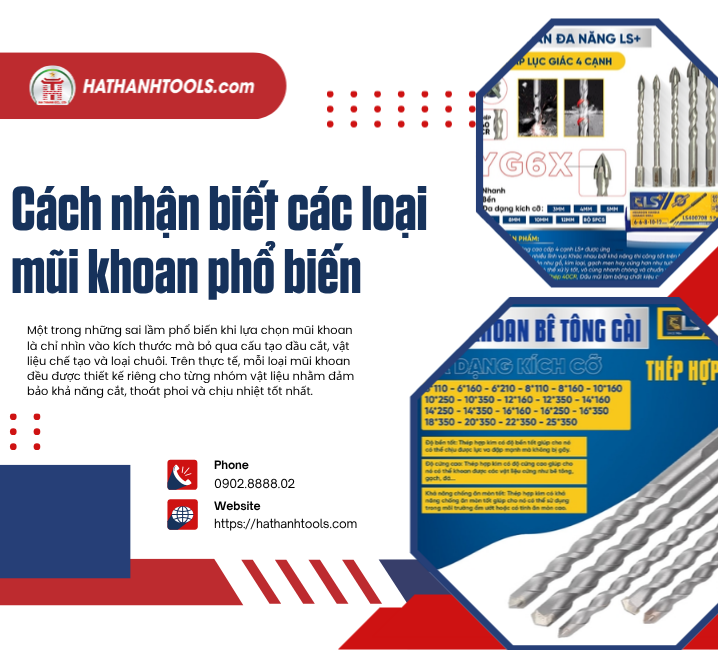
One of the most common mistakes when choosing a drill bit is looking only at the size while ignoring the cutting tip design, material, and shank type. In reality, each type of drill bit is designed specifically for certain groups of materials to ensure the best cutting, chip removal, and heat resistance. Therefore, knowing how to identify drill bits not only helps you choose the right product but also improves work efficiency and extends tool life.
According to the manuals of many major drill manufacturers, when drilling metal, you should create a pilot point, select the appropriate rotation speed, and use coolant if necessary. Meanwhile, concrete drilling requires using the hammer mode with a specialized bit, while wood drilling requires prioritizing centering ability to avoid hole deviation from the first rotation. This is why users need to understand common drill bits instead of using one type for every material.
Identifying Wood Drill Bits
For those learning what wood drill bits are, the most recognizable feature is the sharp centering point in the middle of the tip. This design helps the tip grip precisely into the desired position on the wood surface, preventing slipping or off-centering. The two side cutters cut the wood fibers before the spiral body clears the wood chips out through wide flutes, ensuring clean, beautiful holes without splintering.
Unlike metal drill bits, wood drill bits are optimized to handle fibrous materials. Therefore, the spiral flutes are usually larger to increase sawdust removal efficiency during continuous drilling.
Key characteristics to identify wood drill bits include:
-
Sharp centering point for precise drilling.
-
Large flutes for efficient sawdust removal, preventing clogging.
-
Available in various designs such as twist bits, spade bits, and brad-point bits.
-
Suitable for natural wood, MDF, HDF, plywood, and various industrial wood materials.
For furniture installation, woodworking, or door and cabinet assembly, Hathanhtools.com currently distributes the LS+ two-stage hexagonal shank wood drill bit line. The two-stage design helps with fast centering, stable drilling, and creates sharp holes. The hex shank provides a secure grip in quick-change chucks, limiting slippage when working with cordless drills or impact drivers, making it suitable for both professional and DIY users.
Additionally, when working on multiple materials without wanting to change bits constantly, users can consider the LS+ multi-purpose drill bit line for flexible handling on wood, brick, plastic, and common construction materials.
Identifying Metal and Stainless Steel Drill Bits
If wood drill bits are optimized for fibrous materials, HSS metal drill bits are designed to withstand high friction and heat generated when drilling metal. The most noticeable features are the sharp cutting tip, uniform spiral body, and cutting angles calculated to ensure cutting speed and efficient metal chip removal.
Among current metal drill bits, HSS (High Speed Steel) is the most popular material due to its high hardness, heat resistance, and long lifespan. For stainless steel – a material with high toughness and rapid heat generation – you should prioritize high-quality steel bits like HSS 6542 to ensure stable cutting performance.
Identifying characteristics include:
-
Manufactured from High Speed Steel (HSS).
-
HSS 6542 grade offers high hardness and heat resistance.
-
Many products are gold Titanium coated to reduce friction and increase lifespan.
-
Step drill bits (cone bits) available for enlarging hole diameters in metal sheets.
In the Hathanhtools.com product catalog, the HSS 6542 LS+ gold stainless steel drill bit (packed in blisters of 5 or 10) is a standout product for drilling stainless steel, steel, iron, aluminum, and other metals. The HSS 6542 material combined with the gold coating increases surface hardness, reduces heat generation, and extends the bit's life.
For tasks requiring hole enlargement on sheet metal, stainless steel, or metal plates, LS+ step drill bits and spiral step drill bits are ideal choices, allowing for multiple hole sizes with a single bit, saving tool change time and increasing efficiency.
Furthermore, Hathanhtools.com also distributes the LS+ anti-clogging drill bit, designed to prevent chip jamming during metal drilling, supporting more continuous and stable operation for high-intensity tasks.
Identifying Concrete Drill Bits
When distinguishing between wood, metal, and concrete bits, the concrete bit is the easiest to identify due to its brazed ultra-hard alloy tip. Unlike metal bits that use pure cutting force, concrete drill bits operate by combining rotary motion and hammer force to break through construction material structures.
The tip is usually made of carbide alloy, capable of high impact and wear resistance. The body is designed with deep spirals to bring cement dust out quickly, preventing clogging when drilling deep.
Identifying characteristics include:
-
Ultra-hard carbide alloy tip.
-
Two-edge or four-edge tip design depending on usage needs.
-
Round shank or SDS shank suitable for different machine types.
-
Various variants such as long bits, cross-tip rebar-cutting bits, and core bits.
In the LS+ product ecosystem, Hathanhtools.com offers many choices for the construction industry such as LS+ SDS concrete bits, LS+ cross-tip reinforced steel SDS bits, and LS+ dry core bits. These products are designed to meet diverse needs, from standard wall drilling and reinforced concrete drilling to large-diameter hole creation for plumbing, HVAC, and technical engineering projects.
Understanding how to correctly identify drill bits helps users accurately select the right bit for the material, minimize machine damage, improve productivity, and ensure work quality in every field, from home repairs to professional construction.
What are the Differences Between Wood, Metal, and Concrete Drill Bits?
One of the most important parts of this drill bit selection guide is understanding the differences between each bit type based on the material being processed. Many think choosing the right diameter is enough, but in reality, the cutting tip design, manufacturing material, and operating mechanism are completely different. Choosing the wrong bit not only makes the hole look bad but also causes premature wear, reduces performance, and can even damage the drill.
If you are trying to differentiate between wood, metal, and concrete bits, the comparison table below will help you identify each type and choose correctly based on your usage needs.
Difference in Cutting Tip Design
The cutting tip design is the factor that determines how the drill bit contacts the material. Each material requires a different tip shape to optimize cutting force, chip removal, and accuracy.
| Material | Tip Characteristics | Objective |
| Wood | Sharp centering point | Clean holes, prevent deviation |
| Metal/Stainless | Sharp spiral cutting edge | Cut and remove metal chips |
| Concrete | Hard alloy tip | Grind and break hard surfaces |
For users who frequently do home repairs or work on various materials, the LS+ multi-purpose drill bit is worth considering. The product is designed to drill on many surfaces like brick, wood, plastic, and common construction materials without constant bit changes, helping save time and increase work efficiency.
Difference in Manufacturing Material
Beyond shapes, common drill bits are produced from different materials to meet specific processing requirements.
For metal, the most common material is HSS (High Speed Steel). This steel has good heat resistance and wear resistance, suitable for drilling iron, steel, copper, aluminum, and various alloys. For stainless steel – a material with high hardness and toughness – use stainless steel bits made from HSS 6542 to maintain sharpness during continuous drilling.
At Hathanhtools.com, the HSS 6542 LS+ gold stainless steel drill bit is chosen by many customers for its stable drilling ability on stainless steel, steel, and hard metals. The gold surface reduces friction, increases heat resistance, and extends product life.
For wood, the bit does not require materials as hard as metal bits; instead, it prioritizes a design that helps with fast centering and efficient chip removal. Therefore, a sharp tip combined with large spiral flutes is most effective when processing natural wood, MDF, or plywood.
Meanwhile, concrete bits use carbide or tungsten carbide alloy tips to withstand continuous impact force when combined with the hammer mode of a drill. This is a very hard material, helping drill effectively into brick, stone, concrete, and reinforced concrete.
In addition, the LS+ 2-edge eccentric multi-purpose drill bit from Hathanhtools.com uses a YG6X alloy tip combined with a 40Cr steel body. This design increases hardness, resists wear, centers well, and supports drilling on many different materials with high stability.
Difference in Machine Operating Mode
Besides choosing the right drill bit, users also need to use the correct machine operating mode to achieve the best efficiency.
For wood and metal drilling, the machine usually runs in normal rotary mode. Cutting force is created by the continuous rotation of the bit. When drilling iron or stainless steel, adjust the rotation speed to match the bit diameter and use cooling oil to reduce heat, increasing the lifespan of the HSS metal bit.
Meanwhile, concrete bits only maximize effectiveness when combined with the hammer drill mode. Continuous impact force helps break the concrete structure faster, reducing load on the cutting tip and shortening execution time.
For SDS drill bits, users must use the correct concrete drill with a specialized chuck. If the wrong chuck type is installed or the wrong mode is used, drilling performance will drop significantly, and the equipment may easily be damaged.
Understanding the relationship between the drill bit and the machine operating mode is a crucial step in our drill bit selection guide, helping users optimize performance and avoid common mistakes during construction.
Selecting Drill Bits by Shank Type and Machine
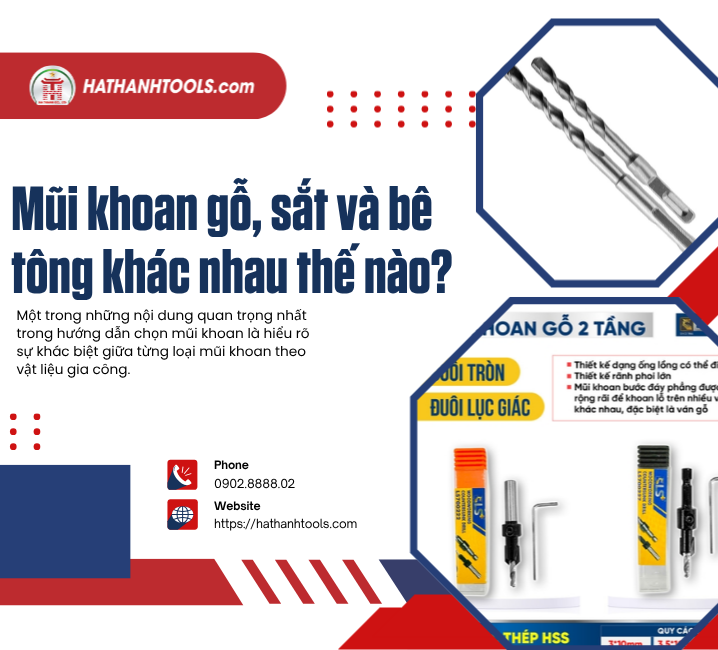
Beyond the material being processed, the shank type is also a factor that determines compatibility with the drill. Currently, the market features three main groups: round shank bits, hex shank bits, and SDS bits. Each type has its own advantages, suitable for specific machine lines and usage purposes.
Choosing the right shank type not only helps with quick installation but also ensures better power transmission, limits bit slippage, and increases safety during operation.
What machines use round shank drill bits?
Round shank bits are the most common type today due to their compatibility with almost all electric drills and cordless drills using keyed or keyless chucks.
The cylindrical shank design makes installation simple, suitable for both home users and professionals. This is also the type of shank frequently found on wood bits, metal bits, and some multi-purpose bits.
When using round shank bits, users should note:
-
Check the chuck's capacity before installing the bit.
-
Insert the shank fully into the chuck.
-
Tighten the three jaws evenly to avoid off-centering.
-
Frequently check for tightness if working continuously.
Thanks to high flexibility, round shank bits are suitable for many tasks like home repairs, furniture installation, light mechanics, and electrical/plumbing work.
What are the advantages of hex shank bits?
If you frequently have to change drill bits during work, the hex shank bit is the optimal choice.
The six-sided design helps the shank grip securely in quick-change chucks, reducing slippage when transmitting high torque. At the same time, bit changes take only seconds without needing a chuck key.
Key advantages of hex shank drill bits include:
-
Fast bit changes, saving time.
-
Secure grip in the chuck.
-
Minimizes shank slippage during drilling.
-
Suitable for cordless drills and impact drivers.
-
Appropriate for flexible installation and repair tasks.
One of Hathanhtools.com's signature products is the LS+ two-stage hex shank wood drill bit, meeting the needs of interior construction, furniture assembly, and tasks that require frequent tool changes. In addition, the 4-edge hex multi-purpose bit line is also chosen by many contractors for its ability to drill multiple materials and its excellent grip.
When do you need an SDS shank drill bit?
For construction projects or work requiring continuous concrete drilling, SDS bits are an almost mandatory choice.
Unlike round shanks, SDS shanks are designed with specialized grooves to transmit hammer force more effectively and limit slippage when working at high intensity.
Users should choose SDS drill bits when:
-
Drilling concrete continuously for long periods.
-
Performing deep hole drilling.
-
Working on reinforced concrete.
-
Undertaking professional construction work.
-
Strong and stable drilling force is required.
Before buying, you must check the machine's chuck standard to ensure compatibility with the SDS bit type being used.
At Hathanhtools.com, LS+ SDS concrete bits and LS+ cross-tip reinforced steel SDS bits are designed for specialized hammer drills, providing fast drilling, high durability, and effectiveness even on reinforced concrete.
Recommended LS+ Drill Bit Groups Based on Product Images
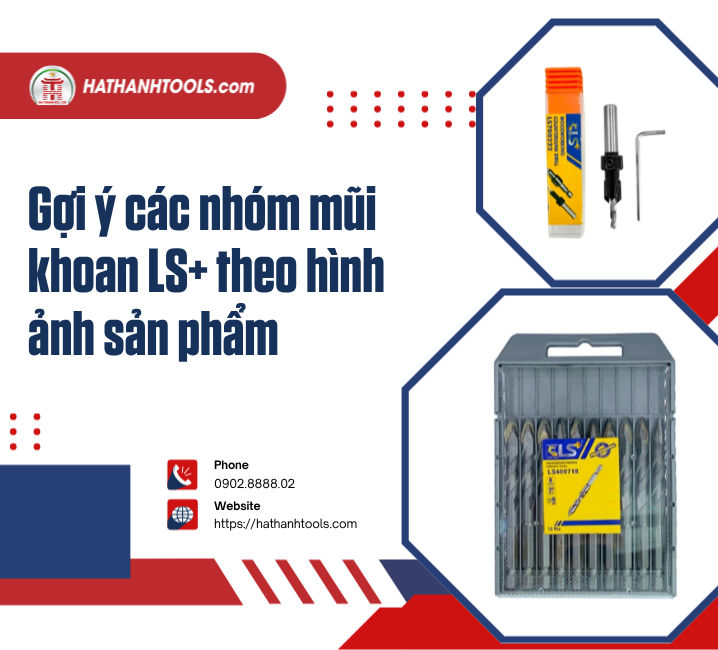
After understanding the drill bit selection guide, how to identify bits, and distinguish between wood, metal, and concrete bits, the next step is choosing the right product for your actual needs. Currently, Hathanhtools.com distributes a wide range of LS+ drill bits serving everything from civil repairs to professional construction in mechanical, interior, and construction industries. Each product group is designed with specific materials, construction, and applications to optimize efficiency for every material.
Metal and Stainless Steel Drilling Group
Metal and stainless steel are high-hardness materials that generate significant heat during processing. Therefore, users should prioritize HSS metal bits or stainless steel bits made from high-quality high-speed steel to ensure stable cutting, limit wear, and increase service life.
For fixed hole drilling in steel, iron boxes, stainless steel, or aluminum, the HSS 6542 LS+ gold stainless steel drill bit is a reliable choice. The product is manufactured from HSS 6542 high-speed steel combined with a gold coating, which increases surface hardness, reduces friction, and handles heat well during continuous drilling. Hathanhtools.com currently provides two package options, blisters of 5 and 10, meeting needs from individual users to production workshops and contractors.
In cases where you need to enlarge multiple hole sizes in sheet metal, stainless steel, or tin without changing bits, the LS+ step drill bit is an efficient solution. The stepped design allows for multiple diameters on one bit, saving time and increasing productivity.
For needs involving fast drilling on thin metal with better chip evacuation, the LS+ spiral step drill bit is a suitable choice. The spiral design reduces resistance, increases stability, and creates a cleaner hole surface.
Additionally, Hathanhtools.com offers the LS+ anti-clogging drill bit, designed to limit chip jamming when drilling metal, helping the process stay continuous, reducing the risk of bit breakage, and increasing product lifespan.
If you are looking for which drill bit is best for processing iron, steel, or stainless steel, the HSS 6542 LS+ lines are suitable for both professional mechanics and DIY users thanks to their stable drilling, high durability, and economic efficiency.
Wood and Multi-Material Drilling Group
For the furniture industry, door installation, cabinet construction, or home repair, choosing the right wood drill bit directly determines the accuracy of the hole and the quality of the finished product.
In the Hathanhtools.com product catalog, the LS+ two-stage hex shank wood drill bit is specially designed for drilling natural wood, MDF, plywood, and many other industrial woods. The centering point helps the bit grip firmly at the starting position, preventing slippage, while the hex shank increases chuck grip, especially suitable for cordless drills and impact drivers.
For users who need to work on many different materials, a multi-purpose drill bit is a more flexible solution. Instead of changing many bit types, users only need one bit to handle surfaces like wood, brick, ceramic tiles, plastic, or common construction materials.
Hathanhtools.com currently distributes many LS+ multi-purpose drill bit lines such as:
-
LS+ 2-edge multi-purpose drill bit suitable for general repairs and high-accuracy multi-material drilling.
-
LS+ 2-edge eccentric multi-purpose drill bit uses a YG6X alloy tip combined with a 40Cr steel body, helping with fast centering, reducing vibration, and increasing cutting ability. This is a popular line for many customers due to its stability on various materials.
-
LS+ 4-edge multi-purpose drill bit features a four-edged cutting tip to increase balance when drilling, limiting splintering and increasing cutting tip life.
-
LS+ 4-edge hex multi-purpose drill bit combines a four-edge design with a hex shank, suitable for construction tasks requiring fast bit changes and stable force transmission.
These product lines are very suitable for furniture installation teams, plumbers, maintenance technicians, and users who frequently work on many different materials.
Concrete and Construction Drilling Group
In the construction sector, requirements for durability and impact resistance for concrete bits are always higher than for metal or wood lines. Therefore, users need to choose the right bit for each task category.
For wall drilling, bricks, and general concrete, the LS+ SDS concrete bit is a suitable choice thanks to the SDS shank which helps transmit hammer force efficiently, increasing drilling speed and reducing slippage during work.
When needing to drill reinforced concrete or high-hardness materials, the LS+ cross-tip reinforced steel SDS bit will show its advantages with its hard alloy cross-cutting tip. This design increases orientation, reduces vibration, and maintains performance even when hitting rebar in concrete.
For projects requiring large-diameter holes for installing electrical systems, air conditioning, plumbing, or ventilation, the LS+ dry core drill bit is a specialized solution. Its specialized design creates large holes with high accuracy, saving time and limiting damage to the material surface.
Selecting the right SDS bit, concrete bit, or reinforced steel bit not only helps improve work efficiency but also extends the life of your power drill, reducing the cost of replacing accessories during use.
Ha Thanh Co., Ltd – HCMC Branch is a unit specializing in the business and distribution of hardware, hand tools, consumables, electric power tools, cordless tools, and many devices serving construction, mechanics, and repair. The company always supports customers in selecting the right product according to actual needs, provides technical advice, wholesale pricing, and nationwide delivery.
Customers can refer to the full catalog of LS+ drill bits along with many other products on the official company website.
Contact Information
Ha Thanh Co., Ltd – HCMC Branch
Hotline: 0902 8888 02
Address: 35 Nguyen An Khuong, Cho Lon Ward, Ho Chi Minh City
Email: cskh@hathanhtools.com
Website: https://hathanhtools.com
Tax ID: 0100108529-006