High-Quality Welding Clamps at Great Prices – Ensuring Safety and Efficiency
In the mechanical engineering and metal fabrication industry, using welding clamps correctly is crucial for creating beautiful, stable, and safe welds. A high-quality, affordably priced welding clamp not only makes the welder's job easier but also contributes to maintaining a stable current throughout the working process, thereby enhancing the quality of fabrication.
With extensive experience in supplying welding tools and equipment, Ha Thanh Trading & Services Co., Ltd. (Ho Chi Minh City Branch) will share detailed guidance on how to use welding clamps accurately, for easy operation, and to minimize common errors. This knowledge is beneficial for both novice welders and those looking to optimize the use of welding pliers, welding electrode holders, or specialized welding clamps currently available.

Contact us now: 0902 8888 02
Operating Principle and Basic Structure of Welding Clamps
Detailed Understanding of Welding Clamps
Before starting, users should understand the structure and working principle of welding clamps. Essentially, a welding clamp is an intermediary component that transmits current from the welding machine to the welding electrode, while securely holding the electrode throughout the arc generation process. A good welding clamp will have a stable conductive metal body, a strong spring, a well-insulated handle, and strong jaws capable of holding the electrode in various positions.
By understanding the structure of welding clamps, welders can better control the working process and achieve:
-
Securely holding the welding electrode during continuous operation
-
Maintaining good conductivity, minimizing localized heating
-
Flexibly changing welding angles in difficult positions
-
Increasing safety during prolonged work
Preparation Steps Before Operating Welding Clamps
Whether you are using welding clamps for domestic or industrial applications, the preparation phase is always essential:
-
Check if the welding cable is securely tightened to the clamp head.
-
Clean the jaws to remove dirt and burnt residue.
-
Ensure the insulated handle is free from cracks, breaks, or peeling.
-
Select the correct type of welding electrode suitable for the material and current intensity.
-
Check the power source, welding machine, and work area for safety.
A thorough preparation process will help the welding clamp maximize its power transmission efficiency and reduce the risk of incidents during work.

Contact us now: 0902 8888 02
Standard Operating Procedures for Welding Clamps
Inserting and Adjusting the Electrode on the Welding Clamp
Insert the welding electrode into the correct jaw slot of the clamp so that the contact point is held firmly and does not become loose during operation. Ensure the electrode is fixed at an appropriate angle relative to the welder's stance and hand movement for a smoother welding process:
-
Clamp the electrode into the correct holding groove to prevent shaking.
-
Choose a suitable inclination angle for a more stable arc.
-
Re-check the tightness of the clamp jaws before igniting the arc.
-
Hold the insulated handle firmly and comfortably for continuous work.
At Ha Thanh Trading & Services Co., Ltd. (Ho Chi Minh City Branch), customers purchasing welding clamps are always provided with specific instructions on how to clamp electrodes, change angles, and check contacts to prevent intermittent contact issues.
Arc Ignition Technique with Welding Clamps
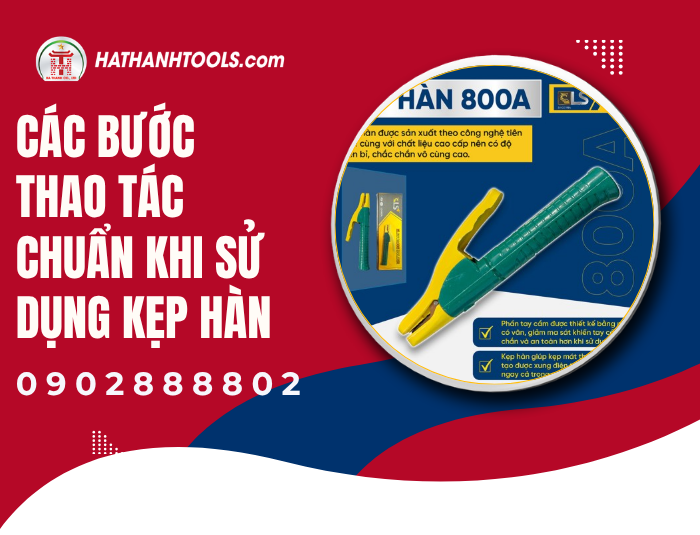
Using moderate hand pressure to move the welding clamp, the welder should lightly touch the electrode tip to the material surface and then lift it to the correct distance to create an arc. The movement should be steady, decisive, and avoid jerky motions that can cause the arc to break abruptly, affecting the weld quality.
Contact us now: 0902 8888 02
Moving the Welding Clamp During Welding
Once the arc is stable, the user should maintain a consistent pace in moving the welding clamp along the intended weld line. Moving too fast can result in a shallow, insufficiently fused weld; conversely, moving too slowly can lead to excessive buildup, edge burning, or thermal distortion of the material.
-
Maintain a stable distance between the electrode and the material.
-
Move the welding clamp at a moderate, steady speed.
-
Observe the arc to adjust grip posture accordingly.
A good welding clamp will help users control the weld line more easily, reduce hand fatigue, and increase work efficiency in various welding positions.
Important Considerations When Using Welding Clamps
Controlling Grip Force and Temperature on the Welding Clamp
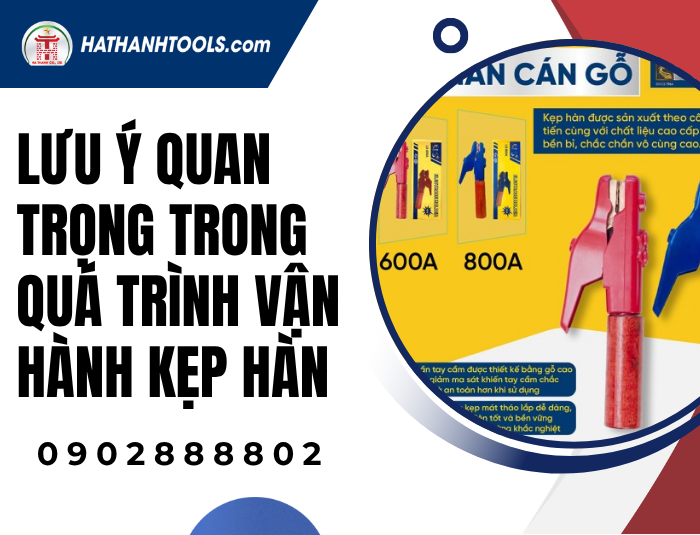
Many novice welders often neglect to check the temperature and grip of the welding clamp during work. When operating a welding clamp, ensure:
-
A firm grip without being too tense, which can cause rapid fatigue.
-
The clamp head does not overheat due to poor contact or loose jaws.
-
Stop and check immediately if there are any signs of unusual blackening.
-
Do not continue using if the insulated handle shows signs of damage.
-
Always maintain a stable, safe, and easily maneuverable working posture.
Only when these factors are well-controlled can the welding clamp perform its intended function and help welders work safely for extended periods.
Contact us now: 0902 8888 02
Absolutely Avoid Misusing Welding Clamps
Welding clamps are specifically designed for holding electrodes and conducting current during arc welding. Using welding clamps to lift heavy objects, pry metal parts, or for purposes other than their intended design can cause jaw deformation, reduce spring tension, burn contacts, and pose a safety hazard to the user.
-
Reduces the lifespan of the conductive contact jaws.
-
Causes loose cable connections or deforms the clamp head.
-
Increases the risk of short circuits and localized heating during operation.
-
Directly affects the quality of the finished weld.
Use welding clamps for their intended function to maintain their durability, electrical conductivity, and safety throughout the working process.
Electrode Angle Adjustment Technique with Welding Clamps
In many working positions such as corner welding, overhead welding, or narrow gap welding, adjusting the welding clamp's angle is essential for accurate access to the working area. Users should adjust the electrode angle to suit the working position for a stable arc and even weld penetration:
-
Choose an appropriate approach angle for each specific weld type.
-
Keep the wrist flexible for easier rotation of the welding clamp.
-
Avoid sudden angle changes that can extinguish the arc.
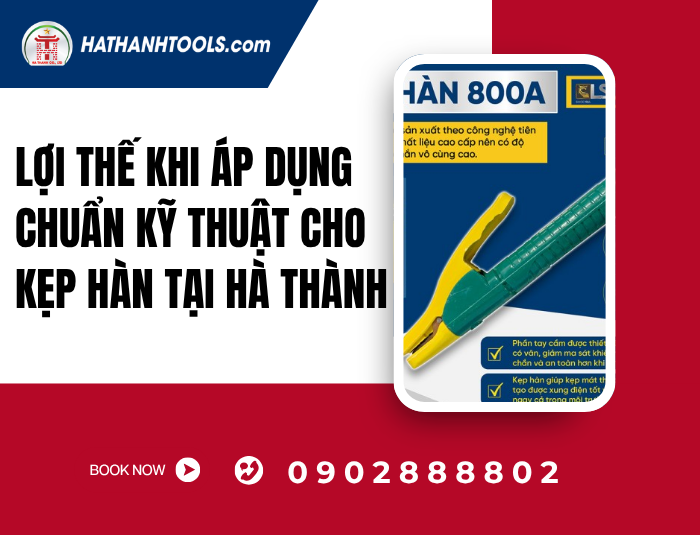
Benefits of Applying Standard Techniques for Welding Clamps at Ha Thanh
Enhancing Professional Welding Skills
Ha Thanh Trading & Services Co., Ltd. (Ho Chi Minh City Branch) always focuses on sharing practical welding clamp usage experience with customers, helping users better understand how to operate, control the arc, and protect equipment during work.
By mastering the skills of using welding clamps, welders will become more confident in various projects, from domestic applications to industrial mechanics, while increasing fabrication speed and ensuring product quality.
You will easily master:
-
Skills to use welding clamps for stable and consistent arc generation.
-
How to adjust the electrode angle for difficult positions.
-
Experience in maintaining welding clamps for durability and long-lasting conductivity.
Contact us now: 0902 8888 02
Saving Material Costs and Fabrication Time
A stably operating welding clamp makes arc ignition easier, reduces current interruption errors, and significantly minimizes instances of electrodes sticking, burning at the tip, or unnecessary consumption. Consequently, users not only save on material costs but also reduce processing time during fabrication.
Ensuring Long-Term Durability of Welding Clamps
When using welding clamps correctly, without excessive jaw pressure, avoiding strong impacts, and regularly cleaning contact surfaces, the equipment will maintain good conductivity and a longer lifespan. This is crucial for professionals who use welding tools daily.
Common Mistakes to Avoid When Using Welding Clamps
Not Cleaning the Welding Clamp Head Before Operation
When the jaw surface is covered with welding slag, metal dust, or accumulated burnt residue, the electrical conductivity of the welding clamp significantly decreases. This can lead to a weak arc, rapid heating of the clamp head, and directly impact the weld quality.
Allowing the Welding Clamp to Hold the Electrode Too Loosely During Work
If the welding electrode is not held securely, the electrode tip is prone to shaking during operation, causing an unstable arc and intermittent welds. This is a common mistake for new users of welding clamps or when the clamp jaws have worn out after extended use.
Forgetting to Check the Cable Connection to the Welding Clamp
A loose or degraded connecting cable will cause an unstable current transmission to the welding clamp, leading to overheating and affecting work efficiency. Before each work session, users should carefully inspect the connection point to ensure the system operates smoothly.
Maintenance of Welding Clamps After Each Work Session
Overall Cleaning of the Welding Clamp
-
Use a dry cloth to wipe away dust and slag from the clamp head.
-
Inspect the jaws to remove any hardened burnt residue.
-
Wipe the handle to maintain grip and good insulation.
Protecting the Jaws and Handle of the Welding Clamp
After working, allow the welding clamp to cool down naturally before storing it. Do not place a hot clamp head directly on a damp surface or a heat-sensitive surface. Regularly inspect the insulated handle to prevent cracks or damage that could reduce safety during use.
Storage in a Dry and Ventilated Area
Although welding clamps have a sturdy construction and good heat resistance, it is still advisable to store the equipment in a dry place, avoiding excessively humid environments or areas with corrosive chemicals. This helps the conductive metal parts last longer, prevents oxidation, and maintains stable performance over time.
Troubleshooting Common Issues with Welding Clamps
Welding Clamp Overheating During Operation
This issue usually stems from poor contact between the electrode and the jaws, a loose cable connection, or a degraded welding clamp after prolonged use. Users should check the entire system before continuing work to avoid dangerous situations.
-
Tighten the cable connection if there are signs of looseness.
-
Thoroughly clean the jaw tips to improve electrical contact.
-
Replace the welding clamp if the jaws are worn or have lost elasticity.
Welding Clamp Not Holding the Electrode Securely
The cause may be a weak spring, worn jaws, or deformed electrode holding parts after extended use. In such cases, the most effective solution is to replace the welding clamp with a genuine one to ensure safety and performance.
Unstable Arc Generated by the Welding Clamp
If the arc is flickering, difficult to ignite, or frequently breaks, check the power source, electrode quality, and the welding clamp's contact capability. In many instances, simply cleaning the clamp head or tightening the cable connection can significantly improve work efficiency.
Dedicated Technical Support for Welding Clamps from the Distributor
If you still have questions regarding the selection and use of welding clamps, the technical team at Ha Thanh Trading & Services Co., Ltd. (Ho Chi Minh City Branch) is always ready to assist you with detailed support. From choosing the right high-quality, affordably priced welding clamp to providing practical operating guidance, customers receive clear and easy-to-understand advice.
Customers purchasing welding clamps from our system not only receive product information support but also benefit from shared practical usage experience, helping to enhance fabrication efficiency and extend tool lifespan. This is a significant advantage when you plan to invest systematically in domestic welding or professional mechanical work.
Mastering the operation of welding clamps not only helps users create beautiful, strong, and stable welds but also optimizes working time, reduces fatigue, and increases safety in each step. This is one of the compact welding tools that directly impacts daily fabrication efficiency.
Visit Ha Thanh Trading & Services Co., Ltd. (Ho Chi Minh City Branch) to explore, experience, and select the most suitable welding clamps for your actual needs. We are always ready to accompany customers from product selection to long-term application.
10 Frequently Asked Questions About Welding Clamp Usage Techniques
1. What types of welding electrodes can be used with welding clamps?
Answer: Most welding clamps can be used with various common welding electrodes. However, you should choose a model that matches the current intensity and electrode size for optimal performance.
2. Why does a welding clamp get hot quickly during use?
Answer: The common reasons are dirty contacts, loose jaws, or a poorly tightened cable connection to the welding clamp, causing unstable current transmission.
3. How often should welding clamps be cleaned?
Answer: If used frequently, you should clean the welding clamp after each work session to remove welding slag, metal dust, and ensure good electrical contact.
4. Can welding clamps be replaced at home?
Answer: Yes, replacing a welding clamp is quite simple if you know how to disconnect and reconnect the cable and choose a product compatible with your welding machine.
5. What are the advantages of high-quality welding clamps over regular ones?
Answer: High-quality welding clamps provide stable electrical conductivity, a firmer grip on the electrode, minimize localized heating, and offer a safer feel during operation.
6. Can welding clamps be used for purposes other than welding?
Answer: Absolutely not. Welding clamps are specifically designed for holding welding electrodes and conducting current. Misusing them can easily cause damage and safety hazards.
7. Does Ha Thanh offer advice on choosing welding clamps?
Answer: Yes, Ha Thanh Trading & Services Co., Ltd. (Ho Chi Minh City Branch) always assists customers in choosing suitable welding clamps based on their actual needs and workload.
8. How to fix a welding clamp that is loose on the electrode?
Answer: You should check the jaws, spring, and wear on the electrode holder. If the welding clamp is significantly worn, the safest solution is to replace it with a genuine product.
9. Are welding clamps suitable for continuous welding?
Answer: Yes, but you should choose a welding clamp with good heat resistance, a strong grip, and a securely insulated handle to meet high work intensity requirements.
10. How to make welding clamps last longer and more durable?
Answer: Clean them regularly, avoid strong impacts, do not misuse them, and always check the cable connection to ensure the welding clamp maintains stable performance over time.
Contact Information
-
Ha Thanh Trading & Services Co., Ltd. - Ho Chi Minh City Branch
-
Hotline: 0902 8888 02
-
Address: 35 Nguyen An Khuong, Ward Cho Lon, Ho Chi Minh City
-
Email: cskh@hathanhls.com
-
Tax Code: 0100108529-006
-
Website: https://hathanhtools.com