How to Use Plastic Pipe Cutters Correctly – For Clean, Precise, and Safe Cuts
In plumbing and drainage system installations, residential or industrial electrical and water works, cutting plastic pipes correctly plays a crucial role. A clean, perpendicular, and undeformed cut surface ensures tighter connections, reduces leaks, and extends the lifespan of the system.
To achieve this, in addition to proper operating technique, users need to choose the right pipe cutter for the pipe's size and material. This article will provide detailed instructions on how to correctly use plastic pipe cutters, as well as how to select the appropriate product for various construction needs.
Popular Types of Plastic Pipe Cutters Today
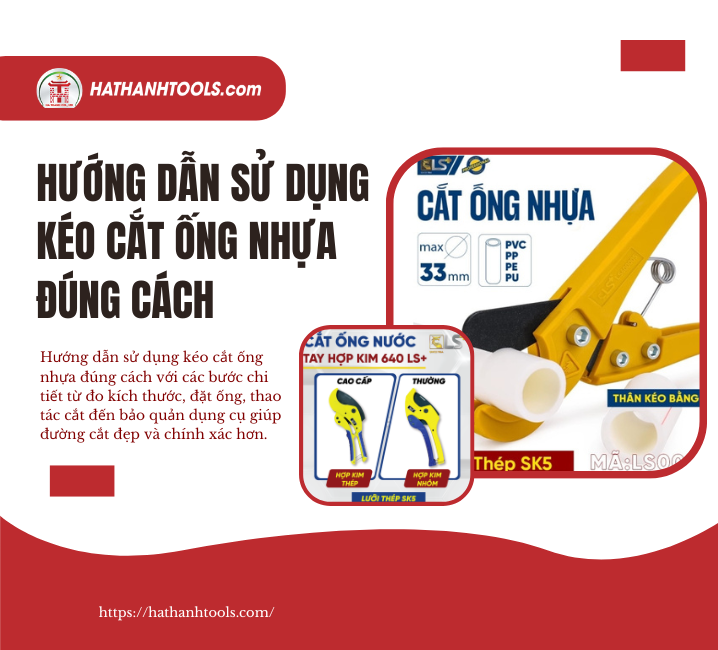
Currently, Ha Thanh Tools offers various LS+ plastic pipe cutter models to meet diverse usage needs:
005 LS+ Water Pipe Cutter
Suitable for domestic repair tasks, cutting small and medium-sized plastic pipes. Compact design, easy to carry to job sites.
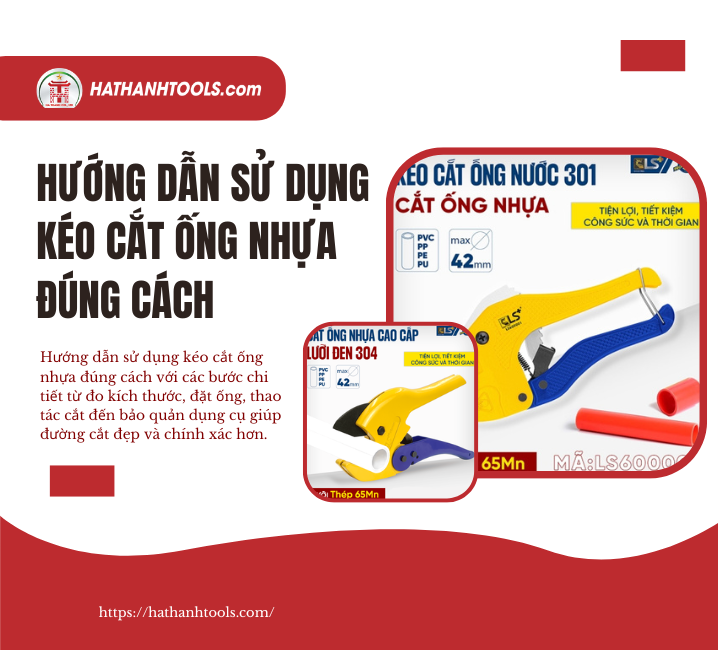
301 LS+ Water Pipe Cutter
Robust design, sharp blade, suitable for plumbers who frequently install water supply and drainage systems.
302 LS+ Water Pipe Cutter
Equipped with a power-assisted spring mechanism to reduce cutting effort, suitable for tasks requiring continuous use.
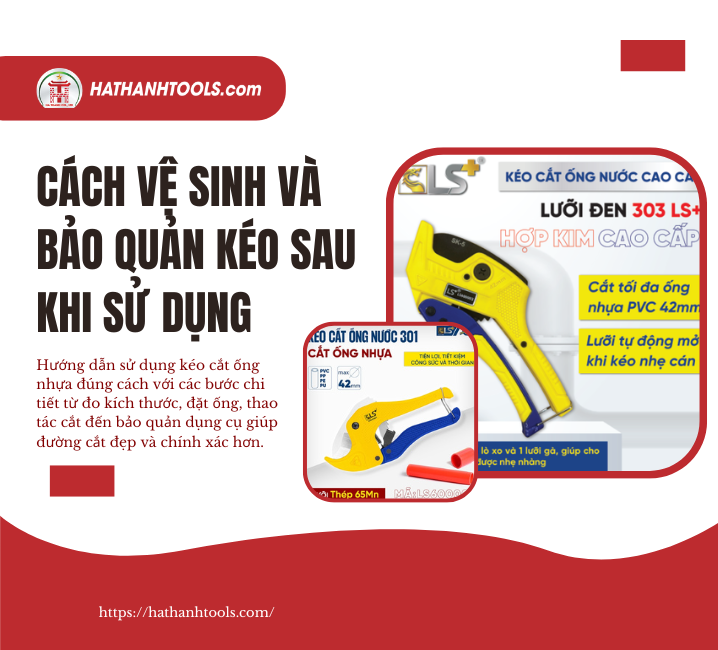
303 LS+ Premium Black Blade Water Pipe Cutter
Premium SK5 steel blade, capable of precisely cutting various types of PVC, PE, PP, and PU pipes with superior durability.
304 LS+ Premium Water Pipe Cutter
SK5 steel blade combined with a professional design, supports cutting pipes with larger diameters and requiring high precision.
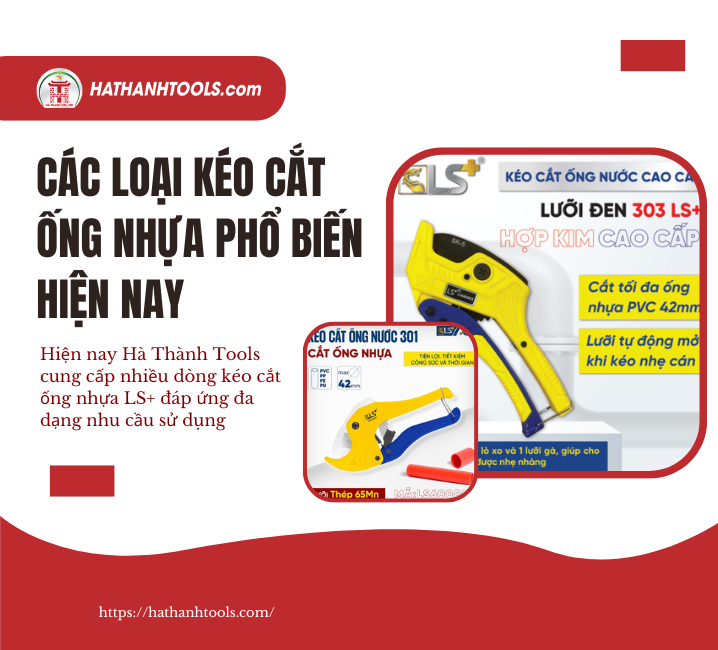
640 LS+ Water Pipe Cutter
High-strength alloy steel frame, capable of cutting pipes up to 64mm, suitable for high-intensity work environments.
640 LS+ Premium Water Pipe Cutter
Premium aluminum alloy frame, lighter and more rust-resistant, suitable for professional installers who work continuously.
How to Choose the Right Plastic Pipe Cutters
Choose According to Pipe Size
Each type of cutter is designed to cut a specific range of pipe diameters.
- Small pipes under 32mm: 005 LS+, 301 LS+, 302 LS+.
- Medium pipes from 32mm to 42mm: 303 LS+, 304 LS+.
- Large pipes up to 64mm: 640 LS+ or 640 LS+ Premium.
Choosing the correct size ensures cleaner cuts and extends the cutter's lifespan.
Choose According to Pipe Material
A suitable cutter must be used for each type of material.
- PVC pipes: Most LS+ cutter models are well-suited.
- PP pipes: Use 303 LS+, 304 LS+, or 640 LS+.
- PE pipes: Prioritize 304 LS+ and 640 LS+ models.
- PU pipes: Choose models with SK5 blades such as 303 LS+, 304 LS+, or 640 LS+ Premium.
Choosing the right type of cutter reduces cutting force and minimizes deformation of the pipe end.

How to Use Plastic Pipe Cutters Correctly
Preparation Before Cutting Plastic Pipes
- Check the sharpness of the blade before use.
- Measure and accurately mark the cutting position.
- Clean the pipe surface to prevent dust from affecting the cut.
- Ensure the cutter is suitable for the pipe's diameter and material.
Standard Technical Steps for Cutting Plastic Pipes
- Place the pipe correctly in the center of the cutting blade.
- Align the blade perpendicular to the pipe body.
- Squeeze the handle slowly so the blade cuts evenly into the material.
- Continue with a decisive motion until the cut is completely severed.
- Inspect the cut surface upon completion.
Using the Right Cutter for Each Type of Pipe
- For small PVC pipes, use models 005 LS+, 301 LS+, or 302 LS+.
- For stiffer PP, PE, and PU pipes, prioritize 303 LS+ or 304 LS+.
- For larger pipes ranging from 50mm to 64mm, use the 640 LS+ or 640 LS+ Premium models.
Common Mistakes When Cutting Pipes
- Placing the blade off-center, causing the cut surface to be slanted.
- Using a cutter too small for large diameter pipes.
- Using a dull blade without replacing or maintaining it.
- Applying excessive force at the beginning, causing the pipe to deform.
- Not securing the pipe during operation.
How to Achieve Clean and Precise Cuts
- Always measure and mark before cutting.
- Keep the cutter perpendicular to the pipe body.
- Use a sharp cutting blade.
- Operate steadily, without sudden jerks.
- Inspect and clean the pipe end after cutting.
Safety Notes During Operation
- Wear protective gloves when working.
- Do not place hands near the cutting blade.
- Lock the safety latch after use.
- Do not use the cutter for purposes other than its design.
- Store the cutter out of reach of children.
How to Clean and Maintain Cutters After Use
- After each use, clean any dust or plastic residue from the blade with a soft cloth.
- Regularly lubricate moving joints to ensure smoother operation of the cutter.
- Do not store the cutter in a damp environment or expose it directly to corrosive chemicals.
- Always engage the safety latch when storing.
- Periodically check the sharpness of the blade and replace it when necessary.
Using plastic pipe cutters correctly not only helps achieve clean, precise cuts but also enhances construction efficiency, saves time, and extends the tool's lifespan. Furthermore, selecting the right cutter model for the pipe's size and material will help professionals achieve the highest work efficiency.
Contact Information
HA THANH ONE MEMBER CO., LTD – HO CHI MINH CITY BRANCH
- Address: 35 Nguyen An Khuong, Cho Lon Ward, Ho Chi Minh City
- Hotline: 0902.8888.02
- Email: cskh@hathanhtools.com
- Website: https://hathanhtools.com