Structure and Operating Principle of Professional Broken Screw Extractors – A Lifesaver for Mechanics
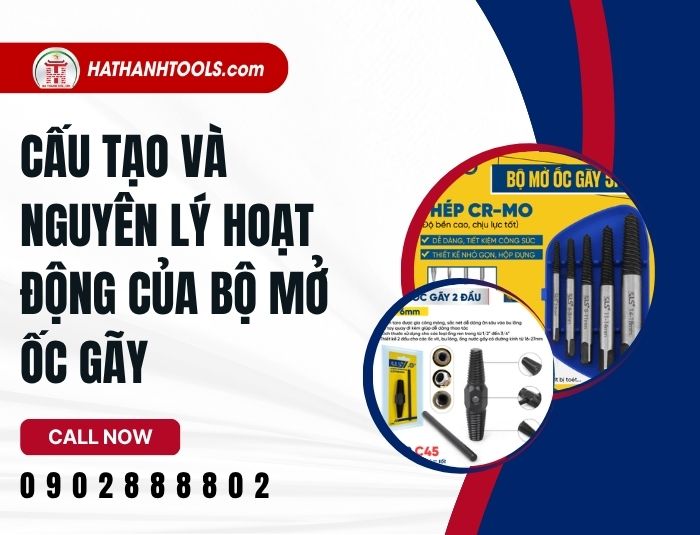
During the repair of machinery and engines, the situation where a bolt becomes rusted, seized, and then unexpectedly breaks off within the engine block is unavoidable. To thoroughly address this broken thread remnant without damaging the original threaded hole, mechanics must thoroughly understand the structure and operating principle of a professional broken screw extractor. This is not an ordinary cutting tool, but an ingenious mechanical invention based on friction and reverse torque.
Many users employ screw extractors without understanding how they firmly grip a smooth metal core, leading to incorrect force application and even breaking the tool itself inside. Analyzing each detail, from the tapered body to the angle of the spiral flutes, will help you master this device.
Accompanying thousands of automotive and machinery technicians, Ha Thanh Co., Ltd. Ho Chi Minh City Branch will provide you with the most in-depth technical analysis. Let's uncover the secrets behind these small extractors that possess the power to break free even the most stubborn rusted connections.
Contact us now: 0902 8888 02
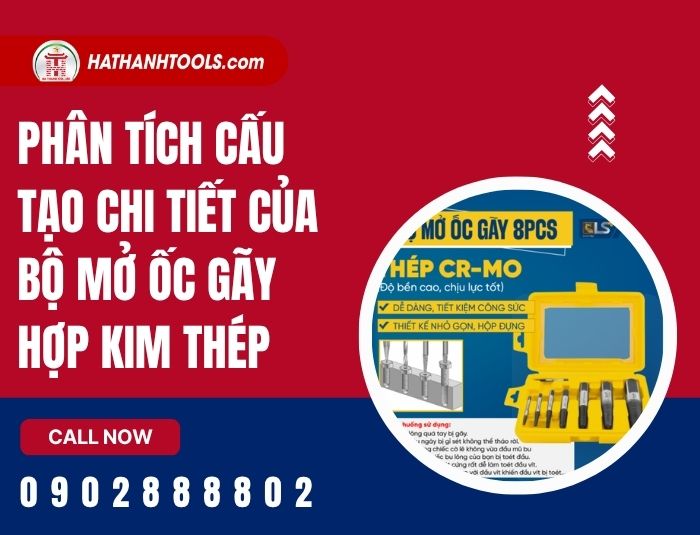
Detailed Structural Analysis of Alloy Steel Broken Screw Extractors
Tapered Body Design of High-End Broken Screw Extractors
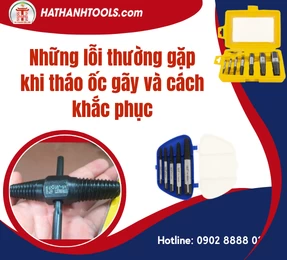
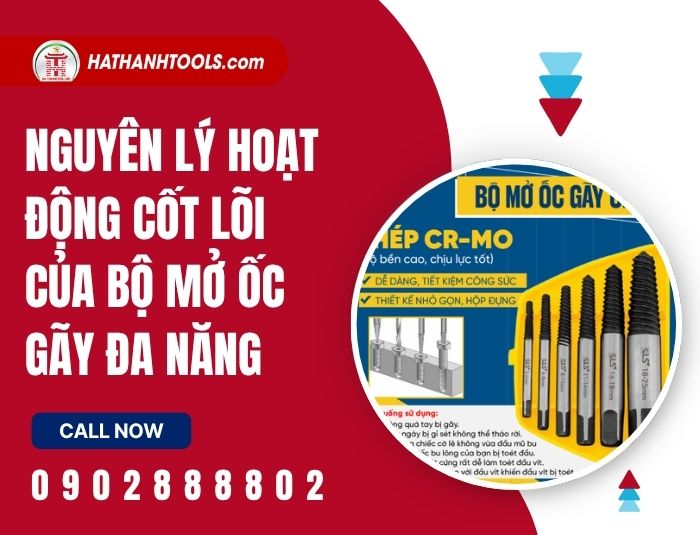
Visually, each extractor in the set has a truncated cone shape, with its diameter tapering from the base towards the tip. This tapered design serves a clear mechanical purpose. It allows the extractor to easily fit into pre-drilled holes of varying sizes. As you hammer it in deeper or apply more force, the extractor's cross-section increases, creating a tight wedging action into the walls of the broken screw.
Distinctive Reverse Spiral Flutes on Genuine Broken Screw Extractors
This is the "soul" of the tool. Unlike standard drill bits or taps (which typically have right-hand threads - clockwise), screw extractors have left-hand spiral flutes (counter-clockwise). The edges of these flutes are sharpened to an extreme. When using a genuine broken screw extractor, these sharp threads act like grippers, biting into the metal of the broken screw as it rotates.
Contact us now: 0902 8888 02
Square Drive Base Design
The base of the extractor is not cylindrical but is formed into a square. This design allows mechanics to securely grip it with a T-handle tap wrench, a wrench, or locking pliers. It prevents slippage when you need to apply hundreds of Newton-meters of torque to remove the screw.
Core Operating Principle of Multi-Purpose Broken Screw Extractors
Self-Tightening Mechanism When Rotating Counter-Clockwise for Load-Bearing Broken Screw Extractors
The operating principle of screw extractors is a perfect combination of wedging force and friction. Most machine bolts and screws are tightened into the engine block in a clockwise direction (right-hand thread). Therefore, to remove them, we must turn counter-clockwise (left-hand turn).
-
When you insert the extractor into the pilot hole and begin to turn it counter-clockwise, the reverse spiral flutes (also turning counter-clockwise) will gradually bite into the metal of the screw.
-
The harder you turn counter-clockwise, the deeper the extractor will automatically wedge and firmly grip the screw core.
-
At this point, the extractor and the broken screw remnant become a single unified object.
Transmitting Torque to Extract Screws with HSS Steel Broken Screw Extractors
Once the HSS steel broken screw extractor is firmly lodged in the broken screw's body, the rotational force from your hand transmitted through the wrench is directly converted into torque to loosen the screw. This rotational force breaks down the rust and corrosion binding the screw threads, forcing it to gradually back out of the engine block's threaded hole without damaging the surrounding aluminum.
Contact us now: 0902 8888 02
Importance of Material in Manufacturing Super-Hard Broken Screw Extractors
Withstanding Immense Rotational Pressure
Due to its principle of applying internal gripping force, an extractor must withstand extreme torsional stress. If an extractor is made from low-quality steel, it will brittlely break as soon as you apply significant force. Ha Thanh Co., Ltd. Ho Chi Minh City Branch always advises mechanics to understand that if an extractor breaks and gets stuck inside, removing it is hundreds of times more difficult than removing the original broken screw, as the extractor is much harder than a drill bit.
HSS Steel and S2 Alloy – The Gold Standard
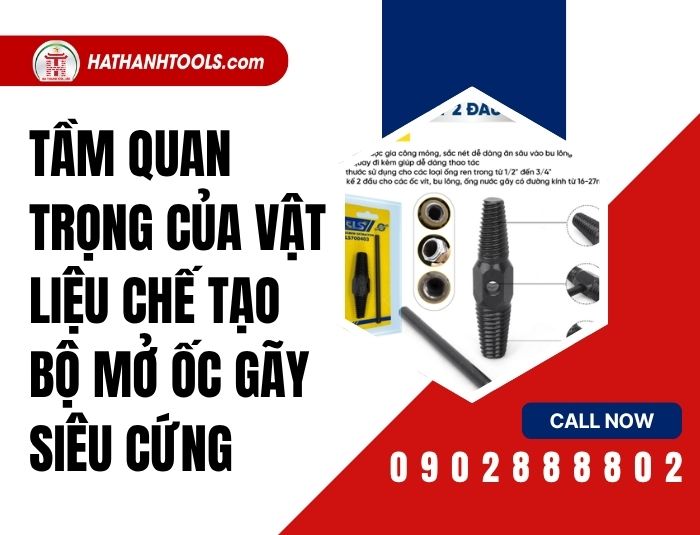
To ensure uninterrupted operation, a super-hard broken screw extractor must be forged from HSS (High-Speed Steel) or S2 alloy steel. After vacuum heat treatment, these materials achieve a very high Rockwell hardness (HRC) while retaining the necessary toughness for the spiral flutes not to deform when biting into the hard steel of the engine block.
Contact us now: 0902 8888 02
Equip Yourself with Value-for-Money Broken Screw Extractors at Ha Thanh Company
Understanding the structure and operating principle is key to successful manipulation. However, a technically sound tool is the decisive "weapon." Ha Thanh Co., Ltd. Ho Chi Minh City Branch is proud to be a leading provider of professional mechanical fastening and unfastening solutions.
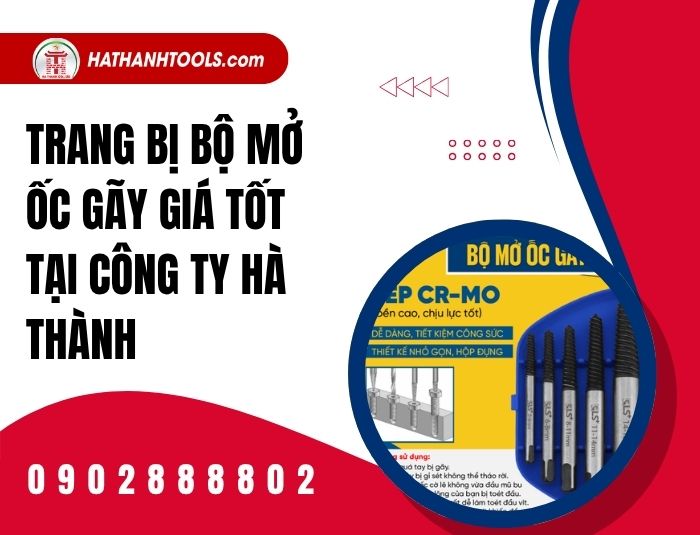
We offer customers value-for-money broken screw extractors that are CNC machined to micro-precision. The sharp spiral flutes on Ha Thanh's products are guaranteed to "bite" firmly into the screw core from the first rotation, transmitting 100% of your hand's force into torque to break rust.
Don't let a small mistake in your tools damage a large machine. Contact Ha Thanh Co., Ltd. Ho Chi Minh City Branch immediately to acquire genuine, durable, and highly effective broken screw extractors, preserving your workshop's reputation!
Contact us now: 0902 8888 02
10 Frequently Asked Questions About the Structure and Principle of Broken Screw Extractors
1. What is the summarized operating principle of a broken screw extractor?
Answer: It converts counter-clockwise rotational force into gripping (wedging) force using reverse spiral flutes, combined with a tapered body to firmly grip the screw core, and then uses torque to rotate the broken screw outwards.
2. Why do the flutes on an extractor spiral counter-clockwise?
Answer: Because screws are typically tightened clockwise and removed counter-clockwise. When you turn the extractor counter-clockwise, it not only wedges into the screw but also creates a backward force to push the broken screw out of the engine block.
3. What is the function of the tapered body design?
Answer: It allows the extractor to easily start into pilot holes. When forced to turn, the widening body wedges tightly into the wall of the pilot hole, creating immense friction to prevent slippage.
4. Why does the base of the extractor have a square shape?
Answer: The square shape allows a tap wrench, wrench, or locking pliers to grip it most securely, preventing rotation and slippage when needing to apply hundreds of Newton-meters of torque.
5. Why can't I use a regular drill bit to extract a screw?
Answer: Because regular drill bits have right-hand flutes designed for forward drilling to cut metal. They lack the ability to wedge and grip for backward extraction like specialized extractors.
6. Can I use this principle to extract inch-system screws?
Answer: Absolutely. The reverse thread friction principle of an extractor doesn't distinguish between metric and inch screws. As long as you choose the correct size extractor that fits the pilot hole, you can extract it.
7. What if the broken screw has a reverse thread (tightened counter-clockwise)?
Answer: If it's a reverse thread screw (very rare, often found on fans or cutting shafts), you cannot use a standard reverse-threaded extractor. Turning counter-clockwise will only tighten the screw further.
8. What steel material is strong enough to withstand this operating principle?
Answer: It must be HSS (High-Speed Steel) or S2 alloy steel. Cheap carbon steels cannot withstand the torsional stress and will fracture immediately.
9. Is pilot drilling a mandatory part of the principle?
Answer: 100% mandatory. Without a void (pilot hole) in the center of the screw, the tapered extractor will not have the space to engage and expand its wedging force for grip.
10. Where should I buy imported broken screw extractors that adhere to the correct mechanical principles?
Answer: Visit the showroom of Ha Thanh Co., Ltd. Ho Chi Minh City Branch to get super-hard steel broken screw extractors with sharp CNC cuts, ensuring success for any difficult repair.
Contact Information
-
Ha Thanh Co., Ltd. Ho Chi Minh City Branch
-
Hotline: 0902 8888 02
-
Address: 35 Nguyen An Khuong, Cho Lon Ward, Ho Chi Minh City
-
Email: cskh@hathanhls.com
-
Tax Code: 0100108529-006
-
Website: https://hathanhtools.com