Which Hand Saw is Best? Secrets to Choosing the Precise Cutting Tool
In every carpentry workshop, mechanic's garage, or even in the home garden, a high-quality hand saw is an indispensable cutting tool. Despite the increasing popularity of electric-powered machinery, hand saws maintain their status thanks to their portability, flexibility, and ability to handle intricate details that machines cannot reach. However, faced with hundreds of models with various saw teeth, shapes, and materials, the question of which hand saw is best often perplexes novice craftsmen or non-professional users.
The difference between a clean, smooth cut and a rough, splintered one depends entirely on choosing the right blade. Wood saws, metal saws, or pruning saws all require different tooth pitches (TPI) and grinding angles. Selecting the wrong saw not only damages the material but also doubles your effort.
With extensive experience in distributing professional hand tools, Ha Thanh Tools Company Limited will help you decode the technical specifications. The following article will provide a detailed analysis, enabling you to easily choose a sharp, durable saw that best suits your needs.

Contact us now: 0902 8888 02
Overview of Criteria for Determining the Best Hand Saw
Hand Saw Blade Steel Material
The soul of any saw lies in its blade. To evaluate which hand saw is best, the material of the steel is a decisive factor. Most high-quality multi-purpose hand saws today are made from High Carbon Steel or Japanese SK5 steel.
-
SK5 steel offers extreme hardness, ensuring the saw teeth remain sharp for years without dulling.
-
Good elasticity allows the saw blade to bend when working at narrow angles without breaking or deforming.
-
Coated with Teflon non-stick or chrome plating helps the saw blade glide smoothly, preventing resin stickiness and rust.
Hand Saw Tooth Pitch (TPI) Design
The TPI (Teeth Per Inch) index determines the speed and smoothness of the cut.
-
Low TPI (4-7 teeth/inch): Coarse and large teeth, saws very quickly but results in a rough, splintery cut surface. Suitable for cutting fresh branches and rough lumber.
-
High TPI (10-14 teeth/inch or more): Fine and small teeth, saws slower but produces an extremely smooth cut surface. Used for cutting PVC pipes, metal, or precise joinery in wood.

Contact us now: 0902 8888 02
Classification of Popular Hand Saw Types on the Market
Hand Wood Saw (Plastic-handled Wood Saw)
This is the most classic type of specialized hand saw, featuring a wide, sturdy blade and a D-shaped handle. European wood saws typically cut on the push stroke, while Japanese-style wood saws (Ryoba, Kataba) cut on the pull stroke, keeping the blade straight and preventing warping. It is the number one choice for ripping boards and general carpentry.
Hacksaw (Hand Metal Saw)
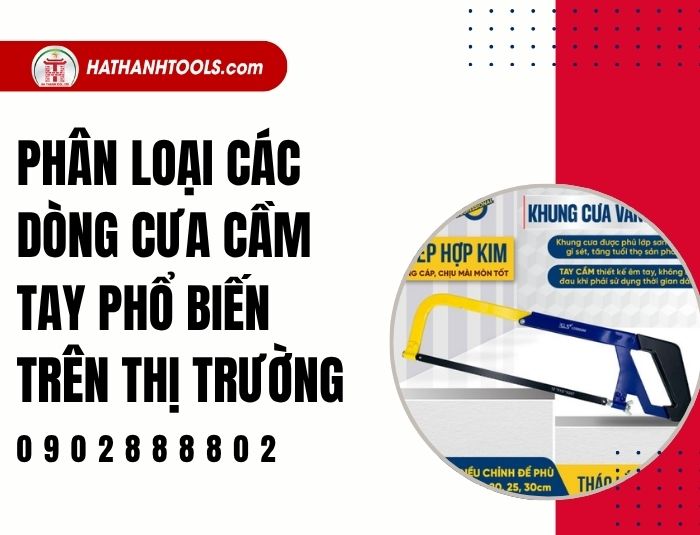
Unlike wood saws, hacksaws have a U-shaped steel frame that tensions a very thin, narrow blade with an extremely fine tooth pitch (usually 18-24 TPI). This hacksaw blade is hardened to cut through metal bars, PVC pipes, or stuck screws. When the blade wears out, you can easily replace it by loosening the knob, making it very economical.
Folding Saw (Hand Pruning Saw)
For those who garden or go camping, a folding saw is a must-have. The blade can be folded and stored inside the handle, similar to a pocket knife. The saw blade typically features sharp, triple-ground teeth with a coarse pitch for excellent sawdust and sap clearance, allowing it to cut through fresh branches as thick as a man's arm in just tens of seconds.
Contact us now: 0902 8888 02
Common Mistakes That Cause Hand Saws to Dull and Damage Quickly
Using Hand Saws for the Wrong Purpose
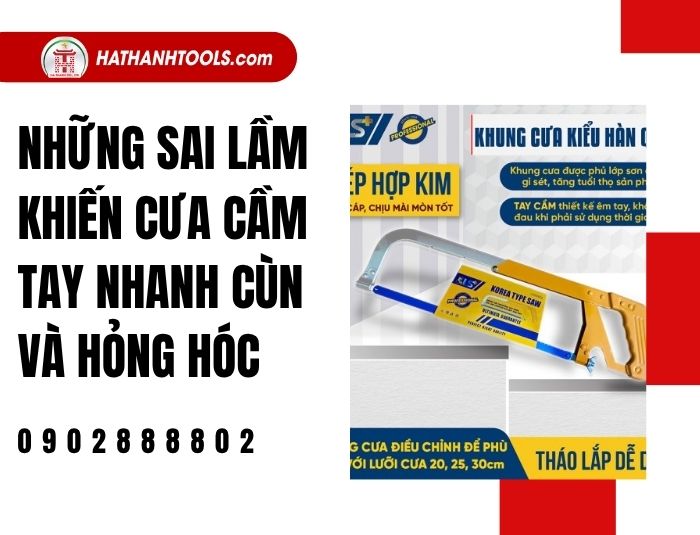
The most common mistake is using a wood saw to cut iron pipes or cables. Wood saw teeth are coarse and designed for cutting cellulose fibers; encountering hard metal will immediately chip or break them. Conversely, using a hacksaw to cut fresh branches will cause wet sawdust to clog the thin teeth, making sawing tiresome without effectively cutting. Using the correct Japanese hand saw for the appropriate material is the key to durability.
Applying Excessive Pressure While Sawing
Many people believe that pressing the saw blade down harder will result in faster cutting. The truth is that the pressing force causes the saw blade to bind and stick in the kerf, leading to permanent warping or bending. Let the sharpness of the saw teeth do the work; you only need to push and pull rhythmically, and the saw blade will penetrate on its own.
Contact us now: 0902 8888 02
Benefits of Buying Genuine Hand Saws at Ha Thanh Company
Owning Superior Steel Quality
Ha Thanh Tools Company Limited understands that a craftsman's efficiency depends on sharpness. We are proud to distribute genuine hand saws forged from SK5 steel alloy, undergoing high-frequency heat treatment at each tooth tip. This ensures sawing up to 3 times faster than ordinary saws and provides exceptionally long-lasting durability.
Accurate Consultation Based on Needs
Visit Ha Thanh's showroom, and you'll no longer struggle with the question of which hand saw is best. Our team of experts will listen to your needs—whether it's for joinery, cutting PVC pipes for electrical and plumbing work, or gardening—to select the saw with the perfect TPI and handle shape, maximizing labor savings.

Contact us now: 0902 8888 02
10 Frequently Asked Questions About Which Hand Saw is Best
1. How do Japanese hand saws differ from Western saws?
Answer: Japanese saws (thin blades) are designed with teeth to cut on the PULL stroke, keeping the blade straight and ensuring a super-smooth cut. Western saws (thick blades) cut on the PUSH stroke, suitable for aggressive wood ripping.
2. I'm going camping, which hand saw is best to buy?
Answer: You should buy a folding hand saw. It's very safe to pack in a backpack, and its coarse-toothed SK5 steel blade quickly cuts firewood and doesn't stick to sap.
3. Can a hacksaw cut wood?
Answer: It can, but very slowly. Hacksaw teeth are too small and dense. When cutting wood, the sawdust will fill the tooth gaps, causing the saw to bind and not cut effectively.
4. What does the TPI on a hand saw blade mean?
Answer: TPI is the number of teeth per inch (2.54cm). Low TPI (coarse teeth) are for fast, rough wood cutting. High TPI (fine teeth) are for precise cutting of wood, plastic, and metal for a smooth finish.
5. Why does the saw blade often get stuck midway?
Answer: This is because the workpiece is clamped, constricting the kerf, or you are sawing at an incorrect angle, causing the blade to tilt. Use a wooden wedge to widen the kerf, and the saw will glide smoothly.
6. Can dull saw teeth be sharpened with a file?
Answer: For traditional carbon steel hand saws, yes, they can be sharpened with a diamond file. However, for modern saws with high-frequency heat-treated teeth (black at the tip), sharpening is very difficult; it's usually better to buy a new blade.
7. How can I maintain my hand saw to prevent rust?
Answer: After sawing, use a brush to clean off sawdust, and wipe dry any moisture. Then, use a cloth dampened with machine oil or spray RP7 to apply a thin protective layer to both sides of the blade and hang it in a dry place.
8. What kind of saw should I use for cutting PVC pipes for electrical and plumbing work?
Answer: It's best to use a U-shaped hacksaw or wood saws with fine teeth (14 TPI or higher) for a smooth cut on PVC pipes, ensuring no obstructions for glue adhesion.
9. Does Ha Thanh Company sell pole saws?
Answer: Yes, Ha Thanh Tools Company Limited distributes pole saws with extendable aluminum poles (3m-5m), allowing gardeners to prune branches safely without climbing.
10. Where should I buy good quality, sharp hand saws?
Answer: Please visit Ha Thanh Tools Company Limited to purchase SK5 Japanese steel hand saws, featuring convenient folding designs, guaranteed to cut through all types of wood smoothly.
Contact Information
-
Ha Thanh Tools Company Limited
-
Hotline: 0902 8888 02
-
Address: 35 Nguyen An Khuong, Ward Cho Lon, Ho Chi Minh City
-
Email: cskh@hathanhls.com
-
Tax Code: 0100108529-006
-
Website: https://hathanhtools.com