Which Type of Hand Saw is Best? A Guide to Choosing the Right Saw for Every Need
Within the realm of mechanical, construction, and gardening tools, the hand saw is consistently one of the most essential and widely used tools. Whether you are a professional tradesperson or a homeowner, selecting the right type of hand saw directly impacts work efficiency, safety, and the quality of your cuts.
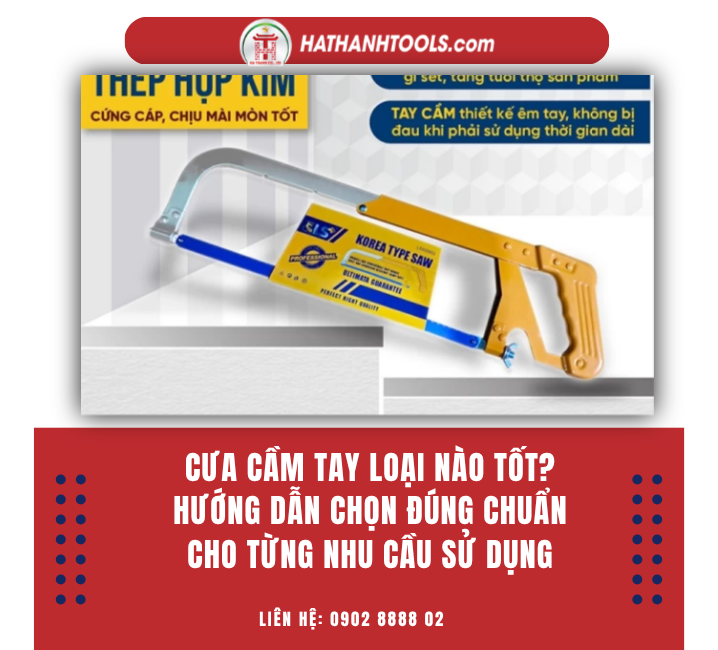
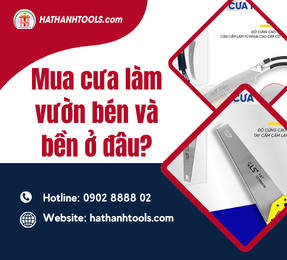
The market today offers a wide variety of saws, including wood saws, pruning saws, drywall saws, multi-purpose saws with interchangeable blades, and saws with high/low TPI. This can often leave users feeling overwhelmed when making a choice. So, which hand saw is best, and what are the crucial criteria for selecting the right product?
What Criteria Should a Good Hand Saw Meet?
A quality hand saw is not just about the sharpness of its blade but also depends on the overall design, the materials used in its construction, and its actual performance.
Firstly, the saw blade must be made from high-hardness steel, such as carbon steel or heat-treated alloy steel. This ensures the blade retains its sharpness for longer and resists bending or warping under significant force.
Next is the design of the saw teeth. A good saw must have evenly spaced, sharp teeth that are precisely ground to ensure smooth cuts without tearing the material. Depending on the intended use, the teeth will be designed differently in terms of size, angle, and spacing.
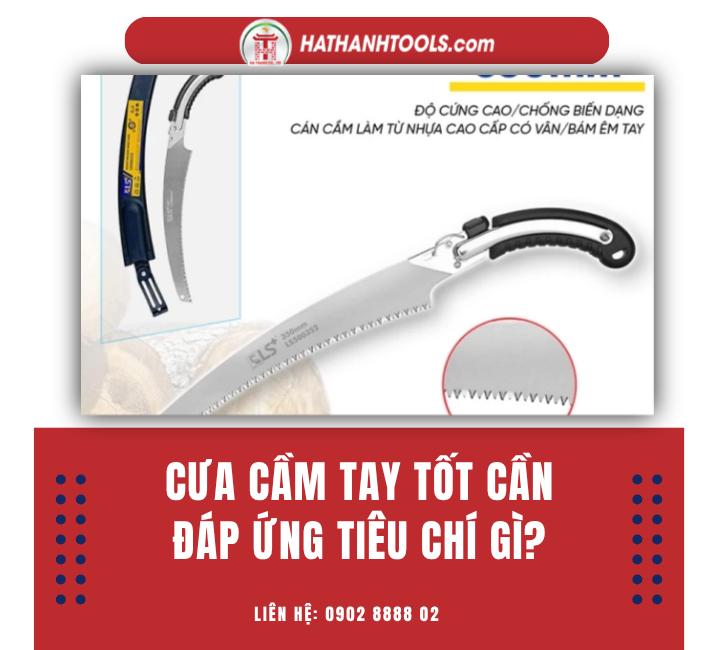
The handle is another important factor that cannot be overlooked. A good hand saw should have an anti-slip, ergonomic handle designed to reduce fatigue during prolonged use. Higher-end models often use ABS plastic combined with soft rubber or moisture-resistant treated wooden handles.
Furthermore, the balance between the blade and the handle directly affects cutting precision. A good product always feels sturdy, vibrates minimally, and offers good control during operation.
How Does Teeth Per Inch (TPI) Affect Cutting Performance?
The TPI (Teeth Per Inch) specification is the most critical technical factor when selecting a hand saw.
A lower TPI means larger and more widely spaced teeth, which allows for faster cutting but results in a rougher surface finish. This type is typically used for softwoods, branches, or materials that require quick cuts without needing a high degree of finish.
.png)
Conversely, a higher TPI has more, smaller teeth over the same length, resulting in a smoother cut, less material tear-out, and better control. This type is suitable for hardwoods, drywall, PVC, or materials that require high precision.
In practical use, choosing the wrong TPI can lead to many problems, such as the blade getting stuck, teeth breaking, or damaging the material's surface. Therefore, understanding TPI is essential when purchasing a hand saw.
Popular Types of Hand Saws Available Today
The current market offers many types of hand saws commonly used in construction, mechanics, and gardening.
The first group includes traditional wood saws, which typically have long blades with large teeth, suitable for quick and forceful wood cutting. This is the most common type, easy to use, and reasonably priced.
The second group is pruning saws, designed with curved blades and deep, sharp teeth for easily cutting fresh or dry branches. This is an indispensable tool in gardening and landscaping.
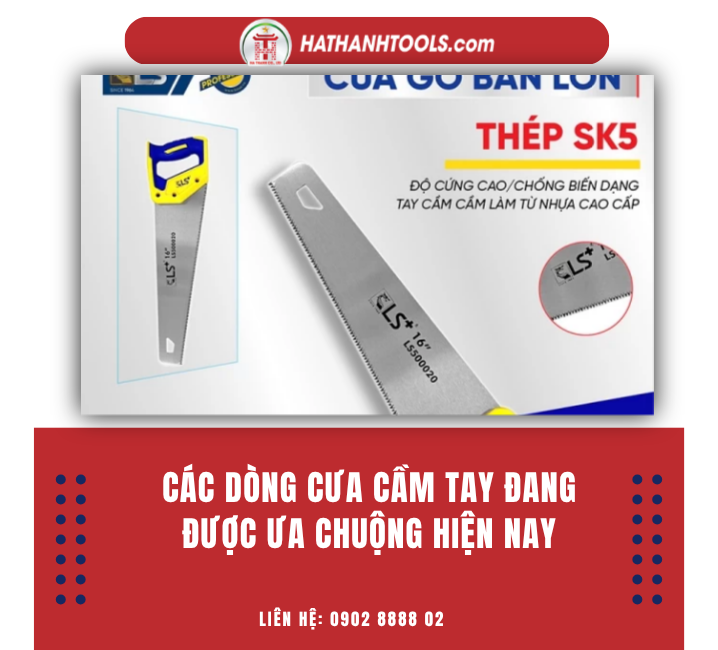
The third group comprises drywall saws and fine-cutting saws, which typically have a high TPI to ensure smooth cuts, minimize dust, and avoid damaging the material's surface.
The final group is multi-purpose saws with interchangeable blades, allowing users to switch blades according to the material being cut. This is a growing trend due to its high flexibility and cost-effectiveness.
Hand Saw vs. Powered Saw with Wood Cutting Blade: Which to Choose?
The choice between a hand saw and a powered saw depends on the nature of the work.
Hand saws are suitable for small tasks, jobs requiring high flexibility, work in confined spaces, or infrequent use. Their biggest advantages are being power-free, portability, and low cost.
On the other hand, powered saws offer higher speed and are suitable for mass production or large-scale construction projects. However, they are limited in mobility and require a stable power source.
In practice, many professional tradespeople often combine both: using powered saws for large jobs and hand saws for small details or touch-ups.
Tips for Choosing a Hand Saw Based on Your Task
To choose the right hand saw, consider three main factors: the material, the frequency of use, and the working environment.
If you work in carpentry, opt for a wood saw with a long blade, large teeth, and hard steel to ensure fast cutting speed. For interior finishing or drywall work, prioritize saws with a high TPI for a smooth finish.
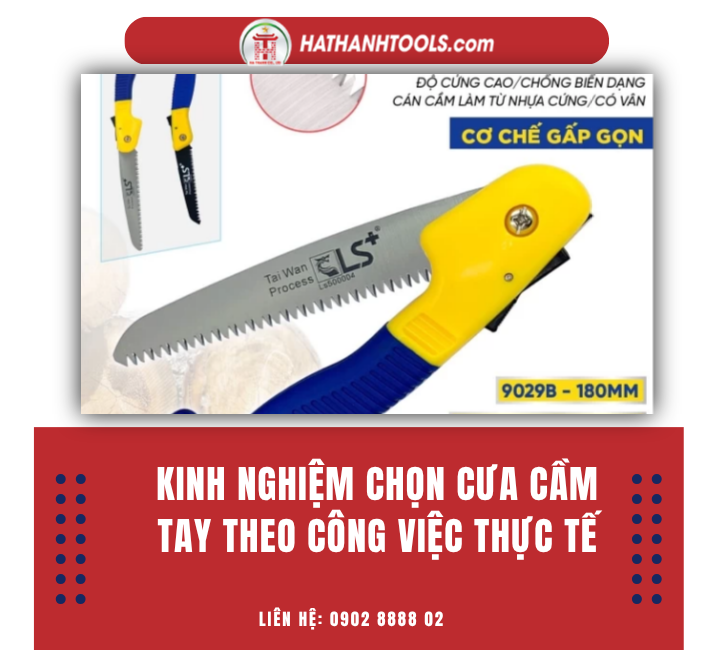
For gardening tasks, a pruning saw is the most suitable choice due to its curved design, which makes cutting easier at hard-to-reach angles. If you need a versatile tool, a saw with interchangeable blades is the optimal solution.
Additionally, it's advisable to prioritize products with interchangeable blades, as this saves long-term costs and offers flexibility for various tasks.
Where to Buy Genuine Hand Saws?
Choosing a reputable supplier is crucial to ensure product quality and user safety. Genuine products typically have clear origins, use certified materials, and come with transparent warranty policies.
If you are looking to source hardware tools that are ahead of the 2025-2026 trend, contact us immediately:
HATHANH TOOLS CO., LTD – HCMC BRANCH
- Address: 35 Nguyen An Khuong, Cho Lon Ward, Ho Chi Minh City
- Hotline: 0902.8888.02
- Email: cskh@hathanhtools.com
- Website: https://hathanhtools.com
Frequently Asked Questions
What are hand saws used for?
They are used for cutting wood, plastic, drywall, and branches in construction and gardening.
What does TPI mean for hand saws?
It stands for Teeth Per Inch, which affects the cutting speed and smoothness.
Is high TPI better than low TPI?
No, it depends on the type of material being cut.
Can hand saws cut metal?
Yes, if a blade specifically designed for metal is used.
What are the advantages of interchangeable blade saws?
They offer flexibility, cost savings, and can be used for various materials.
How do wood saws and pruning saws differ?
Pruning saws have a curved blade and deeper teeth for easier cutting of branches.
Are hand saws durable?
Yes, if made from good quality steel and properly maintained.
Should I choose a long or short saw?
This depends on the workspace and the type of material.
Is it worth buying cheap saws?
Not recommended for long-term use or professional work.
Where can I buy reputable hand saws?
Choose an authorized distributor with clear business information.