Safe and Effective Die Set Usage Guide – Expert Secrets
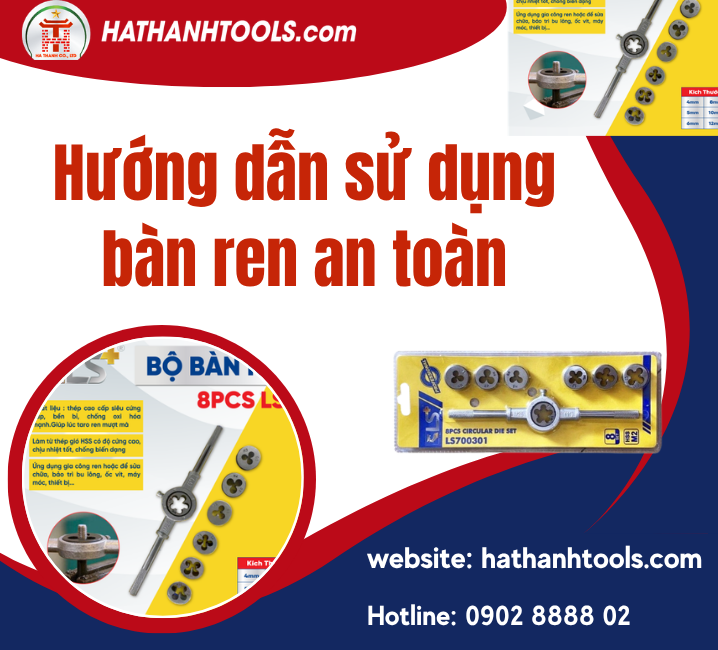
In the fields of mechanics, repair, and construction, a die set is an indispensable tool for creating precise, strong external threads on metal surfaces. Especially with a high-quality die set like those from Ha Thanh Tools, you can easily perform threading operations professionally. This article provides a detailed, comprehensive guide on how to use a die set safely, helping readers – from professional tradespeople to DIY enthusiasts – master the techniques and avoid unnecessary risks.
A die set (also known as a die stock) is a specialized tool for cutting external threads on metal rods, pipes, bolts, or mechanical components. Using a die set correctly not only ensures the quality of the threads but also extends the tool's lifespan and enhances work efficiency. With 5 years of experience in marketing metalworking tools, we understand that clear, practical guidance brings real value to users.
Why Choose a High-Quality Die Set?
Before diving into the usage guide, let's talk about the 8pcs LS+ die set – a standout product offered by Hathanhtools.com. This product, from the LS+ brand with model number LS700301, is crafted from super-hard, durable, and highly rust-resistant premium steel. The set includes 8 common sizes (3mm, 4mm, 5mm, 6mm, 8mm, 10mm, 12mm) along with a tap wrench, ensuring smooth and highly accurate external threading.
This die set is suitable for both basic machining and in-depth repairs in plumbing, gas, steam, mechanical, and home DIY systems. The premium steel material makes the dies highly resistant to wear, ensuring stable operation and ease of use. When you invest in an authentic die set, you not only save time but also minimize the risk of damage.
Preparation Before Using a Die (Die Set)
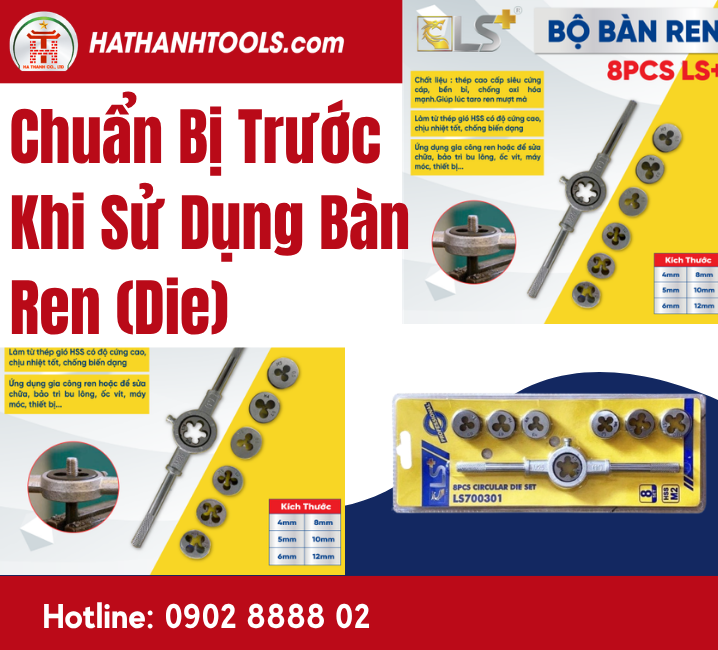
Thorough preparation is the most crucial step for safe and effective die set usage. Many beginners often overlook this step, leading to crooked threads, rapid tool wear, or unintended accidents.
Check and Select the Correct Die Size
First, determine the diameter and thread pitch of the workpiece to be machined. The 8pcs LS+ die set offers a range of standard sizes, allowing you to easily select the correct fit for metal rods or pipes from 3mm to 12mm. Check the markings on the dies to avoid confusion. If the workpiece is too large or too small for the die, the threads will be uneven or the tool may get jammed.
Prepare the Workpiece Surface
Clean the surface of the metal rod or pipe where the threads will be cut. Remove dirt, rust, and excess oil with a clean cloth or a specialized cleaning solution. The end of the workpiece should be chamfered at approximately 45 degrees to allow the die to start cutting easily. The workpiece surface must be straight, without any warping, to prevent crooked threads.
Prepare Supporting Tools
-
Die wrench (included in the LS+ die set).
-
Cutting oil or specialized lubricating oil for metal machining.
-
Safety glasses, anti-slip gloves, and work protective clothing.
-
Secure workpiece clamping device (vise or clamp).
Check the Condition of the Die
Inspect the die for any cracks, chipped teeth, or rust. With the LS+ die set made from premium steel, the product is usually in excellent condition, but regular checks are still necessary. Apply a thin layer of oil to the die teeth before installation.
Choose a Workspace
Work in a well-ventilated area with good lighting and a dry floor. Avoid damp areas to reduce the risk of slips while using the die set.
Proper preparation ensures a smooth die set operation, minimizes errors, and significantly extends tool life.
Steps for Threading Externally with a Die Set Correctly
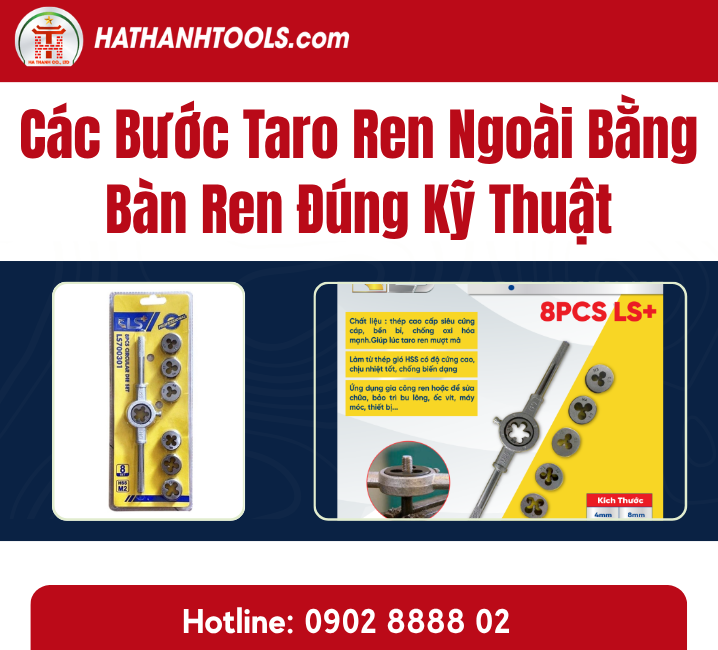
External threading is the core process when using a die set. Here's a detailed step-by-step guide to creating precise, clean, and durable threads.
Step 1: Secure the Workpiece Firmly
Clamp the metal rod or pipe into a vise so that the portion to be threaded extends about 5-10cm. Ensure the workpiece is stable, either vertically or horizontally, without any wobbling.
Step 2: Install the Die into the Wrench
Loosen the fixing screw on the wrench, place the die into the slot so that the side with markings or the cutting edge faces outward. Tighten the screw firmly to prevent the die from loosening. The 8pcs LS+ die set features an ergonomic wrench for a secure grip.
Step 3: Lubricate and Start Cutting
Apply cutting oil to the end of the workpiece and the die teeth. Position the die perpendicular to the workpiece, apply light pressure, and rotate clockwise (usually right-hand thread). Rotate for about 1-2 turns, then rotate back 1/4 turn to clear chips. Continue this rhythmic motion, reapplying oil periodically for smooth threading.
Step 4: Inspect and Finish
Once the desired thread length is achieved, slowly rotate the die counter-clockwise to remove it. Clean off metal chips and inspect the threads with a gauge or a trial bolt. The threads should be uniform, without nicks or deviations.
Step 5: Clean Up After Use
Remove the die from the wrench, brush off metal chips thoroughly, and dry it completely. This is a crucial step for protecting your die set.
Following the correct technique will result in standard threads that offer good load-bearing capacity and are easy to assemble.
Advantages of Super-Hard Premium Steel Material for Die Sets
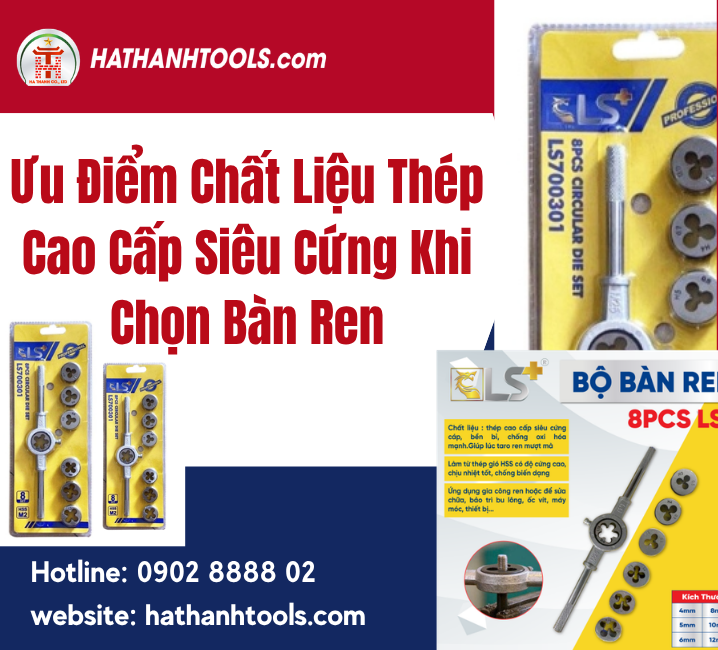
One of the key factors determining the quality of a die set is its material. The 8pcs LS+ die set uses super-hard premium steel, offering numerous superior benefits.
High Hardness and Durability
Premium steel (typically HSS or equivalent) possesses exceptional hardness and excellent wear resistance, even when machining steel, stainless steel, or other hard metals. Compared to ordinary dies, LS+ products are less prone to chipping and maintain their sharpness for a longer time.
Corrosion and Rust Resistance
A strong anti-corrosion coating ensures the dies are durable in humid environments – common conditions in construction sites or repair workshops. You can confidently use the die set without worrying about rapid deterioration.
Smooth Threading, Reduced Force
Thanks to sharp teeth and well-designed chip-clearing flutes, the LS+ dies facilitate a smoother threading process, reducing hand fatigue and increasing work speed. The resulting threads are uniform with minimal burrs.
Long-Term Cost Savings
Although the initial cost may be higher than cheaper dies, high-quality material die sets last longer, reducing the frequency of replacements. This is a smart choice for both professional tradespeople and individuals.
Safety and Versatility
The super-hard material reduces the risk of sudden breakage, ensuring safety during high-intensity die set usage.
When choosing a die set, prioritizing premium steel material will provide the best experience and superior performance.
Common Problems When Using Die Sets and How to Avoid Them
Even the best tools can encounter problems if used incorrectly. Here are common issues when using die sets and their solutions.
Problem 1: Crooked or Uneven Threads
Cause: The workpiece is not securely clamped or the die is not held perpendicular at the start.
How to Avoid: Always check for a square angle using a ruler or experienced judgment. Use a good vise and start slowly.
Problem 2: Die Jamming or Chipped Teeth
Caused by not using oil or rotating continuously in one direction without clearing chips.
Solution: Use cutting oil generously, rotate backward periodically by 1/4 turn. The super-hard material of the LS+ die set significantly reduces this risk.
Problem 3: Loose Threads or Poor Engagement
Workpiece diameter is incorrect or the die is worn.
How to Avoid: Accurately measure the workpiece diameter before selecting the die size. Perform regular maintenance.
Problem 4: Chips Jamming in the Flutes
Lack of lubrication or excessive rotation speed.
Solution: Stop, clean out the chips, and apply fresh oil before continuing.
Problem 5: Hand Fatigue or Loss of Control
Extended die set use without breaks or a poor-quality wrench.
Tip: Choose a die set with an ergonomic wrench like the LS+ and break down your work into smaller intervals.
Early identification of these problems will help you use the die set more effectively and avoid unnecessary damage.
Safety Rules for Using Die Sets
Safety is always the top priority when working with cutting tools like die sets.
-
Wear personal protective equipment: Always wear safety glasses, gloves, and safety shoes. Avoid loose clothing that can easily get caught.
-
Secure the workpiece firmly: Never hold the workpiece with your hands while turning the die set.
-
Control your force: Do not apply excessive force or rotate too quickly to prevent the die set from slipping or breaking.
-
Maintain a proper working posture: Keep your back straight, grip the wrench firmly with both hands, and stand with stable footing.
-
Avoid hazardous environments: Do not use the die set near open flames or in poorly lit areas.
-
Stop immediately if there are any unusual signs: If you hear strange noises or the die set jams, stop and inspect it.
Strictly adhering to these rules will help you use your die set safely for a long time.
How to Maintain Die Sets for Durability and Long-Lasting Threads
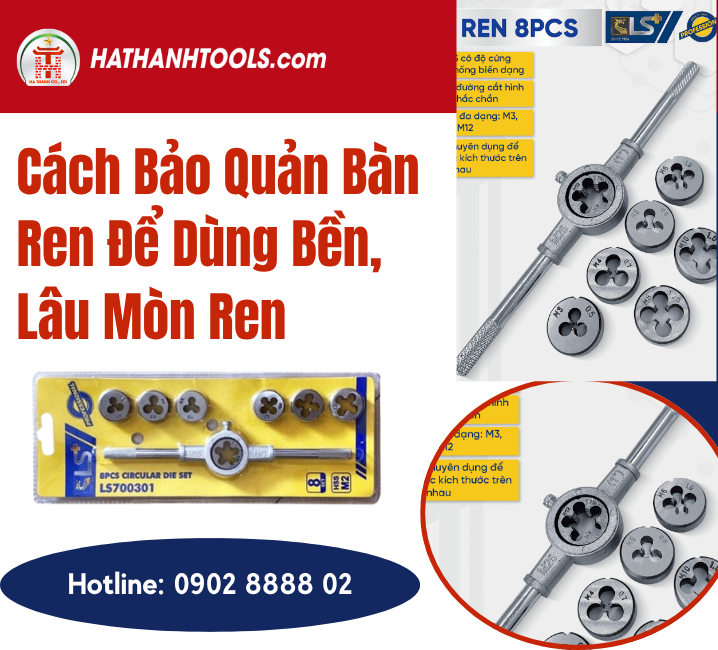
Proper maintenance helps keep your die set sharp and extends its lifespan manifold.
-
After each use: Wipe off metal chips, wash with a specialized cleaning solution, and then dry completely. Apply a thin layer of rust-preventive oil to the die teeth.
-
Storage: Keep the die set in its original case or a moisture-proof bag. Avoid damp places, direct sunlight, or proximity to corrosive chemicals.
-
Periodic Maintenance: Inspect and sharpen the teeth if necessary (this should ideally be done by a professional technician). The premium material of the LS+ die set reduces the need for frequent maintenance.
-
Small Tip: Use silica gel to absorb moisture in the storage case and clearly label each size for easy retrieval when needed.
By applying these maintenance tips, your die set will always be in optimal condition.
Contact Information
HA THANH TRADING CO., LTD - HCM BRANCH
Hotline: 0902 8888 02
Address: 35 Nguyen An Khuong, Cho Lon Ward, Ho Chi Minh City
Email: cskh@hathanhtools.com
Website: hathanhtools.com
Tax Code: 0100108529-006