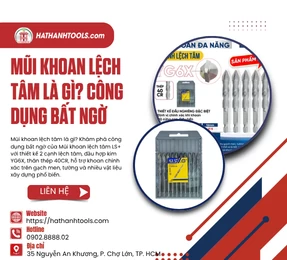
Breaker Chisels for Demolition Machines – How to Use Them? Guide to Correct Selection and Technical Usage

In construction, repair, or home renovation projects, breaker chisels for demolition machines are indispensable accessories that help increase construction efficiency, shorten working hours, and significantly reduce labor effort. However, not everyone knows how to choose the correct chisel type, install it properly, or operate it to achieve peak performance while ensuring safety.
Choosing the wrong concrete chisel can lead to inefficient machine operation, rapid wear of the chuck, bent or broken chisels, or a significant reduction in lifespan. Conversely, when selecting the correct breaker chisels for demolition machines suitable for each machine and task, users will maximize device capacity, generate powerful breaking force, and deliver more precise construction surfaces.
Currently, Ha Thanh Tools offers a wide range of hex shank chisels, round slotted shank chisels, pointed chisels, and flat chisels made of premium 40Cr alloy steel with HRC48 hardness, meeting construction needs from residential projects to professional work sites.
All products are designed to increase load-bearing capacity, resist wear and tear, and are compatible with various concrete demolition machines on the market.
If you are wondering how to use concrete chisels, how to choose the right size, differentiate between shank types, or install chisels correctly, the article below will clarify each issue to help you make the best choice.
Types of Chisels Used for Demolition Machines
The market currently offers many lines of breaker chisels for demolition machines with different designs, sizes, and shank standards. Each type is optimized for specific construction purposes to bring the highest demolition efficiency.
Understanding the characteristics of each genuine concrete chisel line will help users choose the right product, reduce machine wear, and improve labor productivity.
Pointed chisels for concentrated breaking force
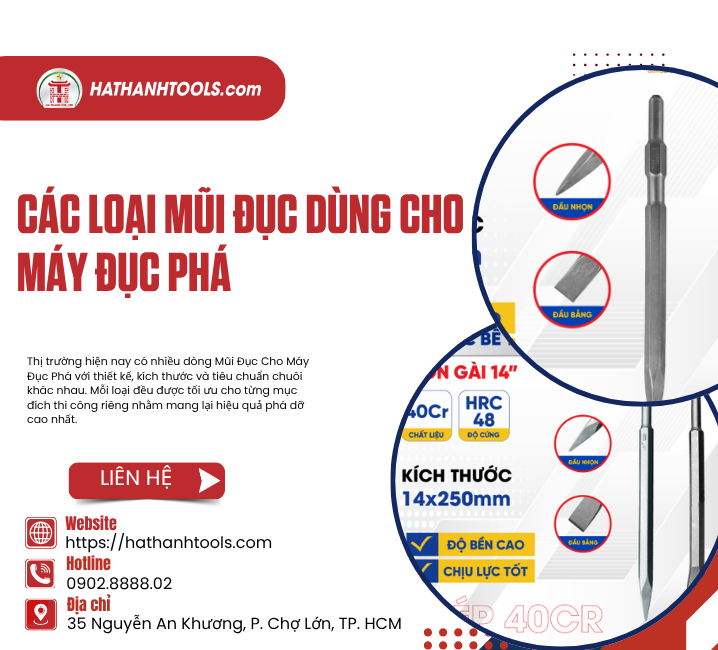
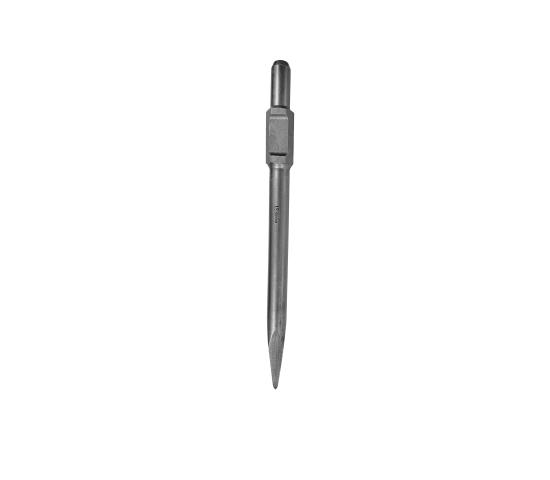
Pointed chisels are the most commonly used products in demolishing concrete, foundations, and hard structures. With a pointed tip design, the entire force from the machine is concentrated onto a small point, creating immense pressure that breaks down materials rapidly.
This is the ideal choice when you need to:
-
Demolish reinforced concrete.
-
Chisel thick cement floors.
-
Break natural stone.
-
Create initial cracks before expanding the chiseling area.
-
Chisel dense and hard structures.
For projects requiring high breaking force, users can choose LS+ breaker chisels for demolition machines, such as:
LS+ 17 × 280 mm Hex Concrete Chisel
This product is made of 40Cr alloy steel, capable of withstanding heavy impacts, and is suitable for machines using a 17 mm hex shank. The chisel has a length of 280 mm, allowing flexible operation in various construction positions.
LS+ 17 × 350 mm Hex Concrete Chisel
This version features a longer length, suitable for increasing depth and working distance. The pointed design helps concentrate a stronger breaking force on thick concrete layers.
LS+ 18 × 400 mm Round Slotted Shank Concrete Chisel
This is a premium round slotted shank chisel line made of 40Cr steel with HRC48 hardness. The 400 mm length allows users to easily work in deep positions or increase the impact force. The pointed tip design supports fast, precise, and durable concrete breaking under high-intensity working conditions.
In addition to outstanding performance, pointed concrete chisels also help reduce machine vibration if used correctly and in line with the device's capacity.
Flat chisels for material peeling
Unlike pointed tips, flat chisels are designed with a wide blade to expand the contact area with the material. This makes removing finishing layers faster and more even.
This type of breaker chisel for demolition machines is commonly used for tasks such as:
-
Removing floor tiles.
-
Scraping mortar layers.
-
Removing old plaster/mortar.
-
Chiseling technical grooves.
-
Correcting concrete surfaces.
-
Demolishing finishing layers before renovation.
When using a flat chisel to scrape mortar, the impact force is distributed evenly over a wide area, preventing deep gouging into the underlying structure.
Both LS+ hex shank and round slotted shank chisel lines offer flat tip options to meet various construction needs.
In particular, the LS+ 30 × 410 mm breaker chisel, made of 40Cr alloy steel with HRC48 hardness, is specifically designed for high-capacity demolition machines. The flat-tip version supports peeling concrete, tiles, and material surfaces faster, significantly reducing construction time.
For home renovations, factory floor repairs, or removing finish layers, flat chisels are always an economical and highly productive choice.
Distinguishing Between Round Slotted Shank and Hex Shank
One of the common mistakes that leads to rapid damage to breaker chisels for demolition machines is choosing the wrong shank standard.
Currently, there are various chuck standards on the market, such as SDS Plus, SDS Max, and hexagonal shanks, each designed for specific machines and tasks.
Round Slotted Shank (SDS)
This shank type is designed to lock automatically into the machine's chuck. Users only need to insert it into the slot correctly, and the chisel will be held securely during operation.
Advantages of round slotted shank chisels include:
-
Fast installation.
-
Easy removal.
-
Reduced chisel slippage.
-
Enhanced stability during chiseling.
-
Compatible with many rotary hammers and demolition hammers.
Typical LS+ products include:
-
14 × 250 mm round slotted concrete chisel.
-
18 × 400 mm round slotted concrete chisel.
Hex Shank
For high-capacity demolition hammers, hex shank chisels are widely used due to their powerful force transmission and excellent torque resistance.
Products such as:
-
17 mm chisel with a length of 280 mm.
-
17 mm chisel with a length of 350 mm.
-
30 × 410 mm chisel.
are all designed to work stably under continuous construction conditions.
When choosing breaker chisels for demolition machines, users should check:
-
The machine's chuck type.
-
Shank diameter.
-
Chisel length.
-
Machine model.
-
Manufacturer's instructions.
Never force a hex shank chisel into a slotted chuck or vice versa. Using the wrong standard can quickly wear out the chuck, reduce efficiency, and pose safety hazards.
How to Choose the Right Chisel Size
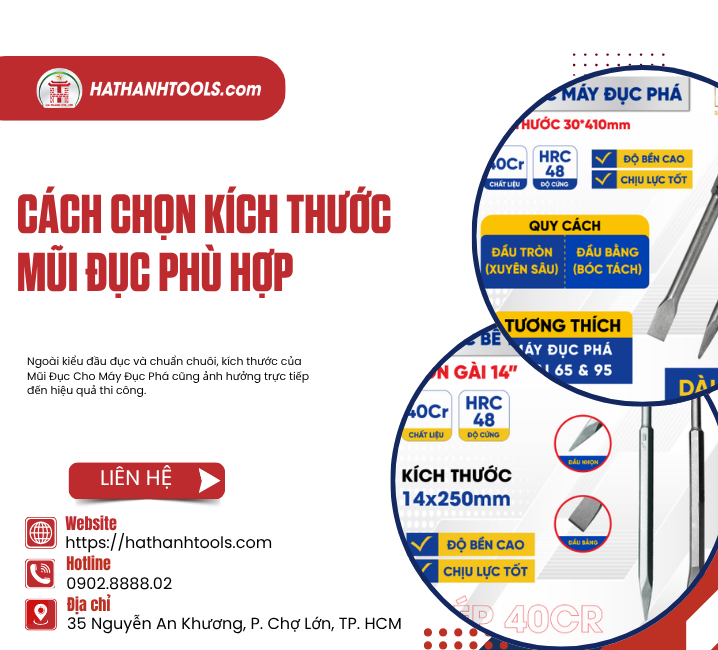
Besides the chisel tip type and shank standard, the size of the breaker chisels for demolition machines also directly affects construction efficiency.
A concrete chisel with the proper length and diameter will help the machine maximize its output, while reducing vibrations and extending the lifespan of both the machine and the accessory.
Choosing the right size not only ensures smooth operations but also reduces the cost of replacing consumable materials during use.
Select Based on Machine Power and Chuck Type
The first factor when choosing breaker chisels for demolition machines is the machine's power and chuck type.
Each manufacturer clearly specifies the shank size, chisel length, and compatible tip type for each model. Therefore, before purchasing, users should verify:
-
Demolition hammer model.
-
Chuck standard.
-
Allowed shank diameter.
-
Suitable chisel length.
-
Recommendations in the user manual.
For example:
-
Light demolition hammers usually use small round slotted shank chisels like 14 × 250 mm.
-
Medium-power hammers can use 17 mm chisels with a length of 280 mm or 350 mm.
-
High-capacity demolition machines are suitable for 30 × 410 mm chisels or specialized hex shank lines.
Choosing correctly from the start not only improves working efficiency but is also a crucial step in using concrete chisels safely and durably.
Choose the Length Based on the Required Chiseling Depth
The length of the breaker chisels for demolition machines directly affects the operating range, the force transmitted to the material's surface, and the accessibility of work sites. If the wrong length is chosen, users will struggle to operate, while reducing demolition efficiency and increasing the risk of chisel damage.
The LS+ concrete chisel lines distributed by Ha Thanh Tools come in various sizes to meet diverse needs, from residential to industrial projects.
| Chisel Size | Features | Suitable Tasks |
| 14 × 250 mm | Compact, flexible | Chiseling brick walls, thin concrete, residential repairs |
| 17 × 280 mm | Balanced power and flexibility | Floor chiseling, moderate concrete breaking, frequent work |
| 17 × 350 mm | Increased working depth | Breaking thick concrete floors, renovation projects |
| 18 × 400 mm | Extended length, good force transmission | Breaking thick concrete structures, reaching deep positions |
| 30 × 410 mm | For high-capacity demolition hammers | Professional sites, high-strength concrete breaking |
If only performing common repair tasks such as removing old tiles, chiseling electrical wire grooves, or renovating homes, users can prioritize the 14 × 250 mm round slotted shank chisel for flexible operation in tight spaces.
For construction projects requiring demolition of thick concrete floors, 17 mm or 18 × 400 mm chisels will perform better due to their deep and stable force transmission.
Specifically, the 30 × 410 mm chisel is designed for high-capacity demolition hammers. Built with a solid structure from 40Cr alloy steel and HRC48 hardness, this product performs exceptionally well under continuous, high-intensity construction site conditions.
Choosing the correct length of breaker chisels for demolition machines will help users reduce vibration, minimize machine wear, and improve long-term working efficiency.
Choose Pointed or Flat Head Based on the Task
Many users only focus on the size while forgetting that the shape of the chisel head also greatly determines construction efficiency. Choosing the right pointed chisel or flat chisel will save time, reduce material wear, and better protect the machine.
Below is a quick selection table to help you easily identify the suitable breaker chisels for demolition machines for each need.
|
Task |
Suitable Chisel Type |
|
Breaking hard concrete blocks |
Pointed chisel |
|
Creating initial crack points |
Pointed chisel |
|
Chiseling stone |
Pointed chisel |
|
Breaking concrete floors |
Pointed chisel or flat head depending on the work scope |
|
Peeling floor tiles |
Flat chisel |
|
Scraping mortar layers |
Flat chisel |
|
Chiseling technical grooves |
Flat chisel |
|
Correcting concrete surfaces |
Flat chisel |
For projects requiring hard structure demolition, pointed concrete chisels concentrate the impact force onto a single point, creating rapid cracks and facilitating easier expansion of the chiseling area.
Conversely, flat tile-peeling chisels are suitable for stripping finishing materials, scraping mortar adhesive, or dealing with surfaces that require a large contact area. Due to the wide blade design, the force is distributed more evenly, preventing damage to the underlying structures.
If the job frequently shifts between concrete demolition and peeling finishing layers, users should prepare both head types for flexible swap-outs, thereby maximizing the efficiency of the breaker chisels for demolition machines.
Guide to Installation and Usage of Chisels
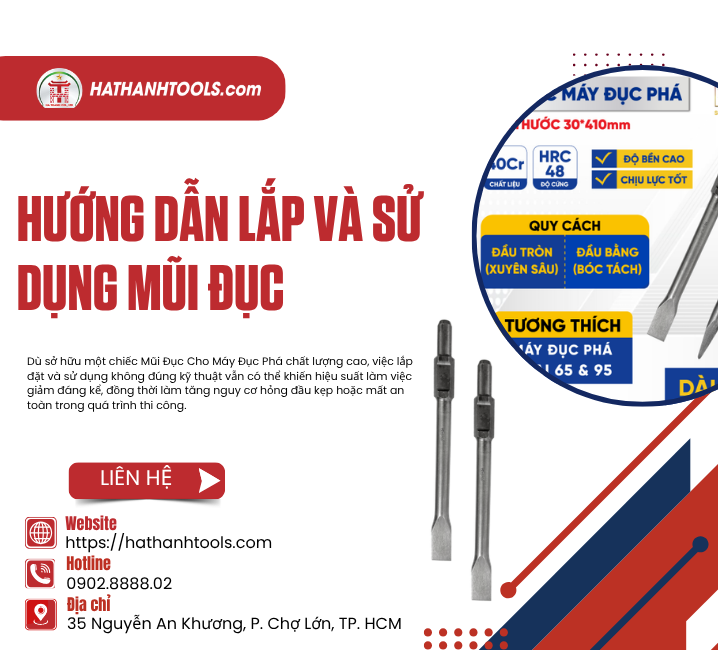
Even if you own a high-quality breaker chisel for demolition machines, incorrect installation and technical usage can still significantly reduce work efficiency, while increasing the risk of chuck damage or safety hazards during construction.
Understanding how to install the chisel and operate it correctly will help extend the lifespan of both the machine and its accessories.
Check Chisel and Chuck Before Installation
This is an often-overlooked step but plays an extremely important role.
Before each use, users should perform a comprehensive inspection of the breaker chisels for demolition machines to detect early signs of damage.
Points to check include:
-
Whether the tip is chipped.
-
Whether the chisel is bent or deformed.
-
Whether the shank is worn out.
-
Whether cracks appear on the chisel body.
-
Whether there is concrete dust or foreign objects inside the machine's chuck.
-
Whether the chuck lock pin still functions well.
If a chisel is found to be bent, cracked, or has a heavily worn shank, users should not continue using it, as this can cause heavy vibrations, affect the chuck, and reduce demolition efficiency.
Cleaning out cement dust or sand from inside the chuck is also a key step in correct concrete chisel usage, helping the chisel lock more securely and reducing shank jamming.
Insert the Chisel Correctly into the Slot and Check the Lock
After checking, proceed to install the chisel according to the machine manufacturer's instructions.
The basic procedure includes:
-
Insert the correct type of hex shank chisel or round slotted shank chisel based on the chuck standard.
-
Guide the shank of the chisel into the holder.
-
Push the chisel until it is fully engaged.
-
Tighten or lock the retention pin according to the machine's mechanism.
-
Pull the chisel gently to verify it is held securely.
If the chisel still slips or feels loose after installation, remove it and recheck both the chuck and the chisel shank before operating.
Never use a hammer to force or drive the breaker chisels for demolition machines into the chuck when they do not match the standard. Doing so can deform the shank, damage the locking mechanism, and reduce device lifespan.
Operate the Machine in the Correct Posture
In addition to selecting the correct concrete chisel, your operating posture greatly influences both efficiency and safety during construction.
Operators should:
-
Hold the machine firmly with both hands.
-
Stand in a balanced position.
-
Avoid leaning too far forward.
-
Position the tip of the breaker chisels for demolition machines perpendicular to the material surface.
-
Let the machine generate the impact force itself, do not press down too hard.
-
Move smoothly between positions instead of trying to break a single point for too long.
Pressing the machine too hard does not speed up the breaking process; instead, it subjects the pointed chisel, flat chisel, chuck, and transmission gears to loads higher than necessary.
During operation, users should equip themselves with full protective gear, such as:
-
Safety goggles.
-
Anti-vibration gloves.
-
Safety shoes.
-
Ear protection.
-
Dust mask.
These are essential pieces of equipment that help mitigate risks when using breaker chisels for demolition machines in high-dust and high-noise construction environments.
For 17 mm chisels, 30 × 410 mm chisels, or LS+ hex shank chisels, operating in the correct posture also increases the lifespan of the chisel, reduces shank bending, and ensures that the breaking force remains stable throughout construction.
Maintenance of Chisels and Minimizing Wear
In addition to choosing the right breaker chisels for demolition machines and using them with proper techniques, maintenance plays a vital role in extending product life. A concrete chisel that is cleaned and maintained periodically will retain its sharpness, minimize wear, and help the machine operate more stably over the long run.
The LS+ hex shank, round slotted shank, and 30 × 410 mm chisel lines are all crafted from 40Cr alloy steel with HRC48 hardness, providing excellent load-bearing capacity and wear resistance. However, if used incorrectly or poorly maintained, their lifespan can still be significantly affected.
Do Not Push the Machine Continuously When the Chisel Is Jammed
During construction, breaker chisels for demolition machines can get jammed in concrete or stone, especially when working with high-strength materials or complex structures.
When this happens, users should not try to twist, bend, or apply heavy force to pull the chisel out. This can cause the chisel body to bend, the tip to deform, or the machine's chuck to fail.
Instead, follow the correct technical procedure:
-
Stop the machine immediately.
-
Disconnect the power supply or remove the battery for cordless machines.
-
Inspect the jammed chisel's position.
-
Remove the chisel following the manufacturer's instructions.
-
Clean the chuck before continuing use.
This is one of the crucial notes in concrete chisel usage to minimize damage and ensure safety for the operator.
Clean the Chisel Shank After Use
After every shift, users should spend a few minutes cleaning the breaker chisels for demolition machines. This simple habit brings long-term efficiency in protecting tools.
Cleaning steps include:
-
Remove concrete dust, sand, and debris clinging to the chisel body.
-
Wipe the shank clean with a dry cloth.
-
Check whether the shank is worn or deformed.
-
Store in a dry place, avoiding damp environments to prevent rust.
-
Organize chisels in a dedicated box or rack to avoid collisions with other tools.
For round slotted shank and hex shank chisels, the shank is the direct contact point with the machine's chuck. If this area accumulates dirt or rust, the locking capability will decrease, leading to vibration and lower working efficiency.
Additionally, some machine models require applying a moderate amount of specialized grease onto the chisel shank according to the manufacturer's manual to reduce friction and extend chuck life. Users should avoid applying too much grease, as it can cause dust to accumulate faster.
When to Replace with a New Chisel?
Despite being manufactured from high-quality alloy steel, breaker chisels for demolition machines are still consumables and must be replaced after a period of use.
Some signs indicating that you should replace the chisel include:
-
The tip is dull, losing its ability to concentrate breaking force.
-
The shank is worn, causing the chuck to hold loosely.
-
The chisel body is bent or deformed.
-
Cracks appear on the chisel body.
-
Chiseling performance drops significantly even though the machine operates normally.
-
The chisel frequently jams or vibrates excessively during operation.
Timely replacement not only ensures construction progress but also protects the machine's chuck, avoiding unnecessary repair costs.
Chisel Selection Table by Task
To help users easily choose the right breaker chisels for demolition machines, below is a suggested table based on real-world needs.
|
Task |
Suitable Chisel Type |
Suggested Size |
|
Breaking thick concrete |
Pointed chisel |
17 × 350 mm, 18 × 400 mm, 30 × 410 mm |
|
Breaking concrete floors |
Pointed chisel |
17 × 280 mm, 17 × 350 mm |
|
Chiseling brick walls |
Pointed chisel |
14 × 250 mm |
|
Chiseling stone |
Pointed chisel |
18 × 400 mm |
|
Peeling floor tiles |
Flat chisel |
17 × 280 mm or 17 × 350 mm |
|
Scraping mortar layers |
Flat chisel |
14 × 250 mm or 17 × 280 mm |
|
Chiseling technical grooves |
Flat chisel |
14 × 250 mm |
|
Industrial sites |
Hex shank chisel |
30 × 410 mm |
|
Residential projects |
Round slotted shank chisel |
14 × 250 mm or 18 × 400 mm |
If you need advice on choosing breaker chisels for demolition machines based on your machine model, shank standard, or specific task characteristics, please contact Ha Thanh Tools for prompt and professional support.
Contact Information
Ha Thanh One Member Co., Ltd – HCMC Branch
Hotline: 0902 8888 02
Address: 35 Nguyen An Khuong, Cho Lon Ward, Ho Chi Minh City
Email: cskh@hathanhls.com
Website: https://hathanhtools.com
Tax Code: 0100108529-006