Cutting Discs vs. Cutting Blades: Which One Should You Use for Each Material?

In the fields of mechanics, construction, installation, and interior fabrication, choosing the right cutting accessory directly affects the quality of the finished product, work efficiency, and user safety. However, many people still confuse cutting discs with cutting blades, leading to incorrect usage for each material, which reduces product lifespan, increases costs, and poses potential risks during construction.
In reality, each line of stainless steel cutting discs, iron cutting discs, diamond cutting blades, dry cutting blades, wood cutting blades, or aluminum cutting blades is designed with its own structure and working principle to meet the different requirements of each material type. No single product is suitable for all cases; rather, the selection must be based on the characteristics of the material, the type of machine used, and the required quality of the cut.
So, how do you distinguish between cutting discs and cutting blades? When should you use cutting discs and grinding wheels, and when should you choose multi-purpose cutting blades, tile cutting blades, diamond cutting blades, or LS+ wood cutting blades? The article below will help you clearly understand each type of accessory, allowing you to make the most appropriate choice for your work.
What are Cutting Discs and Cutting Blades?
Although both are accessories used for hand-held cutters or grinders, cutting discs and cutting blades are designed with completely different structures. Each type delivers maximum efficiency on specific groups of materials. Understanding the working principles correctly will help users optimize investment costs, improve productivity, and ensure safety during construction.
Cutting Discs Use Abrasive Grains to Cut Materials
When it comes to metal fabrication, stainless steel cutting discs and iron cutting discs are always the familiar choices for most mechanics, construction contractors, and fabrication workshops. Unlike toothed saw blades, cutting discs operate based on high-hardness abrasive grains bound tightly together by a specialized bonding agent. When rotating at high speeds, the abrasive grains continuously wear down the material to create sharp, clean, and precise cuts.
Thanks to this principle, cutting discs can effectively handle high-hardness metal materials such as iron, steel, box steel, stainless steel, or aluminum. This is also why cutting discs and grinding wheels are indispensable consumables in the mechanical, construction, technical system installation, and metal structure fabrication industries.
At Hathanhtools.com, the LS+ stainless steel cutting disc lines are carefully selected to meet various usage needs.
LS+ green stainless steel cutting disc is a widely used product in residential and industrial projects. The product is specifically designed for cutting iron, steel, stainless steel, and many other common metals. With its fast cutting ability, neat cuts, minimized material burning, and reduced burrs, this disc line helps improve construction efficiency while saving post-cut processing time.
In addition, LS+ black stainless steel cutting disc is chosen by many mechanical units when high flexibility is needed. This cutting disc line is suitable for various material groups, performing well in diverse fabrication tasks in workshops or construction sites. Choosing the right stainless steel cutting disc line for each material type helps extend product lifespan, reduce wear, and enhance work efficiency.
Besides cutting capabilities, users should also note that LS+ cutting discs and LS+ iron/stainless steel grinding wheels are two products with completely different functions. Cutting discs are designed to create cuts in materials, while grinding wheels are used to clean welds, smooth edges, remove rust, or finish surfaces before painting and polishing. Therefore, never use grinding wheels to replace cutting discs or vice versa, to avoid safety hazards and reduced performance.
Diamond Blades for Construction Materials
While cutting discs excel in metals, diamond blades are the optimal solution for high-hardness construction materials such as bricks, natural stone, artificial stone, concrete, or tiling.
Unlike cutting discs that use bonded abrasive grains, diamond blades are manufactured with high-strength steel bodies combined with synthetic diamond segments that offer high wear and heat resistance. This exact structure helps the cutting blade maintain stable performance throughout working with extremely hard materials.
At Hathanhtools.com, customers can choose from various lines of dry cutting blades with common dimensions such as 105×20mm, 180×22.23mm, and 230×22.23mm. These sizes are compatible with many hand-held cutting and grinding machines on the market today, meeting diverse needs from residential construction to professional projects.
One of the standout products is the 6-in-1 multi-purpose diamond cutting blade. This product line is designed to increase flexibility during construction, allowing the processing of various compatible materials while maintaining a stable and sharp cut. It is a suitable choice for businesses that frequently work on multiple surfaces, saving accessory replacement time and improving work efficiency.
Additionally, Hathanhtools.com offers various multi-purpose blade lines including mesh-rim, continuous-rim, and anti-vibration mesh-rim blades. The specialized design helps reduce vibration during cutting, supports a more stable cutting line, and offers a comfortable user experience for the operator.
When selecting tile cutting blades, dry cutting blades, or diamond blades, users need to consider the hardness of the material, machine size, and cutting quality requirements to achieve optimal performance.
Toothed Saw Blades for Wood and Aluminum
Beside the diamond blade group, wood cutting and aluminum cutting blade lines are also widely used in the interior design, advertising, light mechanics, and material processing industries.
The biggest difference of this product group lies in the toothed cutting structure. Each tooth is designed with a cutting angle, pitch, and shape appropriate for each material type to produce clean cuts, minimize chipping, and enhance precision.
LS+ wood cutting blades are designed to process various types of natural wood, industrial wood, and similar sheet materials. The saw tooth structure helps remove chips quickly, limits edge burning, and delivers a better finished cutting surface.
Meanwhile, LS+ aluminum cutting blades are optimized for processing aluminum bars, extruded profiles, and materials softer than steel but requiring high accuracy. The specialized design helps minimize burrs, reduce deformation, and improve the quality of the finished product after cutting.
It is worth noting that diamond blades do not have teeth like wood or aluminum cutting blades. These two product lines operate on completely different principles and are designed for separate material groups. Therefore, distinguishing between cutting discs and cutting blades, as well as distinguishing between each type of blade, will help users choose the right product, prevent material damage, reduce equipment wear, and ensure long-term efficiency.
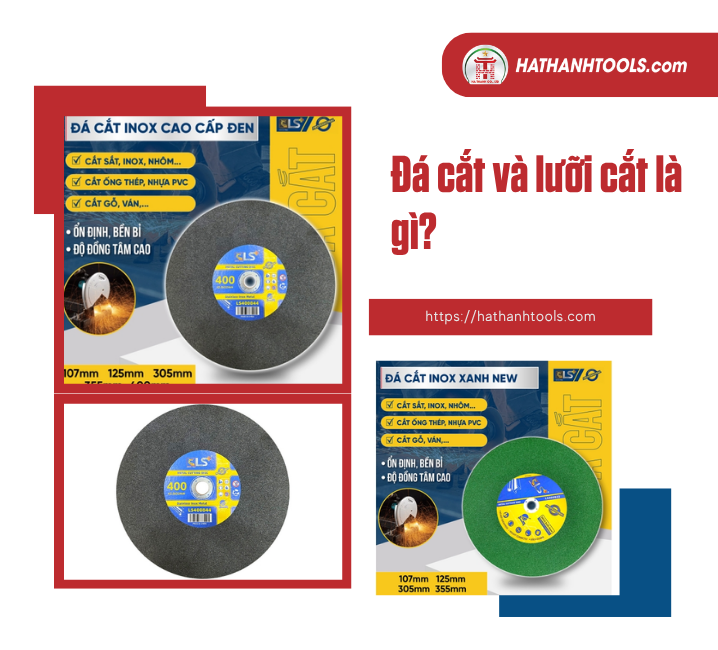
Differences Between Cutting Discs and Cutting Blades
After understanding the concept of each product, the next step in distinguishing between cutting discs and cutting blades is to compare them in detail regarding structure, working principle, cutting performance, and usage cost. These are crucial factors that help users select the right accessory for each material type, thereby optimizing work efficiency and extending machine life.
Even though they are all installed on hand grinders or cutters, stainless steel cutting discs, iron cutting discs, diamond blades, dry cutting blades, wood cutting blades, or aluminum cutting blades each have their own specific purpose. Using the wrong type not only decreases productivity but also affects safety during execution.
Differences in Structure and Cutting Principle
The first difference when distinguishing between cutting discs and cutting blades lies in the structure of each product.
For stainless steel cutting discs or iron cutting discs, the products are made of high-hardness abrasive grains bound together by specialized bonding agents. During high-speed machine operation, the abrasive grains continuously grind down the material surface to form a cut. This exact wear mechanism allows cutting discs to handle high-hardness metals like iron, steel, or stainless steel efficiently.
LS+ green stainless steel cutting discs are designed to make fast, low-burr cuts and minimize material burning during metal processing. Meanwhile, LS+ black stainless steel cutting discs offer greater flexibility for various metal material groups, suitable for shops that frequently execute multiple fabrication phases.
Unlike cutting discs, diamond blades operate by using synthetic diamond particles embedded on the blade rim. These diamond particles have extremely high hardness, helping them cut through construction materials like brick, stone, or concrete with excellent stability and long service life.
For LS+ wood cutting blades and LS+ aluminum cutting blades, the working principle is completely different. Instead of using abrasive grains or diamond coatings, these blade lines utilize a system of teeth designed specifically for each material type. As the blade rotates, each tooth continuously chips away material, creating a precise cut and minimizing splintering.
Clearly, the working principle of each product directly determines its scope of application. Therefore, users should not use diamond blades to cut wood or use wood cutting blades to process stone tiles. Similarly, you should not replace stainless steel cutting discs with iron/stainless steel grinding wheels, as each product is designed for a completely different purpose.
Differences in Speed and Cut Finish Quality
One of the criteria many users care about when choosing accessories is cutting speed and surface quality after processing. However, it cannot be claimed that cutting discs or cutting blades are always superior in every situation, as efficiency depends heavily on the material and working conditions.
For metal fabrication tasks, iron cutting discs and LS+ stainless steel cutting discs usually provide excellent processing speeds. Clean cuts, flexible access, and compatibility with many handheld angle grinders make them a popular choice in the mechanical industry.
Meanwhile, when working with ceramic tiles, granite, natural stone, or high-hardness construction materials, dry cutting blades or the 6-in-1 multi-purpose diamond cutting blade will demonstrate a clear advantage. The specialized design helps maintain cut stability, limits edge cracking, and improves the finish quality.
For the interior industry, LS+ wood cutting blades with a properly designed tooth system will create smoother cut surfaces, reducing wood fiber fraying or edge chipping. If processing extruded aluminum or technical aluminum bars, LS+ aluminum cutting blades will help minimize burrs while ensuring more accurate dimensions after cutting.
In addition, multi-purpose blade lines such as mesh-rim, continuous-rim, or anti-vibration mesh-rim blades also help reduce vibration during operation. This contributes to enhancing machine stability, reducing hand fatigue for users, and improving cut quality under various working conditions.
Evidently, cutting speed and quality depend not only on the product itself but also on machine power, rotational speed, operator technique, and individual material properties. Choosing the correct grinder blade or cutting disc for the intended purpose yields far greater efficiency than trying to use a single product for every job.
Differences in Cost and Lifespan
Investment cost is also an important factor when distinguishing between cutting discs and cutting blades, especially for contractors with high-frequency usage or large-scale production workshops.
Typically, stainless steel and iron cutting discs require a lower initial investment. They are suitable for tasks that require quick processing of large quantities of metal parts or projects with continuous cutting volumes. However, since the operating principle is based on the wear of the abrasive grains, the disc diameter will gradually decrease after each use. Once the disc wears down to its limit or no longer cuts efficiently, users must replace it to ensure safety.
On the contrary, diamond cutting blades, dry cutting blades, or multi-purpose blades usually have a higher initial cost but offer the ability to maintain performance over a much longer period when used on correct materials. This is the right choice for tile/stone contractors, construction sites, or jobs requiring high consistency.
For LS+ wood cutting blades and LS+ aluminum cutting blades, the lifespan also depends on material hardness, cutting speed, and maintenance practices. If cleaned regularly and used with the correct machine type and technical specifications, these products can maintain efficiency over a long period, helping to save operational costs.
Beyond the initial purchase price, users should also consider factors such as accessory replacement time, labor productivity, material waste rate, and finished product quality. These are the metrics that truly reflect economic efficiency in real-world applications.
Should You Choose Cutting Discs or Blades for Each Material?
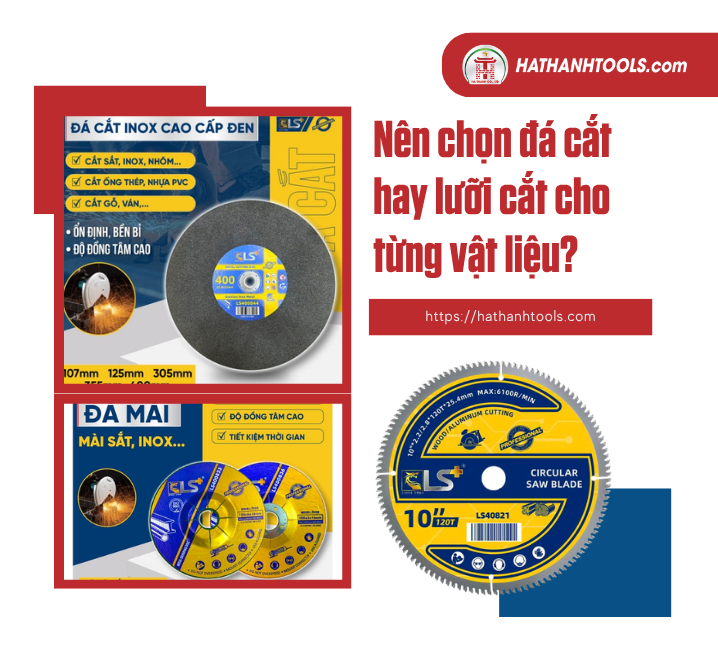
No single accessory is suitable for all materials. Each line of cutting discs and grinding wheels, diamond blades, dry cutting blades, wood cutting blades, or aluminum cutting blades is researched to maximize its efficiency on a specific group of materials.
Understanding the characteristics of each product will help users distinguish between cutting discs and cutting blades accurately and choose the right solution for each job, avoiding material waste and extending the life of their equipment.
Cutting Iron, Steel, and Stainless Steel
Within the metal material group, particularly iron, steel, and stainless steel, the most suitable choice remains the specially designed LS+ stainless steel cutting discs.
For cutting box steel, sheet steel, angle iron, or stainless steel, LS+ green stainless steel cutting discs are chosen by many mechanical units due to their fast cutting speed, clean cuts, and minimized material edge burning. The product features high hardness and operates stably on many common handheld angle grinders.
If you need to process various types of metal, LS+ black stainless steel cutting discs will provide greater versatility, meeting diverse fabrication requirements within the same construction project or workshop.
When selecting iron or stainless steel cutting discs, users need to pay attention to the outer diameter, thickness, and arbor hole diameter to ensure compatibility with their machine. Choosing the correct size not only helps the machine run smoothly but also enhances precision and reduces safety hazards during work.
An important note is not to use LS+ iron/stainless steel grinding wheels to replace cutting discs. Grinding wheels are designed for surface processing, removing weld seams, or cleaning metal after fabrication. Using them for cutting will reduce performance and pose a risk of product damage and operator injury.
Cutting Tiles, Stone, and Construction Materials
For high-hardness materials such as ceramic tiles, granite, porcelain, natural stone, artificial stone, or other construction materials, diamond blades are a much better choice than standard cutting discs. This is also a crucial distinction when comparing cutting discs and cutting blades, as each product is designed around completely different working principles.
At Hathanhtools.com, customers can find various lines of dry cutting blades with common sizes like 105×20mm, 180×22.23mm, and 230×22.23mm. These dimensions are compatible with many current grinding and cutting machines, serving both residential repairs and professional projects.
If you frequently handle multiple materials on the same site, the 6-in-1 multi-purpose diamond cutting blade is a solution worth considering. Its specialized design allows the blade to maintain stable performance on many compatible materials, reducing accessory change times and boosting productivity.
Additionally, Hathanhtools.com offers multi-purpose blade lines including mesh-rim, continuous-rim, and anti-vibration mesh-rim blades. Each design aims to reduce vibration, increase operating stability, and improve cut quality. This is an ideal choice for units requiring continuous, long-term construction.
The harder the material, the more users should prioritize specific tile, dry cutting, or diamond cutting blades. Using the wrong accessory can cause edge chipping, reduce blade life, and increase construction costs.
Cutting Wood and Aluminum
Wood and aluminum are two material groups with completely different characteristics compared to metals or masonry. Therefore, choosing the correct wood and aluminum cutting blades will determine the quality of the finished product and working efficiency.
For interior fabrication tasks, LS+ wood cutting blades are designed with an optimized tooth system to deliver clean cuts, reduce wood fibers, and limit edge chipping. Depending on natural or industrial wood types, users can choose the appropriate tooth count to balance cutting speed and surface smoothness.
When processing aluminum bars, extruded profiles, or aluminum alloy materials, LS+ aluminum cutting blades are the dedicated solution. The appropriate cutting tooth design minimizes burrs, reduces material deformation, and yields highly precise cuts.
In addition to the material type, users should pay attention to the blade diameter, arbor hole diameter, and tooth count before installation. These specifications directly affect machine compatibility and cutting quality.
If you are looking for the right solution, you should refer to the LS+ Wood Cutting Blade and LS+ Aluminum Cutting Blade lines at Hathanhtools.com to select the proper product for your specific fabrication needs.
Safety Precautions When Using Discs and Blades
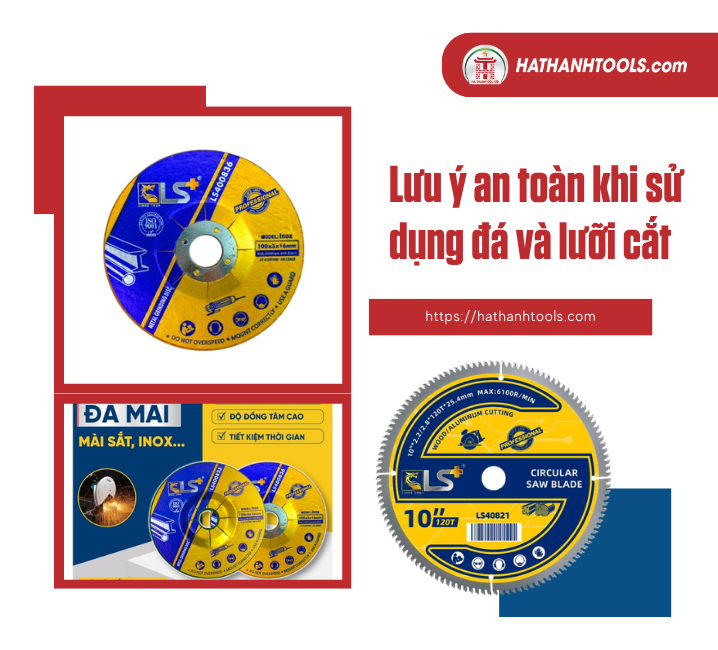
Whether using stainless steel cutting discs, iron cutting discs, diamond blades, dry cutting blades, or wood cutting blades, safety should always be the top priority. Most accidents during operation do not stem from product quality but from using incorrect accessories, improper installation, or neglecting pre-work inspection steps.
Adhering strictly to instructions will help extend accessory life, protect equipment, and ensure operator safety.
Checking Diameter, Arbor Size, and Maximum Speed
Before installing any cutting disc, grinding wheel, or multi-purpose cutting blade, users must verify all technical specifications printed on the product.
Important parameters include:
-
Outer diameter.
-
Arbor hole diameter.
-
Product thickness.
-
Maximum rotational speed.
-
Permitted machine types.
Only install stainless steel cutting discs, dry cutting blades, tile blades, or diamond blades that match the machine's specifications. Using incorrectly sized accessories or exceeding the permitted speed limit can degrade performance and pose severe safety hazards.
This is also a vital criterion when choosing grinder blades or accessories for handheld cutters.
Do Not Use Cracked, Bent, or Chipped Products
Before each shift, take a few minutes to inspect the external condition of the cutting disc or blade.
If you detect signs such as:
-
Cracked disc.
-
Bent blade.
-
Chipped edge.
-
Uneven wear.
-
Abnormal vibration during operation.
Users should replace the accessory immediately rather than trying to continue using it.
For stainless steel cutting discs, microcracks can expand rapidly at high speeds. Meanwhile, bent diamond or wood cutting blades will reduce accuracy, cause machine vibration, and ruin the cut quality.
Though simple, visual inspections help prevent significant incidents during execution.
Always Use Safety Guards and Protective Gear
One of the most common mistakes is removing the safety guard for easier operation. However, this is a critical protective component when operating a grinder with cutting discs, grinding wheels, diamond blades, or other cutting accessories.
Operators must be fully equipped with:
-
Safety goggles.
-
Dust mask.
-
Protective gloves.
-
Earplugs or noise-canceling earmuffs.
-
Safety shoes when working on construction sites.
Additionally, the cutting area must be cleared of any flammable materials near the spark path.
Implementing these protective measures fully not only shields the operator but also improves work efficiency and minimizes risks during execution.
|
Material |
Recommended Product |
Compatible Machine |
Selection Notes |
Iron, steel |
Iron cutting disc or metal cutting disc |
Angle grinder |
Choose correct diameter and maximum speed |
Stainless steel |
LS+ stainless steel cutting disc |
Angle grinder |
Prioritize thin discs, correct stainless steel application |
Tiles, stones |
Diamond blade |
Tile cutter, compatible grinder |
Check for dry or wet cutting |
Wood |
Toothed wood cutting blade |
Compatible saw machine |
Correct number of teeth, arbor size, and diameter |
Aluminum |
LS+ aluminum cutting blade |
Aluminum cutting machine |
Choose suitable tooth count to reduce burrs |
Multiple construction materials |
Multi-purpose diamond blade |
Compatible machine |
Do not exceed the declared scope of application |
Grinding and surface cleaning |
Grinding wheel or flap disc |
Angle grinder |
Do not use grinding wheels for cutting |
Choosing the right accessory not only helps you correctly distinguish between cutting discs and cutting blades but also improves cut quality, saves consumables, and extends the life of both your machine and accessories. In practice, using the right product from the start always delivers better cost efficiency than forcing a single accessory to handle multiple materials.
Frequently Asked Questions About Cutting Discs and Blades
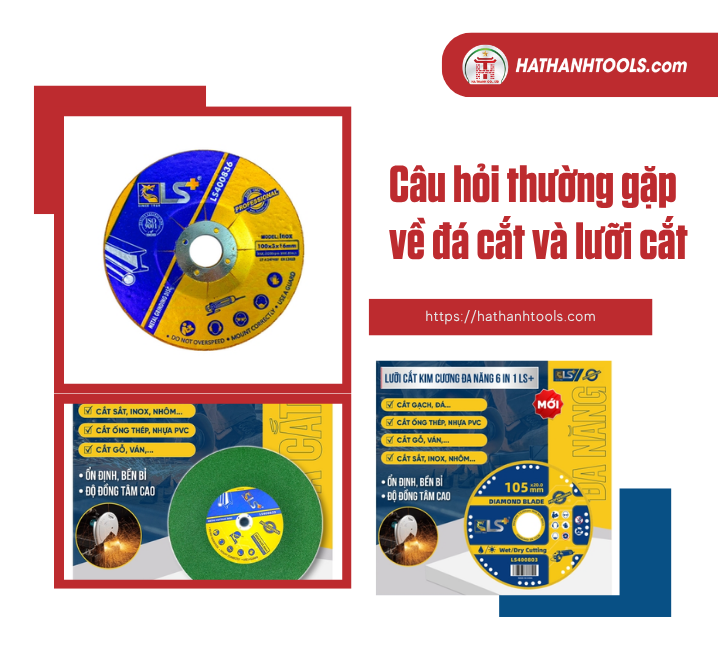
During the selection and usage of cutting accessories, many users still have concerns about application, compatibility, and correct operation. Below are common questions to help you distinguish between cutting discs and cutting blades more clearly, so you can select the correct accessory for each job.
Can Cutting Discs Be Used for Grinding?
Not recommended. This is a very common operating mistake for those new to handheld angle grinders.
Stainless steel cutting discs and iron cutting discs are designed with a thin structure meant to withstand forces along the cutting plane. If you use the side of the disc to grind, the force is not applied as originally designed, increasing the risk of cracking, shattering, or breaking the disc during operation.
If you need to treat welds, clean surfaces, or remove rust, you should use LS+ iron - stainless steel grinding wheels or combine them with LS+ green flap discs for better results and safety.
Can Stainless Steel Cutting Discs Cut Iron?
Some LS+ stainless steel cutting disc lines are capable of cutting multiple metals like iron, steel, and stainless steel. However, users should still read the product label details to understand the specific scope of application.
Choosing the right stainless steel cutting disc, iron cutting disc, or product suited for the material will help:
-
Create cleaner cuts.
-
Reduce accessory wear.
-
Minimize material edge burning.
-
Extend product lifespan.
-
Save operating costs.
Can Diamond Blades Cut Wood?
Not recommended.
Diamond blades are designed specifically for masonry materials such as brick, stone, or high-hardness surfaces. The product structure is completely different from a toothed wood cutting blade.
Only when the manufacturer explicitly states that the blade is a multi-purpose cutter capable of handling wood should users proceed with such application.
For natural or industrial wood, the appropriate choice remains an LS+ wood cutting blade to ensure neat cuts and operational safety.
Are Wood Cutting Blades with More Teeth Always Better?
Not entirely.
This is a common misconception but not quite accurate.
Typically:
Blades with more teeth yield smoother cuts, reduce edge chipping, and are suitable for tasks requiring high aesthetics.
Blades with fewer teeth usually offer faster cutting speeds, ideal for high-productivity tasks.
Therefore, when choosing a wood cutting blade, users should consider:
-
Wood type.
-
Material thickness.
-
Machine power.
-
Desired cutting quality.
Do not evaluate a blade's quality based solely on its tooth count.
How Do I Know if a Disc or Blade Fits My Machine?
This is a vital step before installing any accessory.
Users need to cross-reference all technical parameters including:
-
Outer diameter.
-
Arbor hole diameter.
-
Thickness.
-
Maximum rotational speed.
-
Compatible machine type.
When selecting grinder blades, dry cutting blades, tile blades, stainless steel cutting discs, or iron cutting discs, never use a product whose specs exceed the machine's safety limits to ensure safety and performance.
Related Product Categories
To help you select the right accessory for each fabrication need, Hathanhtools.com offers a diverse range of genuine LS+ products, satisfying requirements from civil construction to industrial manufacturing.
Standout product categories include:
-
Flap discs and grinder accessories
Selecting the correct product not only makes distinguishing between cutting discs and cutting blades easier but also optimizes construction efficiency, minimizes material loss, and extends machine service life.
Contact Information
Choosing the right cutting disc or blade ensures a stable cut, saves material, and guarantees safety on the job. If you need consulting on selecting stainless steel cutting discs, iron cutting discs, diamond blades, dry cutting blades, wood cutting blades, aluminum cutting blades, or multi-purpose blades tailored to each material and machine type, please contact Ha Thanh One Member Co., Ltd – HCMC Branch for prompt assistance.
Hathanhtools.com specializes in the wholesale and retail of genuine hardware products, consumables, hand tools, power tools, battery tools, and premium accessories, meeting diverse demands from individuals to enterprises. With our experienced consulting team, we will help you select the right product, correct size, and appropriate application, contributing to improved construction efficiency and optimized investment costs.
Contact Information
Ha Thanh One Member Co., Ltd – HCMC Branch
Hotline: 0902 8888 02
Address: 35 Nguyen An Khuong, Cho Lon Ward, Ho Chi Minh City
Email: cskh@hathanhtools.com
Website: https://hathanhtools.com
Tax code: 0100108529-006