Wall Plug-Free Drill Bit – Fast & Precise Drilling, No Off-Center Drift
In construction, furniture installation, or residential repairs, time and accuracy are always the two factors that determine the quality of work. In practice, many technical workers still have to perform the traditional process of drilling a hole, inserting a plastic wall plug, and then driving the screw. Although common, this process is time-consuming, prone to off-center deviation, and reduces installation efficiency, especially when working on a large number of drilling points.
The introduction of wall plug-free drill bits has provided a more optimal solution for modern drilling and fastening needs. Featuring a specialized design that allows for drilling pilot holes and fastening screws directly into walls, bricks, or concrete, the product eliminates intermediate steps, accelerates construction speed, and minimizes off-center drift right from the start of drilling.
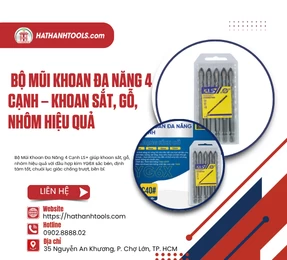
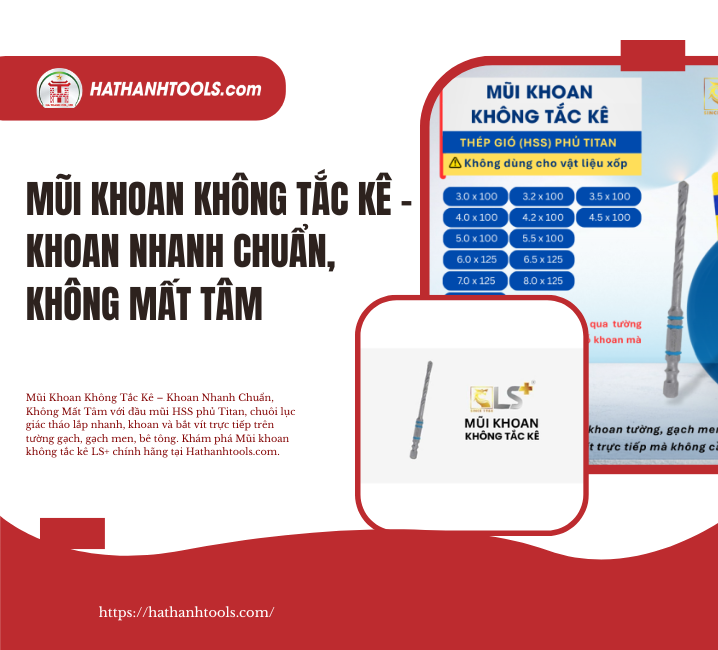
Outstanding in this product line is the LS+ Wall Plug-Free Drill Bit, distributed by Ha Thanh Co., Ltd - HCMC Branch. The product is designed with a sharp Titanium-coated High-Speed Steel (HSS) tip, optimized spiral flutes for efficient dust removal, and a hex shank compatible with various popular cordless drills and impact drivers. This is the perfect choice for plumbers, electricians, furniture installers, mechanical technicians, and DIYers who need a fast, precise drilling solution with high durability and minimal jamming.
The article below will help you understand what a wall plug-free drill bit is, its structure, how it differs from regular drill bits, and why professional technicians prefer the LS+ Wall Plug-Free Drill Bit.
What is a Wall Plug-Free Drill Bit?
A wall plug-free drill bit is a specialized line of drill bits used to drill pilot holes and fasten screws directly into materials without using traditional plastic wall plugs. This solution is widely applied in anchorless wall drilling, installing accessories, M&E construction, hanging furniture fixtures, or home repairs.
Unlike the conventional method that requires multiple steps—drilling, cleaning the hole, hammering in the wall plug, and then tightening the screw—direct fastening drill bits streamline the process and significantly increase work speed. Users can use them on ceramic tiles, brick walls, concrete, and many other common construction surfaces when paired with the correct type of specialized screws.
A crucial point to understand correctly is that drilling walls without plugs does not mean you can use just any screw. To ensure a secure grip, load-bearing capacity, and connection longevity, users must still choose the right type of screw and size corresponding to the drill bit's diameter. Choosing incorrectly can prevent the screw threads from catching, enlarge the drilled hole, or reduce the material's holding capacity.
The LS+ Wall Plug-Free Drill Bit line is designed with a hex shank for quick installation on cordless drills or impact drivers with suitable chucks, offering high flexibility in actual construction.
Principle of Direct Drilling and Fastening
To use a wall plug-free drill bit effectively, users must understand its operating principle. In essence, the drill bit does not completely replace the role of the screw but acts to create a perfectly-sized pilot hole so that specialized screws can grip directly into the material.
The basic operating process includes the following steps:
-
Drill a pilot hole using a drill bit with a diameter corresponding to the screw being used.
-
Clean the drill dust so the screw threads can make good contact with the hole wall.
-
Drive the corresponding screw into the material using an impact driver or a cordless drill on screwdriver mode.
The advantage of this principle is eliminating the plastic wall plug insertion step, reducing redundant movements, and speeding up the installation process. Especially in tasks requiring tens or hundreds of fastening points, using a plug-free drill bit can save significant time and effort.
However, please note that not all screws are suitable. For ceramic tiles, brick walls, or concrete, specialized screws with excellent thread-gripping capabilities on building materials should be used. The correct combination of a hex shank concrete drill bit and a matching screw will directly determine the security of the connection.
Structure of the Wall Plug-Free Drill Bit
The efficiency of the LS+ Wall Plug-Free Drill Bit comes from its optimized design for fast, low-jam, and drift-free drilling. The product structure consists of the following key components:
Sharp Titanium-Coated HSS Drill Bit Tip
This is the component in direct contact with the material. The sharp point design helps locate the exact drilling point right from the start, limiting slippage on slippery surfaces like ceramic or wall tiles. The Titanium coating increases surface hardness, reduces wear and tear, and extends the lifespan under frequent use.
Optimized Dust Removal Flutes
The spiral flutes are designed to evacuate drill dust faster during operation. This reduces friction, prevents the tip from overheating, and supports more stable operation of the hex shank tile drill bit during continuous drilling.
One-Piece Solid Drill Bit Body
The solid, one-piece design increases stability when transferring power from the drill machine to the cutting tip. As a result, the drill bit vibrates less, supporting more accurate anchorless wall drilling and reducing the risk of hole deviation.
Quick-Change Hex Shank
This is a highlight of the LS+ Wall Plug-Free Drill Bit. The hex shank is compatible with a wide range of cordless drills, impact drivers, and screwdrivers with matching collets, allowing quick bit changes without wasting time on adjustments.
The combination of a Titanium-coated HSS tip, dust-clearing flutes, and a hex shank creates a direct-fastening drill bit solution suitable for both professional and DIY applications.
How Does a Wall Plug-Free Drill Bit Differ from a Regular Drill Bit?
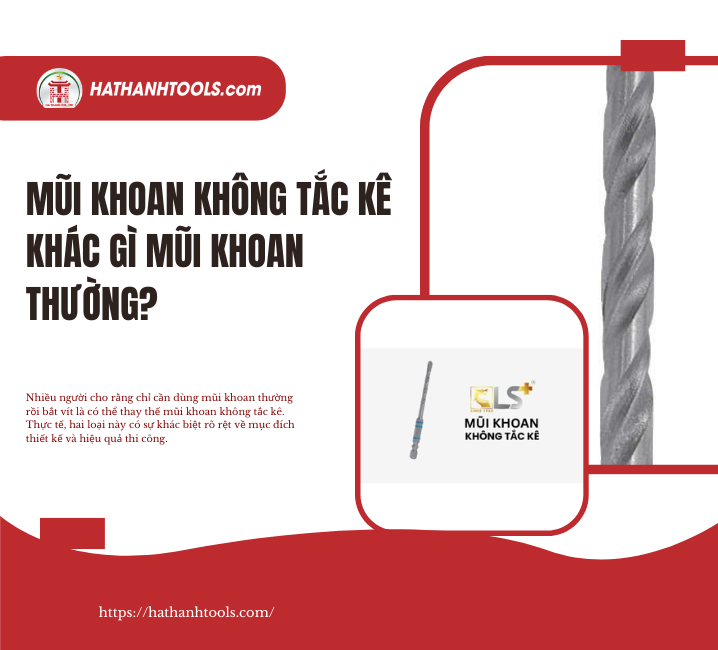
Many people assume that using a regular drill bit and then driving a screw can replace a wall plug-free drill bit. In reality, these two types have distinct design purposes and installation efficiencies.
| Criteria | LS+ Wall Plug-Free Drill Bit | Regular Drill Bit |
Construction Process |
Drill and screw directly | Drill → insert wall plug → drive screw |
| Number of Steps | Fewer | More |
| Screw Type Used | Corresponding specialized screws | Usually used with plastic wall plugs |
| Installation/Removal Ease | Fast thanks to hex shank | Depends on chuck type |
| Applications | Brick walls, ceramic tiles, concrete, quick installation | General hole drilling |
| Work Efficiency | Fast, clean, less off-center drift | More time-consuming |
The most important difference is that wall plug-free drill bits are optimized for creating pilot holes for screws to grip directly into the material, whereas regular drill bits are mainly used to create holes for various general purposes.
For tasks requiring high speed, such as installing electrical cable trays, hanging accessories, fitting curtain tracks, brackets, or installing furniture, the LS+ Wall Plug-Free Drill Bit significantly reduces operation time and limits errors caused by manual wall plug insertion.
Advantages of the LS+ Wall Plug-Free Drill Bit
The reason why the LS+ Wall Plug-Free Drill Bit is chosen by many technical professionals is its ability to simultaneously meet three key requirements: fast drilling, low jamming, and high durability. It not only shortens installation time but also supports more accurate operations on many common building materials.
Compared to many generic plug-free drill bits on the market, LS+ is optimized in tip design, spiral flutes, and the hex shank system, providing a more stable working experience in practice.
Minimizing Slippage and Off-Center Drift at the Start of Drilling
One of the most common issues when drilling walls without plugs is that the drill bit easily slips away from the marked position, especially on glossy ceramic tiles, wall tiles, or hard, smooth surfaces. When a drill bit slips right at the start, the hole will be off-center, affecting the aesthetics and precision of the entire installation.
The LS+ Wall Plug-Free Drill Bit is equipped with a sharp Titanium-coated HSS point, increasing its ability to grip the target immediately upon contacting the material surface. This design helps:
-
Accurately locate the drilling point.
-
Reduce lateral slippage.
-
Minimize vibration at the start.
-
Create a rounder, perfectly centered hole.
To achieve optimal results, start the machine at a low speed for the first few seconds, keep the tool perpendicular to the surface, and only accelerate once the tip has firmly bitten into the material. This technique is highly critical when using hex shank ceramic tile drill bits or drilling on easily chipped surfaces.
By preventing off-center drift at the start, this product is particularly suitable for high-precision tasks such as installing switches, outlets, hangers, bathroom accessories, and furniture fixtures.
Quick-Change Hex Shank
In actual construction environments, constantly switching between drill bits, screwdriver bits, and other accessories can waste considerable time. This is why the hex shank has become a standard preferred by many professional tradespeople.
The LS+ Wall Plug-Free Drill Bit features a 1/4-inch hex shank which:
-
Mounts directly into cordless drills with compatible chucks.
-
Is compatible with impact drivers utilizing hex bit holders.
-
Allows quick insertion and release without requiring auxiliary tools.
-
Reduces changeover time between drilling and fastening stages.
This advantage is especially useful when working overhead, in tight spaces, or when constantly moving between multiple installation locations. Instead of using a chuck key to change bits like traditional drill bits, users can simply plug and pull very quickly.
For M&E, plumbing, or interior fit-out teams, using hex shank concrete drill bits significantly optimizes daily productivity while reducing redundant movements for the operator.
Multiple Sizes for Diverse Construction Needs
Not every job uses the same screw type or requires the same drilling depth. Selecting the correct drill bit and screw size is the key factor determining the grip, load capacity, and durability of the joint.
The LS+ Wall Plug-Free Drill Bit is available in a wide range of sizes:
-
3.0 × 100 mm
-
3.2 × 100 mm
-
3.5 × 100 mm
-
4.0 × 100 mm
-
4.2 × 100 mm
-
4.5 × 100 mm
-
5.0 × 100 mm
-
5.5 × 100 mm
-
6.0 × 125 mm
-
6.5 × 125 mm
-
7.0 × 125 mm
-
8.0 × 125 mm
-
10 × 148 mm
This range of sizes allows users to choose flexibly according to their specific needs:
-
3.0 – 4.0 mm: Suitable for small screws, lightweight accessories, electrical switches, decorative trims.
-
4.2 – 5.5 mm: Ideal for wall hangers, furniture accessories, residential plumbing, and electrical systems.
-
6.0 – 8.0 mm: Perfect for connections requiring a stronger grip on brick walls or concrete.
-
10 × 148 mm: Suitable for applications requiring deep drilling or larger-sized screws.
When choosing drill bit and screw sizes, prioritize the rule that the hole diameter must match the shank of the specialized screw. Avoid drilling too large, which prevents the screw from catching, or too small, which makes driving difficult and may snap the screw head.
The variety of sizes allows the LS+ Wall Plug-Free Drill Bit to perform exceptionally well, from home repairs to professional construction, while facilitating tool standardization in installation teams' inventories.
Which Materials Can the Wall Plug-Free Drill Bit Be Used For?
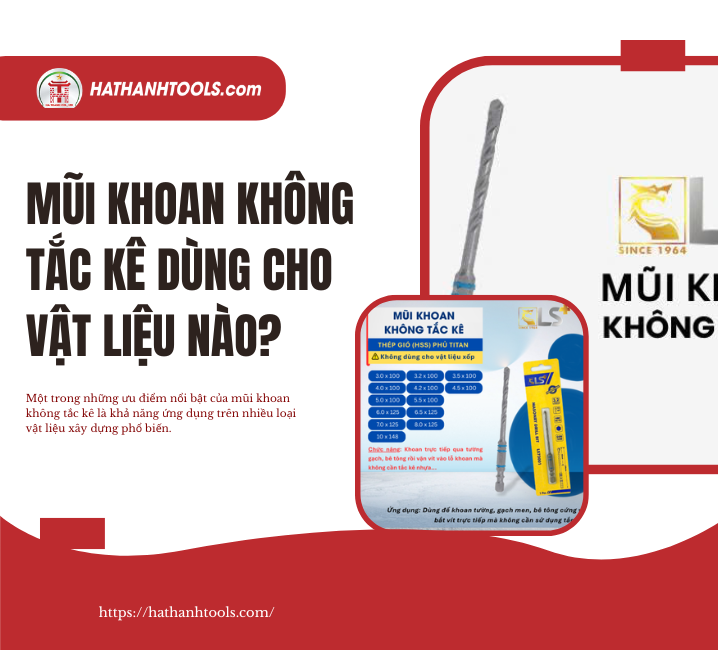
One of the prominent advantages of the wall plug-free drill bit is its versatility across multiple common building materials. Thanks to the sharp Titanium-coated HSS point, optimized flutes, and convenient hex shank, the LS+ Wall Plug-Free Drill Bit excels in tasks ranging from home maintenance to commercial projects. However, to achieve maximum efficiency, users must select the correct drilling mode, drill size, and screw type corresponding to each material.
Drilling Brick Walls and Masonry
Brick walls and masonry are the most common materials used in homes, offices, workshops, and civil buildings. This is also the ideal environment for the wall plug-free drill bit to showcase its efficiency.
By drilling pilot holes and driving screws directly, this plug-free drill bit eliminates plastic anchor installations, saving considerable time. This is especially beneficial when installing a high volume of accessories or equipment.
Some practical applications include:
-
Hanging paintings, clocks, signs.
-
Installing TV wall mounts.
-
Installing electrical cable trays and trunking.
-
Installing water supply and drainage pipes.
-
Securing wall cabinets.
-
Installing decorative shelves.
-
Mounting CCTV security cameras.
-
Installing fire and smoke detectors.
-
Hanging decorative lamps.
-
Home repairs and renovations.
When drilling walls without plugs, select the correct size of direct fastening drill bits and specialized screws to guarantee that the screw threads grip the material firmly. If the wrong diameter is chosen, the screw may fail to achieve the desired holding force.
For hollow brick walls, users should also check the material quality before proceeding to select the appropriate torque, avoiding cracking or breaking the bricks.
Drilling Ceramic Tiles to Prevent Chipping
Drilling on ceramic tiles is always a task that demands care because tile surfaces are highly hard but the glaze layer is brittle. A wrong move or using an inappropriate speed can easily cause the hole edges to chip, crack, or ruin the aesthetics.
With its sharp point for precise centering, the hex shank ceramic tile drill bit reduces initial slippage, making it easier for users to control the drilling line.
To minimize chipping, follow these principles:
Marking the Drilling Position Accurately
Before drilling, identify the correct installation spot and mark it with a marker or masking tape. This helps the drill tip grip better when starting.
Do Not Turn on Hammer Mode From the Start
When drilling ceramic tiles, use regular drilling mode so the tip can penetrate the glaze layer first. Only switch to hammer mode if necessary after passing the tile layer and reaching the brick or concrete wall behind.
Drill Slowly and Do Not Force the Bit Too Hard
This is an essential rule when using the LS+ Wall Plug-Free Drill Bit. Applying excessive force does not speed up the process but instead increases the risk of cracking tiles or snapping the bit tip. Let the cutting edges do the work rather than using excessive physical force.
Additionally, users should regularly clear dust from the hole to reduce heat and ensure smoother drilling.
Drilling Concrete and Hard Surfaces
Concrete is a very hard material, so selecting the proper tool plays a critical role. The hex shank concrete drill bit from LS+ is engineered to support drilling on concrete and other tough surfaces when paired with the right drill and specialized screws.
Before starting, keep these factors in mind:
Check Material Hardness
Not all concrete surfaces are the same. Old concrete, reinforced concrete, or high-grade concrete will require different drill power and techniques.
Choose Proper Tool Power
Cordless or corded drills must have sufficient power to generate stable cutting force. An underpowered tool can reduce drilling efficiency and overheat the drill tip.
Select the Correct Screws
Even when using a plug-free drill bit, you must choose screws compatible with the hole diameter and material characteristics. This determines the overall durability of the joint after completion.
For M&E installation, carpentry, or industrial equipment setup, combining the LS+ Wall Plug-Free Drill Bit with the proper drill will enhance work efficiency, cut down on labor, and deliver more precise holes.
How to Use a Wall Plug-Free Drill Bit Correctly
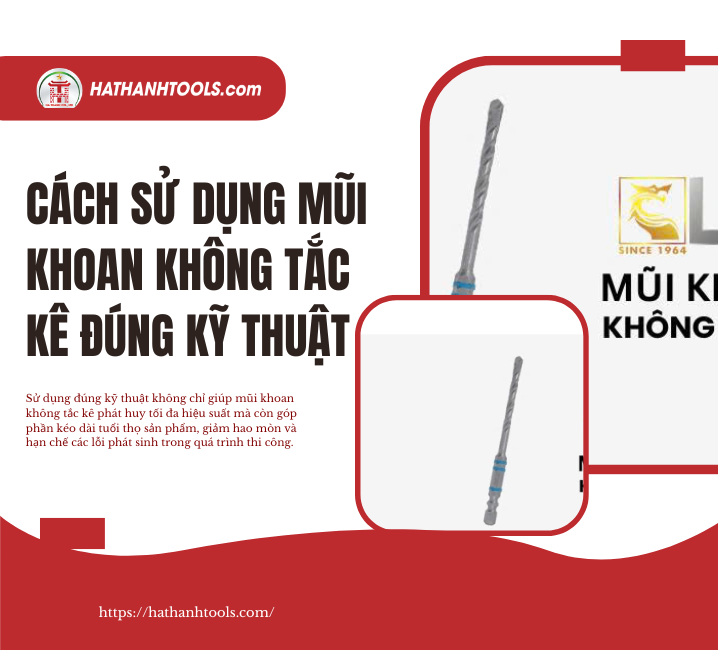
Using the correct technique not only maximizes the performance of the wall plug-free drill bit but also extends the product's lifespan, minimizes wear, and limits common errors during construction.
Users should follow the proper process from selecting the right drill and screw size, handling the drilling process, to cleaning the hole before fastening.
Selecting the Correct Drill Bit and Screw Size
Matching the drill bit and screw sizes is a prerequisite for the screw to grip the material securely. If the hole is too large, the screw will lack holding force; conversely, if the hole is too small, driving the screw will be difficult or ruin the threads.
Below is a reference guide for quick selection:
|
Drill Bit Diameter |
Compatible Screw (Reference) |
Target Material / Application |
|
3.0 mm |
Small screw |
Ceramic tiles, lightweight accessories |
|
3.2 mm |
Small screw |
Brick walls, electrical appliances |
|
3.5 mm |
Small-medium screw |
Electrical trunking, furniture hardware |
|
4.0 mm |
Medium screw |
Wall hangers, small shelves |
|
4.2 mm |
Medium screw |
Brick masonry walls |
|
4.5 mm |
Medium screw |
Electrical and plumbing works |
|
5.0 mm |
Large screw |
Brick walls, concrete |
|
5.5 mm |
Large screw |
Brick walls, concrete |
|
6.0 mm |
Extra-large screw |
Civil construction |
|
6.5 mm |
Extra-large screw |
Hanging systems |
|
7.0 mm |
Large screw |
Concrete applications |
|
8.0 mm |
Large screw |
Concrete applications |
|
10 mm |
Specialized screw |
High-load connections |
Note: This is a reference table for quick selection. In actual construction, prioritize the technical specifications of the screw being used to ensure optimal grip.
Steps for Drift-Free Drilling
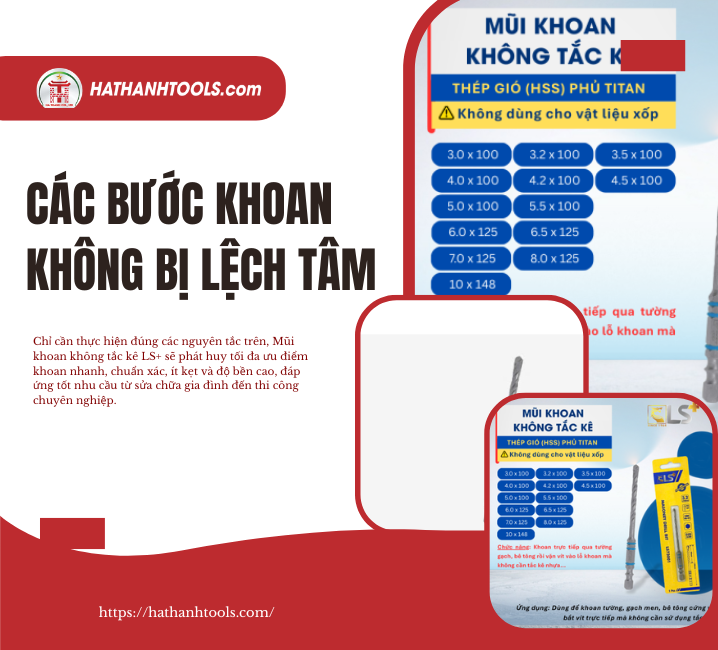
To ensure the LS+ Wall Plug-Free Drill Bit operates at peak efficiency, users should follow the correct operational steps.
Marking the Position
Determine the exact spot to drill beforehand to avoid having to re-drill multiple times.
Keeping the Tool Perpendicular
The drill should be held perpendicular to the surface to create straight holes, helping the screw grip evenly and securely.
Starting at Low Speed
This is a crucial step to let the sharp point accurately self-center, especially on ceramic tiles or slippery surfaces.
Accelerating Gradually
Once the tip has bitten into the material, gradually increase the speed for a stable drilling process, minimizing vibration and reducing the risk of drift.
Cleaning the Hole Before Fastening
After drilling, remove any remaining dust from the hole. Accumulated dust can reduce the thread-gripping capability of the screw and compromise the connection's strength.
Common Mistakes During Use
Although using a plug-free drill bit is simple, many people still make mistakes that significantly reduce work efficiency.
Drilling Too Large a Hole
This is the most common mistake. A hole larger than the screw's diameter will leave the screw with zero holding force.
Choosing the Wrong Screw Type
Not all screws are suitable for direct-fastening applications. Make sure to choose specialized screws tailored to each material.
Forcing the Tool Too Hard
Applying too much force does not speed up drilling but increases friction, generates excess heat, and reduces the tip's lifespan.
Angled Drilling
Drilling non-perpendicularly causes misaligned holes, making it hard for screws to catch threads and reducing holding power.
Neglecting Hole Dust Cleaning
Remaining dust prevents the screw from making firm contact with the hole walls, diminishing fastening efficiency and joint durability.
By simply adhering to these guidelines, the LS+ Wall Plug-Free Drill Bit will fully unleash its advantages of fast, precise, low-jam, and highly durable drilling, satisfying both DIY and professional demands.
HA THANH MTV CO., LTD – HCMC BRANCH is a specialist in the wholesale distribution of hardware, hand tools, consumables, power tools, cordless tools, and various equipment for maintenance and construction. With a diverse product portfolio and an experienced consulting team, hathanhtools.com is always ready to accompany customers in choosing the optimal solution for every application.
Please visit hathanhtools.com to check product details, obtain technical specification advice, and receive nationwide delivery quotes.
Contact Information
Ha Thanh Co., Ltd - HCMC Branch
Hotline: 0902 8888 02
Address: 35 Nguyen An Khuong, Ward Cho Lon, Ho Chi Minh City
Email: cskh@hathanhls.com
Website: https://hathanhtools.com
Tax Code: 0100108529-006