Can a Voltage Detector Pen Test Electricity? Detailed Answers and Correct Usage
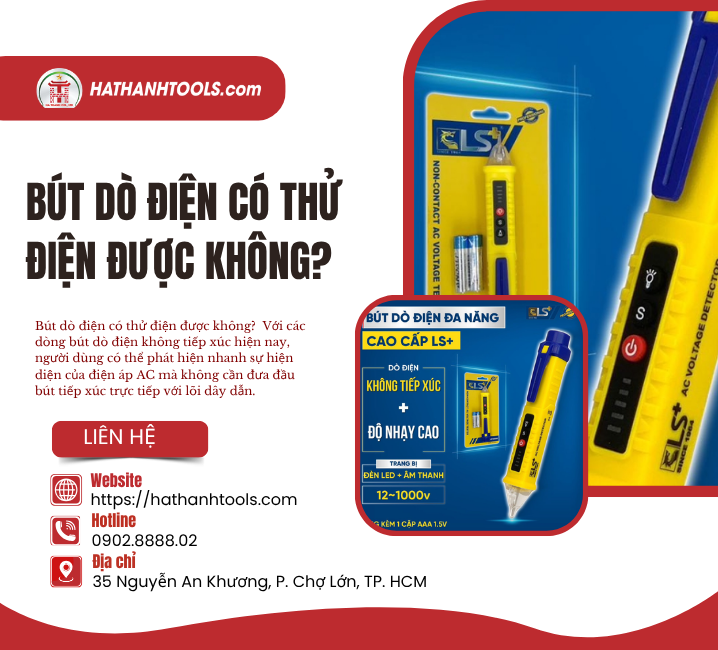
"Can a voltage detector pen test electricity?" is a question many people ask when researching voltage testing tools, especially non-contact voltage detector pens. With a compact design, quick operation, and light or sound warning capabilities, voltage detector pens are increasingly popular for residential electrical repairs, construction, machine maintenance, and electrical equipment testing.
However, it is crucial to distinguish between detecting the presence of voltage and accurately measuring its value. A voltage detector pen can help identify live areas, but not all devices have the function to display the exact voltage value in Volts.
In this article, Ha Thanh Tools will answer in detail whether a voltage detector pen can test electricity, the operating principle of NCV technology, how to use a non-contact voltage detector pen, and important notes when inspecting electrical systems. Additionally, the article introduces the LS+ Premium Multipurpose Voltage Detector Pen with non-contact detection capability in the 12–1000V range.
Can a Voltage Detector Pen Test Electricity?
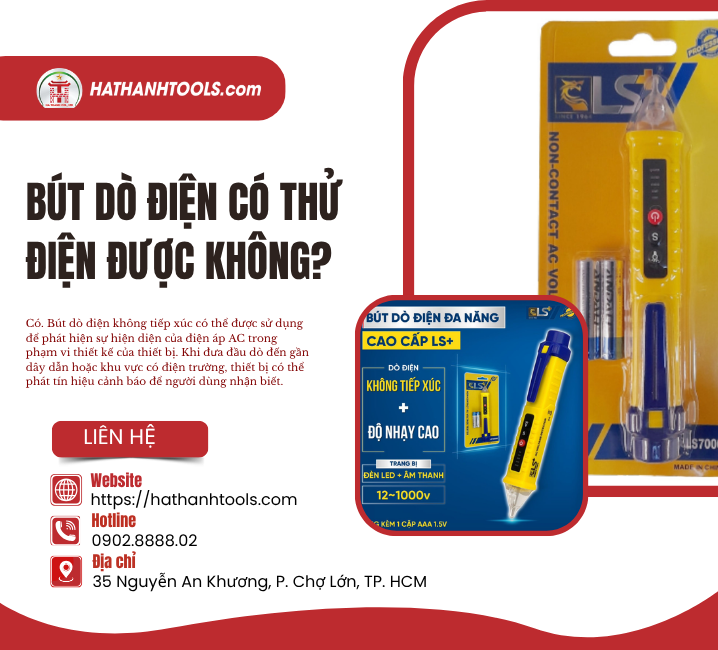
Yes. A non-contact voltage detector pen can be used to detect the presence of AC voltage within the device's designed range. When the probe is brought close to a conductor or an area with an electric field, the device emits a warning signal to alert the user.
However, if the question "can a voltage detector pen test electricity" is meant in terms of measuring the exact voltage value in Volts, the answer requires a clearer explanation. A voltage detector pen primarily functions to detect and warn of voltage; it should not be equated with multimeters or specialized electrical measuring instruments that can provide a specific voltage reading.
In other words, a voltage detector pen is suitable for quickly checking whether an area or wire is potentially live. When there is a need to determine the exact voltage, check potential differences, or diagnose faults in an electrical system, users should use an appropriate measuring instrument.
This is also an important point to remember when wondering if a voltage tester pen is accurate. Accuracy here depends on the intended use. A voltage detector pen can be very useful for detecting voltage, but that does not mean it can accurately measure the numerical voltage value like a multimeter.
How Does a Voltage Detector Pen Detect Power Sources?
Many current non-contact voltage detector pens use NCV technology—which stands for Non-Contact Voltage, meaning it detects voltage without needing direct contact with the conductive wire core.
Simply put, when an AC conductor is carrying electricity, an electric field is generated around the wire. The NCV sensor is designed to detect this electric field within a certain range. When the detected signal reaches the appropriate threshold, the pen will issue a warning via LED lights, sound, or other indicators designed by the manufacturer.
Thanks to this principle, users do not necessarily have to touch the metal tip directly to the conductor to detect the presence of electricity. This is a prominent advantage of non-contact voltage detector pens, especially useful when quick checks are needed in environments with multiple wires or hard-to-reach areas.
However, the NCV signal can be affected by distance, insulation layers, wire positioning, the surrounding environment, and device sensitivity. Therefore, users should not rely on the pen's warning signal as absolute proof in all situations.
How Does a Voltage Detector Pen Differ from a Contact Tester Pen?
To clearly understand whether a voltage detector pen can test electricity, it is essential to distinguish between a non-contact voltage detector pen and a traditional contact-based voltage tester pen.
A contact voltage tester pen usually requires the probe tip to touch the test point according to the product's design. When electricity is detected, an indicator light or mechanical indicator alerts the user.
In contrast, a non-contact voltage tester pen uses a sensor tip to detect the electric field without directly touching the conductive core. This testing method is more convenient for preliminary inspections in many cases.
Some key differences include:
-
Testing method: Traditional voltage tester pens usually test through direct contact; NCV detector pens detect voltage without direct contact.
-
Level of contact: Non-contact detector pens eliminate the need to place the probe directly onto conductive parts.
-
Scope of application: NCV detector pens are suitable for quickly checking wires, outlets, and areas suspected of being live, and helping to locate electric fields.
-
Warning signals: Depending on the model, the device may use LED lights, sound, or a combination of both.
-
Purpose: Both assist in testing electricity, but you must check the specific specifications and functions of each product.
Therefore, you should not rely solely on the name to evaluate a product. When purchasing a multipurpose voltage tester pen, users should clearly check whether the device supports contact or non-contact testing, its detection range, warning methods, and intended use.
Can a Voltage Detector Pen Measure Exactly How Many Volts?
This is a common point of confusion when users search for whether a voltage detector pen can test electricity.
If a product is advertised to have a detection range of 12–1000V, this information must first be understood as the voltage range the device is designed to detect according to the manufacturer's specifications. This does not mean the pen will display the exact value of 120V, 220V, 380V, or 1000V.
Voltage detection and voltage measurement are two different concepts.
For example, when the pen signals when brought near a live wire, it indicates that the device recognizes an electric field matching its detection conditions. However, from this signal alone, users cannot conclude the exact actual voltage of the wire.
If a specific voltage value is needed, a multimeter, clamp meter with a voltage-measuring function, or an appropriate specialized measurement device must be used.
When Should You Use a Voltage Detector Pen Instead of a Traditional Tester?
A voltage detector pen is particularly useful when users need quick checks while minimizing direct contact with power sources.
Some suitable situations include:
-
Quickly checking if a conductor is potentially live.
-
Checking electrical outlets.
-
Identifying voltage areas.
-
Assisting in wire tracing under suitable conditions.
-
Preliminary inspection of electrical equipment before starting work.
-
Assisting electricians during maintenance and repair processes.
-
Quickly checking areas suspected of being live.
For tasks requiring exact numerical values or system diagnostics, the voltage detector pen should only be considered an initial supporting tool.
How Does a 12–1000V Non-Contact Voltage Tester Work?
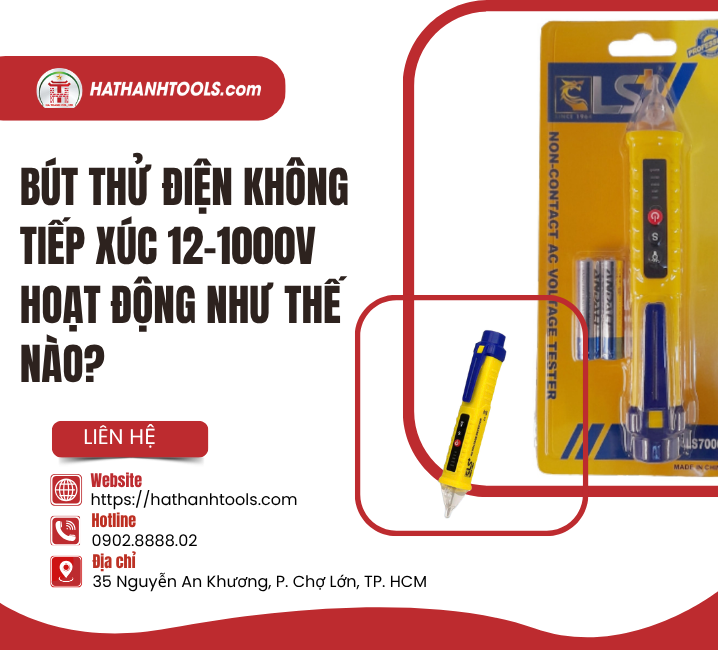
The phrase "12–1000V non-contact voltage tester" commonly appears when users search for modern voltage detector devices. This product line is generally designed for quick AC power source testing without direct contact with conductive parts.
Some devices in the same segment may be equipped with LED + sound alerts, powered by AAA batteries, and offer multiple sensitivity levels. These are factors users should research before making a choice.
At Ha Thanh Tools, the LS+ Premium Multipurpose Voltage Detector Pen is featured with non-contact detection capability, high sensitivity, LED and sound alerts, a 12–1000V range, and AAA battery operation.
NCV Non-Contact Voltage Detection Technology
NCV is a technology that allows the device to recognize the electric field around AC conductors without needing to put the probe in direct contact with the wire core.
Instead of requiring the user to touch a metal tip to the test point, the sensor inside the pen picks up the electric field signal within a suitable range. When a signal meeting the operational conditions is detected, the pen issues a warning.
This is the very foundation of the convenience offered by non-contact voltage testers.
However, NCV is not a technology that can replace all electrical measurement devices. Its main goal is to quickly detect the presence of voltage, providing users with more information before carrying out in-depth testing.
What Does the 12–1000V Detection Range Mean?
When you see the 12–1000V specification, you need to understand that this is the detection range announced according to the device's design.
It does not mean the pen will measure and display the exact value of every voltage between 12V and 1000V.
This is especially important when evaluating if a voltage tester is accurate. A device with a wide detection range can accommodate various testing scenarios, but the detection capability still depends on actual conditions.
For instance, the distance from the probe to the conductor, the thickness of the insulation, wire placement, surrounding environment, and electromagnetic interference can all affect the signal.
Therefore, interpret the specifications exactly for the purpose stated by the manufacturer: a detection range, not automatically assumed to be an accurate measurement range.
How Do the LED Light and Sound Alerts Work?
One of the most noticeable advantages of a voltage tester with an LED light is its ability to help users recognize status right during the testing process.
When the sensor detects a suitable voltage signal, the LED light may light up or change status according to the product design. Meanwhile, a voltage tester with sound will emit an audible warning to make it easier for the user to notice.
Combining both warning styles enhances visibility and awareness in different conditions. For example, in noisy environments or when it is difficult to see the light, the sound can provide an extra signal. Conversely, in environments where noise should be minimized, the LED light offers visual detection.
How Does the Sensitivity of a Voltage Detector Pen Affect It?
Sensitivity is a critical factor in a voltage detector pen's detection capabilities.
When the conductor is close to the probe, the electric field signal is typically easier to detect. However, as the distance increases or if the wire is behind a layer of material, the signal can weaken.
The insulation layer is also an element to consider. A thick layer of material or a complex wall structure can reduce detection efficiency.
Additionally, multiple wires running close together can create induction or interference, causing the device to respond. Therefore, users must understand that high sensitivity does not mean the pen can accurately detect power sources in every situation.
How to Use a Non-Contact Voltage Detector Pen Correctly
Understanding how to use a voltage detector pen is crucial to utilizing the device's functions properly.
Although non-contact voltage testers are generally simple to operate, users still need to check the pen's condition before use and should not rely solely on a single detection result for high-risk electrical work.
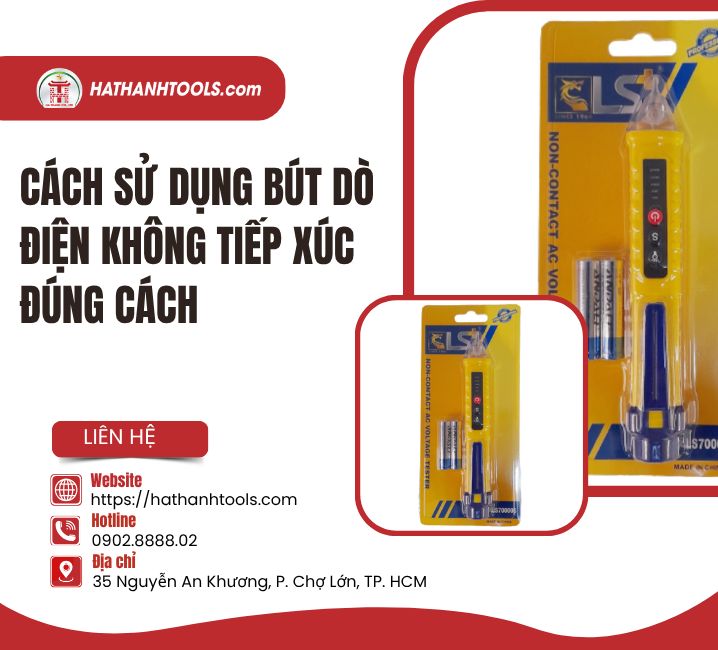
Step 1 – Check the Batteries and Pen Operation
Before testing an electrical system, check the device's battery source.
For models using AAA batteries, ensure that the batteries have sufficient power and are installed with the correct polarity. Then, test the pen on a known live power source to confirm that the device is responding normally.
This is a simple but vital step. If the pen does not work due to a dead battery or device malfunction, the user might incorrectly assume that the test area is dead (not live).
Step 2 – Bring the Probe Tip Close to the Wire or Outlet
For NCV mode, users do not need direct contact with any conductive metal parts.
Bring the probe tip of the non-contact voltage detector close to the conductor, outlet, or target area as instructed by the manufacturer.
If the device has multiple sensitivity levels, select the level appropriate for your purpose:
High sensitivity can assist in tracing wires under certain conditions, including when wires are behind materials.
Low sensitivity may be more suitable for identifying a live wire at close range while reducing warnings from surrounding power sources.
Do not disassemble or alter the structure of the pen to increase its detection capability.
Step 3 – Observe the LED Light and Sound Signals
When a voltage tester with LED and sound alerts detects an electric field, users should monitor both signals as designed.
If the light and sound indicators activate when the probe is brought near the target area, it indicates that the device has detected an electrical signal matching its operating conditions.
However, remember that the warning signal is not an accurate measurement of the voltage.
If the signal is unstable, re-check by changing the probe's position, checking the batteries, and cross-referencing with a known working power source.
Step 4 – Re-Verify Before Repairing the Electrical System
If you are preparing to repair, connect, or work directly with conductors, do not rely solely on a non-contact voltage tester to conclude that the system is safe.
The proper measure is to cut off the power supply and follow the necessary safety protocols. When the task requires determining the exact voltage or verifying a de-energized state, use a suitable measuring device.
This is a key principle in accurately answering whether a voltage detector pen can test electricity: a detector pen can assist in detecting voltage, but it does not replace the entire electrical safety testing procedure.
What Can a Voltage Detector Pen Be Used to Test?
Besides wondering if a voltage detector pen can test electricity, users are also interested in many practical situations such as locating live wires, testing outlets, identifying hot wires, finding energized zones, or locating signal loss points.
Depending on the design and specifications of each product, an electrician's voltage detector pen can serve as a convenient supporting tool during preliminary inspections.
Checking if an Outlet is Live
One of the most common applications of a voltage tester is quickly checking outlets.
With an NCV device, users can bring the probe close to the outlet area in accordance with the product instructions to check for a response.
If the device alerts, it shows that the pen has detected a suitable electric field signal. However, to determine the exact voltage or check if there is an issue with the outlet, specialized measuring equipment is still required.
Detecting Live Conductors
A wall wire detector pen is a fairly common search requirement. In reality, the ability to detect wires behind walls depends on wire depth, wall material, insulation, pen sensitivity, and the surrounding environment.
Therefore, it is more accurate to describe it as supporting the tracing of live wires under certain conditions, rather than asserting that it can detect them in every single scenario.
In addition, wires running close to each other can sometimes generate induced voltage. This might cause the pen to trigger a signal even if the user has not identified exactly which wire is live.
Therefore, when using a non-contact voltage detector pen, users should test multiple times and combine it with appropriate measurement methods if precision is needed.
Assisting in Identifying Hot Wires and Voltage Zones
A voltage detector pen can help quickly identify areas that are potentially live, guiding users on their next inspection steps.
This is a noteworthy advantage of multipurpose voltage tester pens, especially for electricians, maintenance technicians, or anyone who regularly inspects electrical systems.
However, do not use a voltage detector pen to test voltages that exceed the manufacturer's stated limits.
At the same time, a voltage detector pen should not fully replace a multimeter when you need to determine the exact voltage, measure parameters, or troubleshoot system faults.
Assisting in Checking Wire Locations or Signal Loss Points
Under suitable conditions, a voltage detector pen can help users identify areas where conductors carry an electrical signal.
When searching for an in-wall wire detector pen, note that effectiveness depends not only on the device itself but also on wire depth, wall covering materials, wall structure, insulation, and surrounding noise/interference levels.
Therefore, if the pen does not detect a signal at a certain spot, do not immediately conclude that there are absolutely no wires inside.
Conversely, even if the pen triggers an alert, it should not be taken as absolute evidence to pinpoint a specific wire or exact voltage.
What Makes the LS+ Multipurpose Voltage Detector Pen Stand Out?
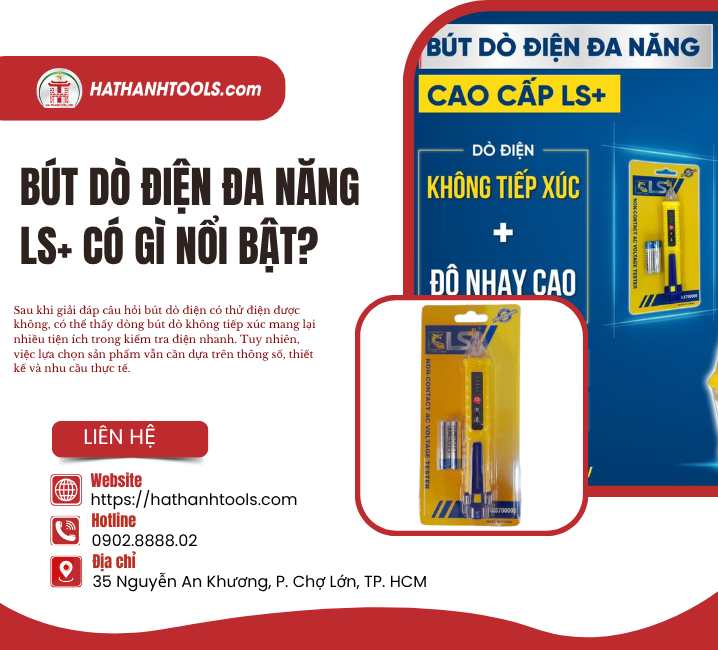
After answering whether a voltage detector pen can test electricity, it is clear that non-contact detector pens offer great utility for rapid electrical checks. However, choosing a product still depends on specifications, design, and practical requirements.
At Ha Thanh Tools, the LS+ Premium Multipurpose Voltage Detector Pen is a product aimed at non-contact electrical testing needs, featuring a compact design and intuitive warning features.
Non-contact detection – Minimizing Direct Contact with Power Sources
The first standout feature of this product is its non-contact detection capability.
This design helps users conduct the initial check without placing the probe tip directly against conductive metal parts while in NCV mode.
For electricians and technicians who frequently work with electrical systems, this quick-checking capability makes operations much more convenient.
However, even when using a non-contact tester, users must still adhere to electrical safety protocols. Do not treat the device as the sole means of verifying that a system is safe before performing repairs.
High Sensitivity, LED and Sound Alerts
The pen is introduced with high sensitivity, combining LED lights and audible warnings.
This combination helps users easily recognize feedback during tests. When the device detects a suitable electric field, the alert signal provides visual and auditory cues to capture the user's attention.
These are also features commonly sought after by buyers looking for voltage testers with LED lights or audible alerts.
12–1000V Detection Range and Compact Design
The LS+ Premium Multipurpose Voltage Detector Pen has a featured detection range of 12–1000V.
This specification fits the requirement for checking the presence of voltage within its design range. Users should understand that this is a detection range, not a guarantee that the device will measure and display exact voltage values across the entire range.
Additionally, its compact design makes the pen easy to grip, carry, and use in various inspection scenarios.
The product uses AAA batteries, making it convenient to replace the power source when needed.
Suitable for Electricians, Technicians, Hardware Stores, and Home Users
With its compact design and non-contact detection capabilities, the product is suitable for various user groups.
For an electrician's voltage detector pen, the advantage lies in its ability to perform rapid checks before proceeding with more in-depth procedures.
Maintenance technicians can use the device to help identify areas suspected of carrying power. Hardware and power tool stores can select this product to serve their business needs.
For households, the pen can support preliminary checks on outlets or electrical appliances.
However, users should keep in mind:
-
Do not touch the metal probe tip of the pen when testing electricity.
-
Do not use with wet hands.
-
Avoid using in excessively humid areas, as this can increase the risk of electric shock and affect test results.
-
Do not use beyond the limits announced by the manufacturer.
-
Check the battery status and the pen's operation before use.
-
Do not rely solely on the detector pen to carry out high-risk electrical work.
-
When precise voltage measurement is required, use an appropriate specialized measuring device.
Product Information – LS+ PREMIUM MULTIPURPOSE VOLTAGE DETECTOR PEN:
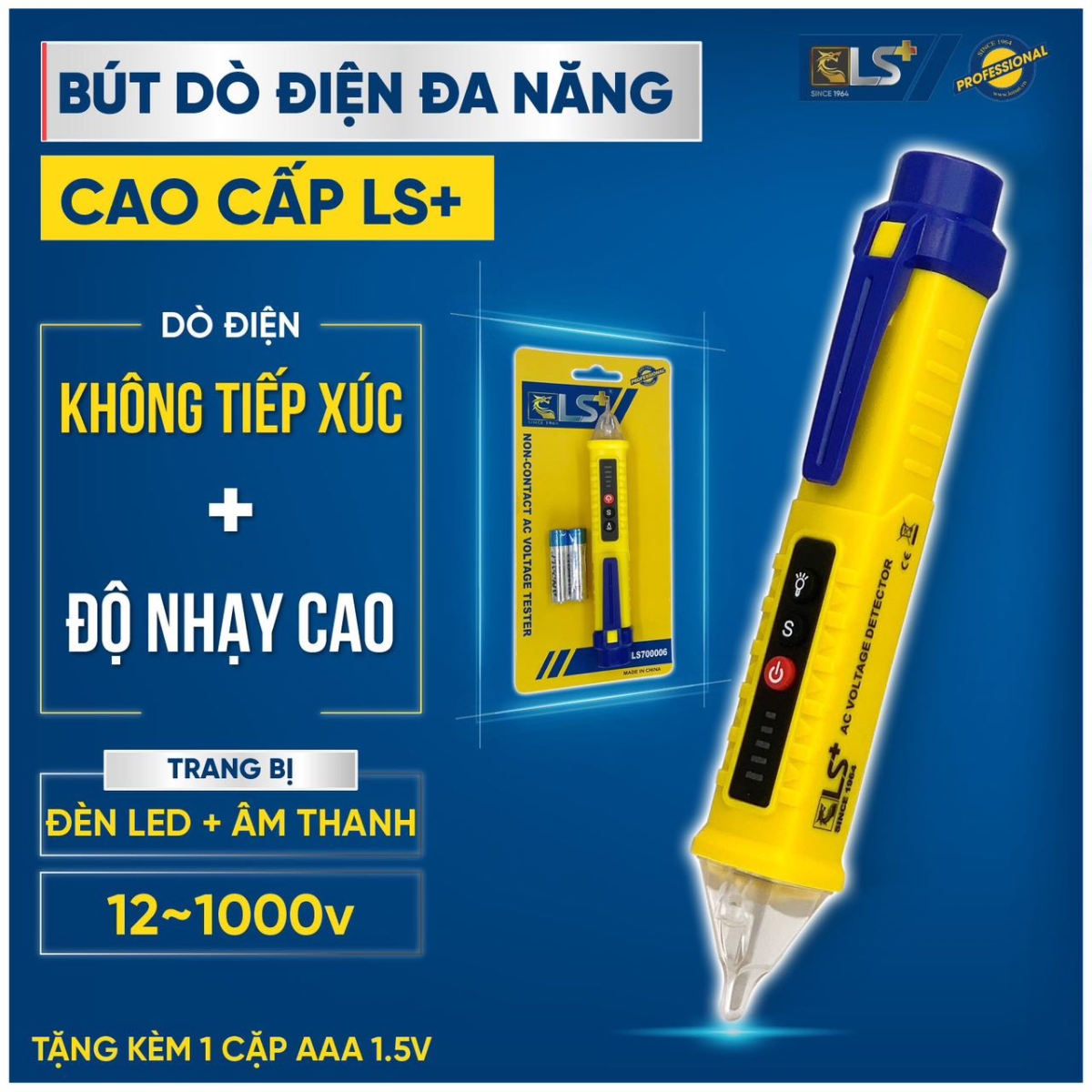
Non-contact voltage detection.
High sensitivity.
LED + sound alerts.
Detection range: 12–1000V.
Powered by AAA batteries.
Compact design, convenient for carrying and rapid checking.
If you are looking for voltage detector pens, non-contact voltage testers, or LS+ electrical tools for your business, you can browse the catalog at hathanhtools.com. Ha Thanh MTV Co., Ltd – HCMC Branch specializes in providing hardware, tools, and supplies for wholesale buyers, stores, dealers, and distributors nationwide.
Ha Thanh MTV Co., Ltd – HCMC Branch specializes in providing hardware, tools, and supplies for wholesale buyers, stores, dealers, and distributors nationwide.
Contact Information
Ha Thanh MTV Co., Ltd – HCMC Branch
Hotline: 0902 8888 02
Address: 35 Nguyen An Khuong, Ward Cho Lon, Ho Chi Minh City
Email: cskh@hathanhtools.com
Website: https://hathanhtools.com
Tax Code: 0100108529-006