How Many Types of Cutting Blades Are There? Uses of Each Type
In construction, mechanical work, furniture manufacturing, or residential repair, cutting blades are essential accessories that directly affect the speed, accuracy, and quality of the cut. However, not every blade can be used for all materials. Wood, aluminum, stainless steel, iron, brick, stone, and concrete all have different characteristics and require a correspondingly designed blade.
So, how many types of cutting blades are there and what is each type used for? In which cases should you choose diamond cutting blades, wood cutting blades, aluminum cutting blades, or multi-purpose cutting blades? How does the number of teeth on a saw blade affect the cut?
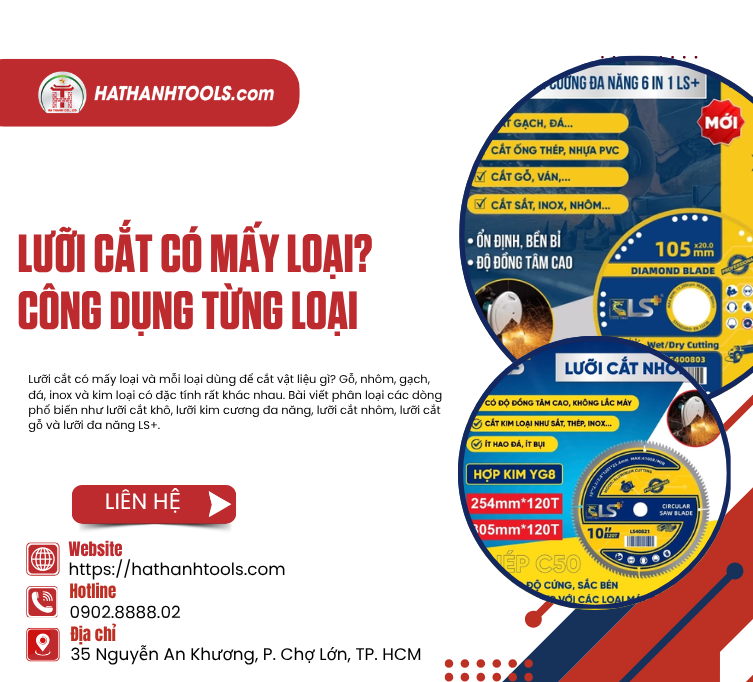
In this article, Hathanhtools.com will help users distinguish between common types of cutting blades, while introducing the LS+ cutting blade lines available in our consumables catalog for easy selection based on your actual needs. The Cutting Blade catalog of Hathanhtools.com currently includes dry cutting blades, aluminum cutting blades, 6-in-1 multi-purpose diamond blades, multi-purpose cutting blades, and LS+ wood cutting blades.
What Are the Most Common Types of Cutting Blades Today?
There are many ways to classify cutting blades, but for practical buyers, the easiest method is based on the material to be processed, blade structure, and cutting method. The LS+ consumables catalog at Hathanhtools.com currently features multiple groups serving different needs. Among them, dry cutting blades focus on suitable brick, stone, and concrete; wood cutting blades belong to the circular saw blade group with various tooth count options; aluminum cutting blades use YG8 carbide teeth; in addition, the multi-purpose diamond blade line serves multiple material groups as published by the manufacturer.
Therefore, if you are wondering how many types of cutting blades there are, you can start with the following common groups.

Diamond cutting blades – for hard materials
Diamond cutting blades are designed to handle highly hard materials such as bricks, natural stone, construction stone, and other building materials. The cutting section contains industrial diamond grits, enabling grinding/cutting of the material while the disc rotates at high speed.
This group is typically selected when tile cutting blades, stone cutting blades, or hard construction material processing are required. Depending on the specific design, the blades can be suitable for dry or wet cutting.
An important point to note is that you should not assume that just because it has the word "diamond" in it, the blade can cut any material. Actual working capability depends on the construction, size, the machine used, and the material range published by the manufacturer.
Carbide-tipped saw blades – for wood and aluminum
The carbide-tipped saw blade group typically consists of a steel disc body and cutting teeth attached to or made of alloy/carbide materials. This is a common structure in wood cutting blades and aluminum cutting blades.
The number of teeth is a factor users need to consider when choosing. Blades with fewer teeth usually have larger gaps between teeth, assisting in chip clearance and prioritizing cutting speed. Conversely, blades with more teeth generally aim for smoother cuts and a better surface finish.
The LS+ wood cutting blade catalog currently has various specifications from 4 inches to 14 inches, with 30T, 40T, and 60T options in many sizes. The products use C50 steel and are featured to have a hardness of HRC 88–89.
Multi-purpose cutting blades – one blade for multiple materials
Multi-purpose cutting blades aim for flexibility. This is a noteworthy option for repair technicians, construction teams, or people who frequently need to switch materials during the same job.
However, "multi-purpose" does not mean "cuts everything." Users must check the material range published by the manufacturer before use. Using it on the wrong material can cause the blade to wear out quickly, vibrate, reduce efficiency, or cause safety hazards.
A prominent example is the LS+ 6-in-1 multi-purpose diamond blade, introduced for six material groups, including bricks and natural stone; steel pipes and metals; PVC and plastic pipes; wood and plywood; iron and stainless steel; aluminum and light alloys.
Dry cutting blades – no water supply needed during cutting
Dry cutting blades are a group designed to perform cutting operations without a cooling water supply system, in accordance with the product's proper method of use. This is a convenient choice for many construction site tasks or residential repairs where setting up a water source is inconvenient.
LS+ dry cutting blades are currently available in sizes 105 × 20 mm, 180 × 22.23 mm, and 230 × 22.23 mm. The products are designed for applications on ceramic tiles, granite, stone, and concrete, while being compatible with suitable hand-held cutters and angle grinders.
This is also a suitable group for addressing the question: "do dry cutting blades need water?". The answer must be based on the exact design and user manual of each product, rather than applying a general rule to all types of blades.
Applications of Each LS+ Cutting Blade Type
The LS+ cutting blade catalog can be used as a direct illustration for each group of needs, rather than just explaining general theory. Each product line is oriented towards a specific group of materials or usage methods, helping buyers easily match actual jobs with the necessary accessories.
LS+ dry cutting blades – cutting bricks, stone, and building materials
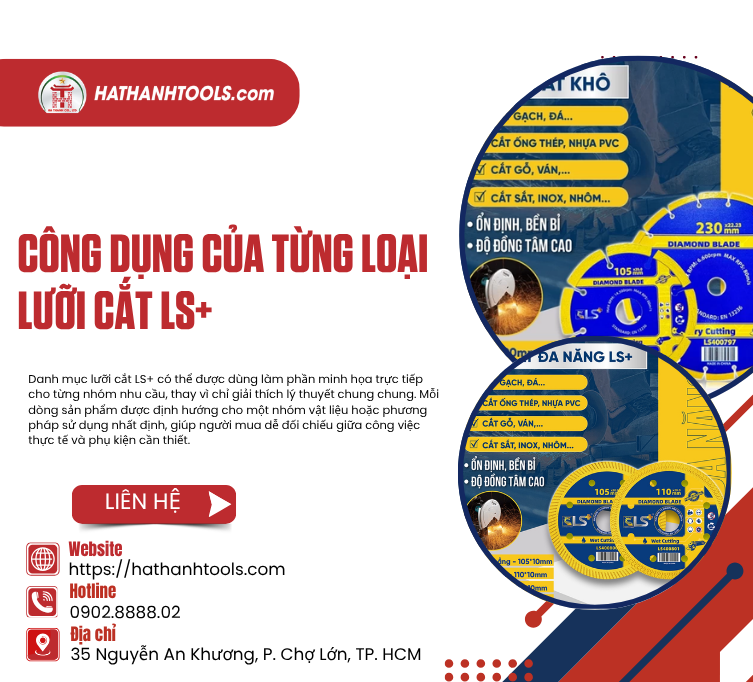
LS+ dry cutting blades are currently available in sizes 105 × 20 mm, 180 × 22.23 mm, and 230 × 22.23 mm. According to the product information, this line is applied for cutting ceramic tiles, granite, stone, and suitable concrete, and is designed for the dry cutting method.
For tasks like cutting tiles, making cuts on stone, or processing certain building materials, choosing the correct blade diameter ensures compatibility with the machine. Users should also check the arbor size and allowable rotational speed before operating.
A notable advantage of this line is that it does not require cooling water under the dry cutting method, making it convenient for quick and highly mobile tasks.
LS+ aluminum cutting blades – for aluminum and aluminum profiles
If your work frequently involves aluminum, aluminum profiles, or aluminum parts in doors, furniture, and mechanical production, choosing a specialized blade is much more reasonable than using a blade not designed for this material.
LS+ aluminum cutting blades come in two prominent specifications: 10 inches – 254 mm × 120T and 12 inches – 305 mm × 120T. The products feature a C50 steel body and YG8 carbide teeth. According to information from Hathanhtools.com, the tooth design and cutting angle aim to provide clean cuts, minimize vibration, limit heat generation, and reduce the risk of chip sticking.
Therefore, when researching aluminum cutting blades, users should prioritize products with a structure suitable for aluminum rather than relying solely on diameter. Especially for manufacturing aluminum doors or cutting aluminum profiles, the quality of the cut can directly affect the assembly stage and the aesthetics of the finished product.
LS+ wood cutting blades – for natural wood, MDF, and plywood
LS+ wood cutting blades are designed to serve tasks such as cutting natural wood, industrial wood like MDF, plywood, wood planks, and boards. This is a suitable choice for woodworking shops, furniture production, carpentry, and various other wood-processing jobs.
The catalog currently includes various specifications:
-
105 mm – 30T and 40T.
-
180 mm – 40T and 60T.
-
205 mm – 40T and 60T.
-
235 mm – 40T and 60T.
-
254 mm – 40T and 60T.
-
305 mm – 40T and 60T.
-
350 mm – 40T and 60T.
Additionally, there are some 24T lines in 180 mm and 235 mm sizes.
If users are looking up "how many teeth on a wood cutting blade", they should understand that there is no single number suitable for all cases. The number of teeth should be selected based on the material, workpiece thickness, cutting speed, and surface finish requirements.
LS+ 6-in-1 multi-purpose diamond cutting blade
This is one of the standout product lines when users need versatility. The LS+ 6-in-1 multi-purpose diamond cutting blade (model LS400803) comes in size 105 × 1.4 × 10 mm and is introduced with the capability to process six material groups.
The published material groups include:
-
Bricks and natural stone.
-
Steel pipes and metals.
-
PVC and plastic pipes.
-
Wood and plywood.
-
Iron and stainless steel.
-
Aluminum and light alloys.
The product is featured for use in both dry and wet cutting, depending on suitable working conditions and methods.
This is a noteworthy choice for technicians who frequently move between different tasks. Instead of carrying too many accessories, a suitable multi-purpose cutting blade can help reduce blade-changing time.
However, users still need to read the product information and check the material before cutting. "6-in-1" represents the published application range, and does not mean the product can completely replace all specialized blades.
Which Cutting Blade Should You Choose for Each Material?
Instead of just searching for the "best cutting blade," users should determine three main factors: what material needs to be cut, what machine is being used, and what the cut requirements are.
Choosing the right cutting blade not only improves efficiency but also limits quick wear, vibration, or unsatisfactory cuts.
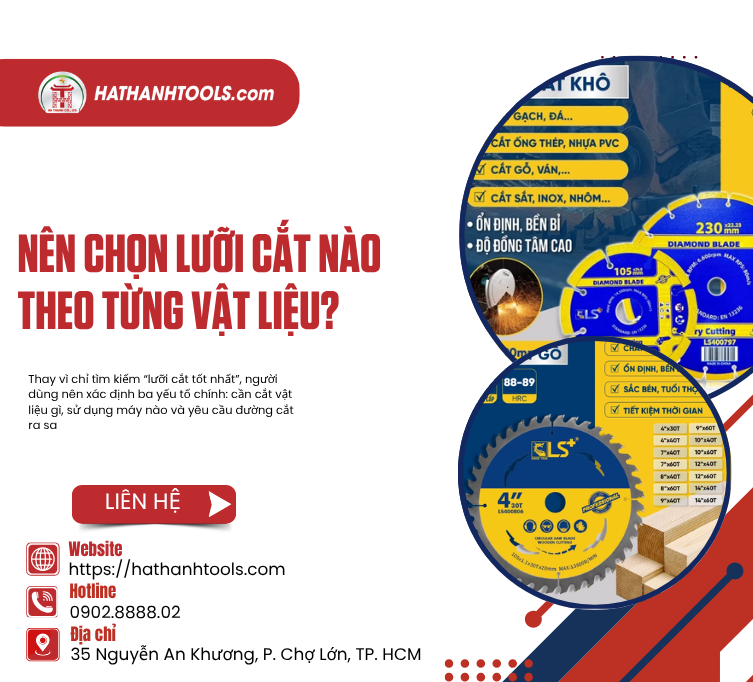
Which blade should be used to cut bricks, stone, and concrete?
When needing to cut bricks, stone, or concrete, users should prioritize diamond blades or dry cutting blades specifically designed for this group of materials.
In particular, when choosing a tile cutting blade, check the blade size, arbor diameter, maximum rotational speed, and compatible machine types. LS+ dry cutting blades come in 105, 180, and 230 mm options, and are featured for suitable ceramic tiles, granite, stone, and concrete.
For natural stone or highly hard materials, prioritize the correct diamond blade line according to the manufacturer's guidelines. Do not take any random stone cutting blade and use it for all materials just because the size is similar.
Should you choose more or fewer teeth for wood cutting?
In principle:
-
Fewer teeth: larger gaps between teeth support fast chip clearance and are usually suitable when speed is prioritized.
-
More teeth: more cutting points per revolution, typically suitable when fine cuts and better finishes are required.
-
Always compare materials and blade designs: even with the same tooth count, actual performance also depends on diameter, tooth shape, blade thickness, and machine specifications.
LS+ currently offers 30T, 40T, and 60T lines in various diameters, giving users more choices to fit their needs.
Should you use a wood blade or an aluminum blade for cutting aluminum?
If the work mainly involves cutting aluminum or aluminum profiles, you should choose a specialized aluminum cutting blade instead of using a wood cutting blade just because the two products look similar.
LS+ aluminum cutting blades feature a C50 steel body and YG8 carbide teeth, with 254 mm × 120T and 305 mm × 120T options. The design is introduced to target clean, smooth cuts, reduce vibration, and minimize chip sticking.
For aluminum door manufacturing shops, aluminum profile processing, or high-finish requirements, using the correct specialized blade will make the process more stable.
When should you choose a multi-purpose blade?
Multi-purpose cutting blades are suitable when the job requires frequent material changes. For instance, a repair team might handle wood, PVC, metal, or construction materials all in the same day.
In this case, a multi-purpose blade can help reduce accessory-changing time and the number of blades needed to carry around.
However, if a workshop specializes in cutting a single material in high volumes, a specialized blade is usually the more rational choice. Do not choose a multi-purpose blade just because of the name; look exactly at the published material range.
How Do Dry Cutting, Diamond, and Carbide-Tipped Blades Differ?

Names like diamond, carbide/alloy, dry cutting, and multi-purpose can easily confuse beginners because they are not always based on the same classification method.
"Diamond" mainly refers to the cutting material or element. "Carbide/Alloy" typically relates to the cutting teeth or manufacturing material. Meanwhile, "dry cutting" describes the usage method without water supply. "Multi-purpose" refers to the range of materials the blade is designed to handle.
Understanding this difference will help users accurately answer the question of how many types of cutting blades there are instead of just classifying them by name.
How do diamond blades differ from carbide-tipped blades?
Diamond cutting blades typically use a cutting segment containing industrial diamond grits and are suitable for hard materials like brick, stone, or certain building materials.
Meanwhile, carbide-tipped blades typically feature a disc body and cutting teeth made of alloy/carbide materials. This is a common structure in circular saw blades, wood cutting blades, and aluminum cutting blades.
The key difference lies in the mechanism and the group of materials the blade is designed to process. Therefore, do not just look at the disc shape to determine its function.
Do dry cutting blades need water?
By definition, "dry cutting" blades are designed for cutting methods that do not require cooling water supply, in accordance with the product's user guide.
For example, LS+ dry cutting blades are featured for not requiring cooling water and are applied for suitable ceramic tiles, granite, stone, and concrete.
However, a clear distinction must be made between dry and wet blades. Some products are designed for both methods. The LS+ 6-in-1 multi-purpose diamond blade is an example introduced by the manufacturer as usable for both dry and wet cutting.
Therefore, before use, check the instructions for each product instead of arbitrarily adding water or changing the cutting method.
Can multi-purpose blades completely replace specialized blades?
No.
This is a point buyers must pay close attention to. A multi-purpose cutting blade offers the advantage of flexibility, but that does not mean it always delivers optimal performance on all materials.
If your work frequently involves cutting wood, prioritize wood cutting blades. If you specialize in cutting aluminum, choose aluminum blades. If you specialize in handling bricks, stone, or hard materials, select diamond blades or a suitable specialized line.
Multi-purpose blades deliver the best value when users need to switch between multiple materials and want to optimize their toolsets.
Common mistakes that cause cutting blades to wear out quickly or vibrate
Some common mistakes that can reduce blade lifespan and affect cut quality include:
-
Choosing the wrong material: This is the most basic mistake. Do not use a blade not designed for the material to be processed.
-
Incorrect rotational speed: The machine and blade must have compatible parameters. Excessive or inappropriate speed can increase heat, vibration, or cause damage.
-
Incorrect diameter or arbor size: The blade must be compatible with the machine. Do not force-fit a blade with mismatched parameters.
-
Applying excessive force: Users should only guide the machine according to the speed and cutting capability of the blade. Pressing too hard does not mean cutting faster.
-
Incorrect installation direction: For blades with a rotation direction, they must be installed in the indicated direction.
Using degraded blades: If the blade is deformed, cracked, damaged, or shows abnormal signs, stop using it immediately and check before proceeding.
Additionally, it is essential to equip appropriate personal protective equipment (PPE) such as safety goggles, masks, or hearing protection, depending on the working environment. Operating the machine must also comply with the manufacturer's instructions.
Contact Hathanhtools.com for advice on LS+ cutting blades
Hathanhtools.com provides cutting discs, grinding discs, cutting blades, and LS+ consumables for hardware stores, agencies, mechanical workshops, and bulk buyers. The Hathanhtools.com team can advise on specifications suitable for your needs and support you with price quotes.
Contact Information
Ha Thanh One Member Co., Ltd – Ho Chi Minh City Branch
Address: 35 Nguyen An Khuong, Cho Lon Ward, Ho Chi Minh City
Hotline: 0902 8888 02
Email: cskh@hathanhtools.com
Website: Hathanhtools.com
Tax Code: 0100108529-006