How Many Types of Silicone Caulking Guns Are There? – A Detailed Comparison of Plastic, Steel, and Aluminum Alloy Models
When working on aluminum window installation, waterproofing, sanitary ware installation, interior finishing, or minor home repairs, a silicone caulking gun is an essential support tool. It helps apply sealant precisely, control the flow, and create neat, clean lines. However, the market offers a wide range of designs, materials, and operating mechanisms. This leads many people to ask: how many types of silicone guns are there, which one suits my job, and what material should I prioritize?
In reality, silicone caulking guns can be classified by their operating mechanism, power source, or body material. For general use, manual silicone caulking guns are a simple, user-friendly choice that requires no power. Within this category, there are plastic, steel, and aluminum alloy versions, each with distinct characteristics regarding weight, durability, handling feel, and usage frequency.
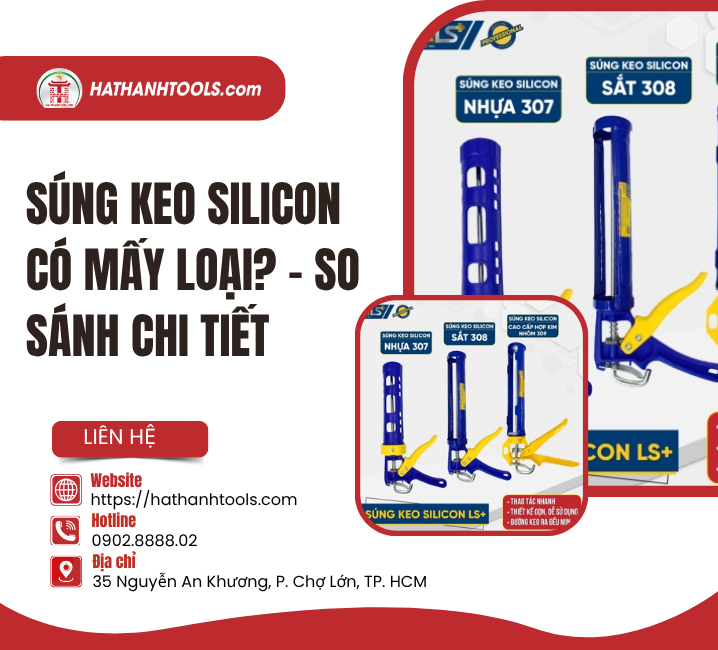
Regarding the LS+ silicone gun line, Hathanhtools.com currently provides three main versions: the LS+ 307 (plastic), LS+ 308 (steel), and LS+ 309 (aluminum alloy). These versions are designed to meet needs ranging from DIY and home repairs to frequent, professional construction tasks. The products feature a stable extrusion mechanism, ergonomic grips, and compact designs to support smooth, even bead application.
So, how many types of silicone caulking guns are there and how do they differ? Let’s analyze them in detail with Hathanhtools.com to help you choose the right tool for every task.
What Is a Silicone Caulking Gun? What Are the Popular Types?
Before determining which silicone gun is best, users need to understand the structure and operating mechanism of this tool.
A silicone caulking gun is a tool used to press sealant out of a tube or cartridge through a pushing mechanism. Instead of squeezing manually, the user places the tube into the gun frame and pulls the trigger, which pushes the rod against the bottom of the tube. This pressure forces the sealant through the nozzle, creating a continuous, consistent bead.
This is why silicone caulking guns are particularly useful for tasks requiring long, even beads with better control than manual squeezing.
On the market, in terms of operation, you can find manual, battery-powered, or pneumatic guns. Regarding body material, the most common types are plastic, steel, and aluminum alloy.
For general purposes, manual silicone caulking guns remain the most popular choice due to their simple design, ease of maintenance, and lack of power requirements.
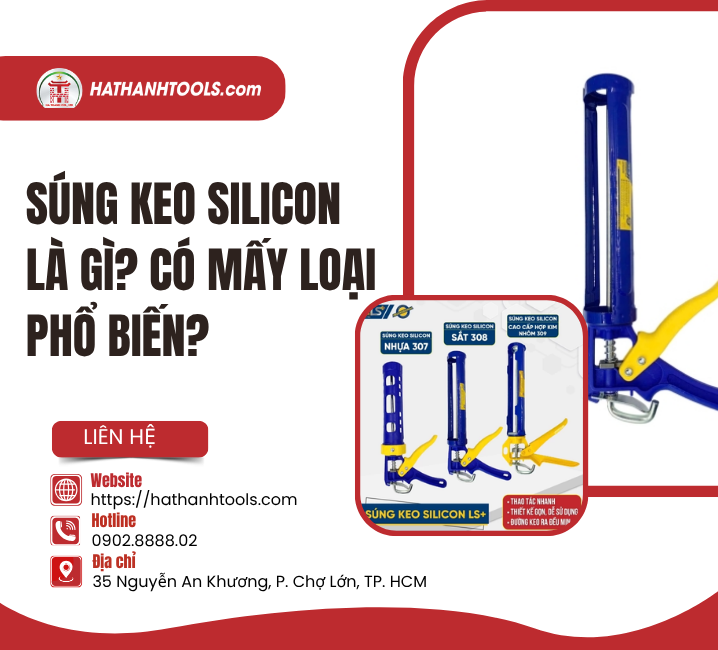
Manual silicone caulking guns – the popular choice for homes and job sites
The mechanism of manual silicone caulking guns is quite intuitive. When the user pulls the trigger, the force is transferred to the pushing mechanism. The rod moves forward, compressing the base of the cartridge and pushing the sealant through the nozzle.
Notably, the user's grip strength directly affects the output. If squeezed too quickly, too much sealant may come out; if squeezed too lightly or inconsistently, the bead may be interrupted.
The advantages of this gun type are:
-
No electricity required.
-
No air compressor needed.
-
Relatively simple structure.
-
Easy to transport to job sites.
-
Suitable for home repairs and general construction.
-
Sealant flow is controlled by hand pressure.
-
Easy to clean and store.
The LS+ series also belongs to the manual category, designed with a stable pumping mechanism, ergonomic handles, and the ability to create smooth, even lines.
For homeowners, repairmen, or those frequently handling small tasks, this is a highly recommended type of caulking gun.
Battery-powered or pneumatic silicone caulking guns – suitable for large-scale work
Besides manual ones, there are also guns powered by batteries or pneumatic systems.
Battery-powered guns reduce manual effort, making them suitable for long, continuous applications. Meanwhile, pneumatic guns utilize compressed air to create the pushing force, ideal for workshops or assembly lines with high-volume needs.
This product group is usually aimed at:
-
Professional construction teams.
-
Aluminum and glass workshops.
-
Interior installation units.
-
Projects with large sealant volume.
-
Continuous long-term work.
The advantage is that the sealant line is more consistent, and hand fatigue is reduced. However, pneumatic guns require a compatible compressed air system, while battery guns require attention to battery life and charging.
If your needs are only for home repairs or occasional work, manual silicone caulking guns are usually simpler and more economical.
Classifying silicone caulking guns by body material
Another practical way to classify them is by the body material.
They can be divided into:
-
Plastic silicone caulking guns.
-
Steel/Iron silicone caulking guns.
-
Aluminum alloy silicone caulking guns.
This is also the direct classification used for the 3 versions of LS+: LS+ 307 (plastic), LS+ 308 (steel), and LS+ 309 (aluminum alloy).
Choosing the material isn't just about "cheap vs. expensive." Users should consider weight, usage frequency, working environment, trigger pull, and durability requirements.
Comparing Plastic, Steel, and Aluminum Alloy Silicone Guns
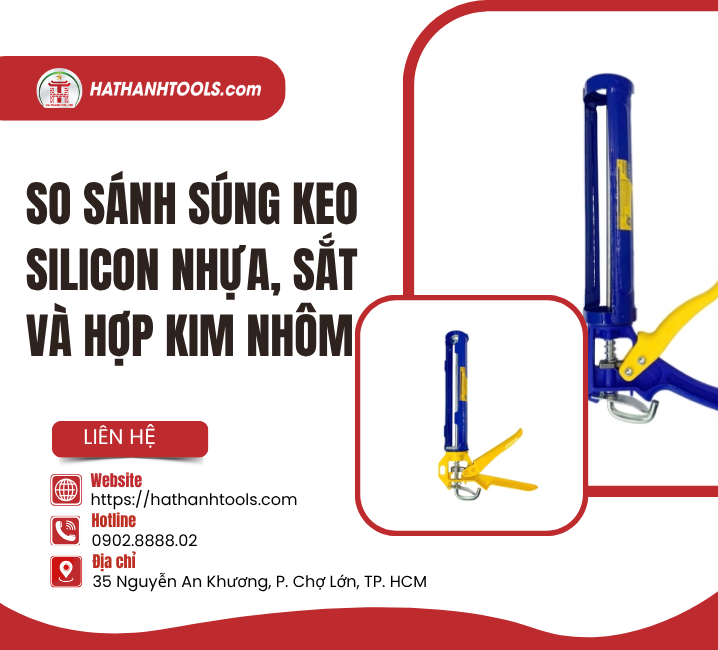
If you are researching how many types of silicone caulking guns there are, the material is a very important factor.
With the same operating principle, different materials can create different user experiences. Plastic guns are usually light and easy to hold. Steel guns focus on sturdiness. Meanwhile, aluminum alloy aims for a balance between weight, durability, and professionalism.
Plastic silicone caulking guns – lightweight, easy to hold, and suitable for basic needs
Plastic silicone guns are often chosen when the user prioritizes lightweight design, simple operation, and moderate workload.
The LS+ 307 version uses an engineered plastic body, combined with metal components for the trigger mechanism and pusher. The product uses a 300–310 ml sealant tube and weighs approximately 250–350 g, according to product specifications.
This is a notable advantage for those who need to use a gun for household tasks or light-duty work.
You can consider LS+ 307 for:
-
Home repairs.
-
DIY projects.
-
Handicrafts.
-
Light construction work.
-
Tasks that require carrying tools often.
-
Beginners using silicone guns for the first time.
If you are asking how to choose a silicone gun for basic needs, a light plastic model like the 307 is a reasonable choice.
Steel silicone caulking guns – sturdy, suitable for frequent use by tradespeople
If you need a tool with a sturdier structure to serve regular work, a steel silicone gun is a viable option.
The LS+ 308 uses a powder-coated steel body, a hardened steel pusher rod, and an elastic steel spring. It fits 300–310 ml tubes and weighs approximately 400–500 g.
Compared to the plastic version, the 308 has a more robust construction, suitable for higher pressure and frequent use.
This product can be applied in:
-
Aluminum window installation.
-
Glass construction.
-
Waterproofing sealant application.
-
Sanitary ware installation.
-
Building construction.
-
Interior repair and finishing.
For technicians needing a silicone gun for aluminum and glass work, the LS+ 308 is a solid choice that balances durability and practicality.
Aluminum alloy silicone caulking guns – a premium choice for professional needs
Aluminum alloy silicone guns are often favored by those looking to combine sturdiness with reasonable weight.
The LS+ 309 uses an aluminum alloy body, rust-proof hardened steel pusher, and an alloy trigger handle with high-tension springs. The product weight is about 350–450 g and uses 300–310 ml tubes, according to Ha Thanh Tools.
Compared to the steel version, aluminum alloy reduces weight while maintaining a sturdy structure.
LS+ 309 is suitable for:
-
High-end aluminum and glass installation.
-
Interior construction.
-
Curtain wall installation.
-
Professional waterproofing.
-
Tasks requiring beautiful and stable sealant beads.
If users are looking for a premium silicone gun, especially focusing on weight and durability, the LS+ 309 is a version worth consulting.
Comparison table: Plastic – Steel – Aluminum Alloy silicone guns
|
Material |
Reference weight |
Durability |
Usage frequency |
Target users |
Suggested LS+ product |
|
Engineering plastic |
250–350 g |
Fair |
Basic – moderate |
Homes, DIY, light construction |
LS+ 307 |
|
Steel/Iron |
400–500 g |
High |
Frequent |
Construction workers |
LS+ 308 |
|
Aluminum alloy |
350–450 g |
Very high |
Frequent – professional |
Professional technicians, aluminum/glass |
LS+ 309 |
The above specifications are aggregated based on LS+ 307, 308, and 309 product information at Ha Thanh Tools.
As shown in the table, there is no single best material for everyone. To the question of how many types of silicone caulking guns exist by material, the answer centers on three main LS+ options: plastic, steel, and aluminum alloy.
How to choose cartridges for silicone caulking guns
One factor often overlooked when learning how to choose a silicone gun is the cartridge size.
The gun must be compatible with the type of tube/cartridge you want to use. If the tube doesn't fit the size or the holding mechanism isn't compatible, the pumping process will be difficult and the bead may be inconsistent.
The LS+ 307, 308, and 309 versions are introduced as compatible with 300–310 ml silicone cartridges.
Therefore, when buying a silicone gun, check the:
-
Cartridge volume.
-
Tube size.
-
Tube holding capability.
-
Push rod mechanism.
-
Intended purpose.
-
Construction frequency.
Choosing the right cartridge and gun from the start will make your work much smoother.
Differentiating Mechanical Silicone Guns and Glue Guns
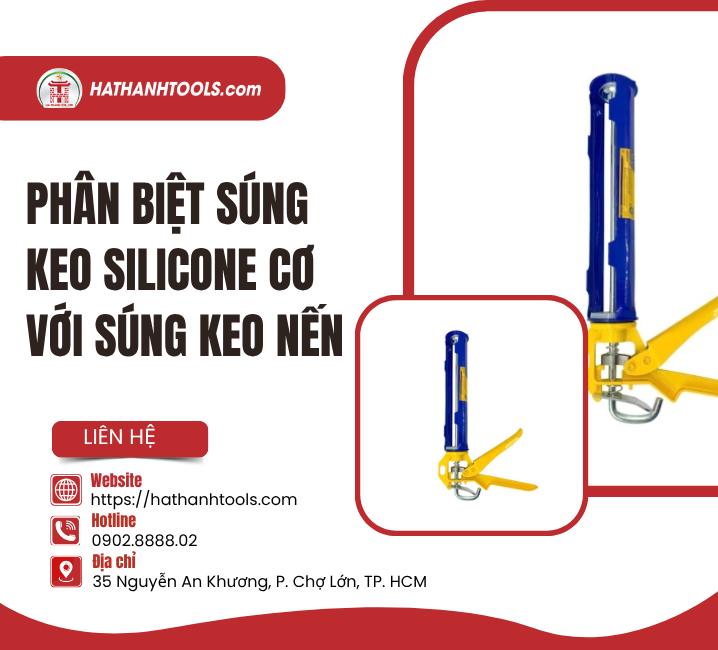
A common issue is that users often group many types of tools under the term "glue gun." However, mechanical silicone guns and hot glue guns are two different tool groups in terms of mechanism.
Mechanical silicone guns use mechanical force to squeeze sealant from cartridges. Meanwhile, glue guns use a heating element to melt glue sticks before dispensing.
Therefore, when searching for a silicone caulking gun, make sure to identify exactly which type of gun you need.
When are glue guns suitable?
Glue guns typically use hot-melt glue sticks. When heated, the glue stick turns into a soft/melted state, then is pushed through the nozzle.
This type of gun is suitable for tasks such as:
-
Handmade projects.
-
Decorations.
-
Model making.
-
DIY.
-
Gluing small parts.
-
Some craft tasks.
The advantage of glue guns is quick and convenient operation for small joints.
However, if the work requires using silicone tubes for crack sealing, waterproofing, or finishing long seams, you must use a dedicated silicone caulking gun instead of a glue gun.
When should you use a Silicone caulking gun?
Silicone guns are suitable for tasks using sealant cartridges, where the user needs to control the amount of sealant dispensed.
Some typical applications include:
-
Sealing door frames.
-
Sealing joints.
-
Aluminum and glass installation.
-
Glass construction.
-
Waterproofing.
-
Sanitary installation.
-
Interior finishing.
-
Repairs and construction.
The LS+ series is introduced for applications ranging from home, DIY, to construction, interiors, woodworking, and electronics.
Which Silicone Caulking Gun Is Good for Each Task?
There is no single "best" silicone gun for all cases.
A good gun is one that fits the task. If you are just repairing around the house, choosing a model that is too heavy can make handling uncomfortable. Conversely, if you use it every day at a site, a model that is too light might not be the optimal choice.
What to choose for home use, repair, and DIY?
For home needs, priority should be given to:
-
Lightweight.
-
Easy to hold.
-
Easy to use.
-
Easy to store.
-
No power required.
-
Suitable for the sealant quantity needed.
The LS+ 307 plastic body is a version weighing about 250–350 g, aimed at homes, DIY, and light construction.
This is a suitable choice if you need a manual silicone gun for repairs or light-duty work.
What silicone gun should aluminum and glass workers use?
For aluminum and glass workers, creating even sealant lines and maintaining control are crucial.
The gun needs a structure sturdy enough for frequent use, and the grip must feel comfortable when squeezed repeatedly.
The LS+ 308 has a steel body and is recommended for applications such as aluminum door installation, glass construction, and general building work.
If you prioritize a reasonable weight along with a more premium construction, the LS+ 309 uses aluminum alloy and is aimed at high-end aluminum/glass, curtain wall, and projects requiring beautiful beads.
Therefore, when choosing a silicone caulking gun for aluminum and glass work, you can consider either the 308 or 309 based on frequency and handling requirements.
Should you choose steel or alloy for interior construction and projects?
For projects, usage time and tool durability are usually higher priorities.
The LS+ 308 is a suitable choice if you prioritize a sturdy steel body and good load-bearing capacity.
Meanwhile, the LS+ 309 is suitable for those who want to reduce weight while maintaining a sturdy structure. Aluminum alloy also makes the product suitable for tasks that require long operational hours.
If you frequently move around, work at heights, or have to hold the gun for long periods, weight is a factor to consider.
What silicone guns should hardware stores stock?
For hardware stores, instead of stocking just one model, you should offer multiple segments to meet diverse customer needs.
LS+ currently has 3 versions:
-
307 – Plastic: for home, DIY, and general needs.
-
308 – Steel: for construction workers and frequent tasks.
-
309 – Aluminum alloy: for professional users and high-requirement tasks.
All three versions are introduced by Hathanhtools.com in the same LS+ Silicone Gun series, packaged 6 units/box and 36 units/carton.
This distribution strategy helps stores serve multiple customer segments rather than focusing on just one.
How to Use a Silicone Caulking Gun for Even Beads
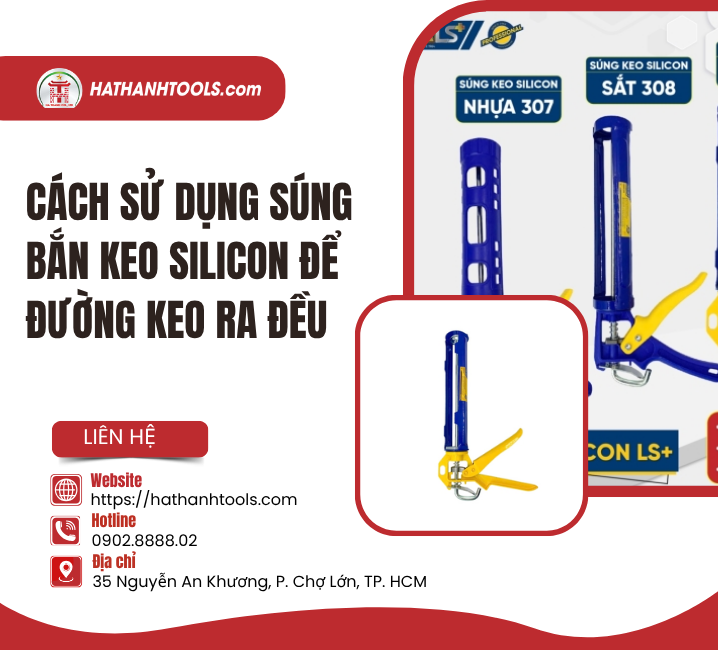
Besides selecting the right gun, the user technique also determines the quality of the bead.
Even a good gun can produce poor lines if the cartridge is misaligned, trigger pressure is inconsistent, or movement speed is uneven.
How to properly load a silicone cartridge into the gun
First, check the cartridge size and compatibility with the gun.
Then:
-
Pull the push rod back.
-
Place the sealant cartridge into the frame.
-
Ensure the base of the tube is correctly positioned against the push rod.
-
Position the nozzle towards the front.
-
Check that the cartridge is stable before pulling the trigger.
-
Cut the nozzle tip according to the desired bead size.
The LS+ 307, 308, and 309 versions are designed for 300–310 ml silicone cartridges.
How to pull the trigger to keep the sealant consistent and avoid overflow
After installing the cartridge, users should pull the trigger with relatively steady force.
Do not squeeze too hard at the start, as too much sealant may come out. Also, the gun movement speed should be relatively steady with the trigger pull.
Simply put:
Stable trigger pull + steady movement speed = beautiful, easy-to-control beads.
When a thin bead is needed, the nozzle should be cut smaller. If a larger bead is needed, adjust the nozzle accordingly.
Common errors when using a silicone caulking gun
-
Inconsistent output: Could be due to unstable pressure, a clogged nozzle, or the cartridge not being seated correctly.
-
Trigger is too heavy: Could be due to thick sealant, high pressure on the pusher mechanism, or using a gun not suited for the job.
-
Cartridge is misaligned: When the tube is not in the frame correctly, force might not transfer evenly to the base.
-
Sealant keeps flowing after stopping: This may happen because pressure remains in the cartridge or the push force isn't fully released.
Hathanhtools.com also advises users not to pull too hard to avoid bending the push rod and to clean excess sealant after use.
How to clean and store the silicone gun after use
After finishing work, do not leave excess sealant on the gun for long.
Make sure to:
-
Clean the remaining sealant on the gun head.
-
Check the push rod.
-
Remove any residual glue.
-
Avoid storing in high-humidity areas.
-
Store in a dry place.
-
Check the trigger mechanism before the next use.
Regular cleaning helps the gun operate stably and extends its lifespan.
Especially with premium silicone guns, proper storage helps maintain handling feel and limits issues caused by residual sealant or environmental factors.
Buying LS+ Silicone Caulking Guns for Stores, Agencies, and Wholesalers
If you are in the hardware business, selecting products across various segments will help your store better meet customer needs.
The LS+ silicone gun line currently has three main material options: plastic, steel, and aluminum alloy. The products feature compact designs, ergonomic non-slip grips, stable pumping mechanisms, and consistent sealant output.
LS+ 307 plastic silicone gun
The LS+ 307 is an engineered plastic version with metal components, weighing about 250–350 g, and uses 300–310 ml sealant tubes.
The product is suitable for:
-
Homes.
-
DIY.
-
Repairs.
-
Light construction.
-
General customers.
If your store needs a plastic silicone gun with broad appeal, the 307 is a version worth adding to your catalog.
LS+ 308 steel silicone gun
The LS+ 308 uses a powder-coated steel body, hardened steel push rod, and elastic steel spring. Weighs about 400–500 g.
This is a version more suitable for:
-
Construction workers.
-
Aluminum and glass technicians.
-
Construction teams.
-
Project work.
-
Frequent users.
The LS+ 308 focuses on sturdiness and higher intensity work.
LS+ 309 premium aluminum alloy silicone gun
The LS+ 309 uses aluminum alloy, rust-proof hardened steel push rod, and an alloy handle.
Weighing about 350–450 g, it fits 300–310 ml cartridges. The product targets professional work such as high-end aluminum/glass, curtain wall, interior, and waterproofing.
This is a notable choice if customers are looking for an aluminum alloy silicone gun that is both sturdy and easy to handle.
Get wholesale quotes and LS+ partnership policies
For hardware stores, agencies, or construction teams needing large quantities, Hathanhtools.com provides LS+ versions to meet various customer segments.
Instead of stocking just one model, stores should consider combining the 307 – 308 – 309 to create a product catalog ranging from general to professional.
According to information on the product page, the LS+ series is packed 6 units/box and 36 units/carton.
You can contact us directly for product consultations, wholesale quotes, and shipping policies.
If you are looking for silicone guns for aluminum/glass workers, manual silicone guns, aluminum alloy silicone guns, or want to stock hardware products, the LS+ 307 – 308 – 309 line is worth considering.
Ha Thanh Co., Ltd. - HCMC Branch provides authentic hardware, tools, and consumables for shops, wholesalers, and distribution systems nationwide. Explore our product catalog and contact information at hathanhtools.com.
Contact information
Hotline: 0902 8888 02
Address: 35 Nguyen An Khuong, Cho Lon Ward, Ho Chi Minh City
Email: cskh@hathanhtools.com
Website: hathanhtools.com
Tax ID: 0100108529-006