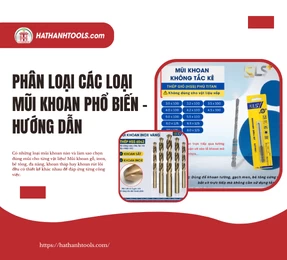
Plasterboard Hole Saw Kit - How to Use It? A Detailed Guide From A to Z
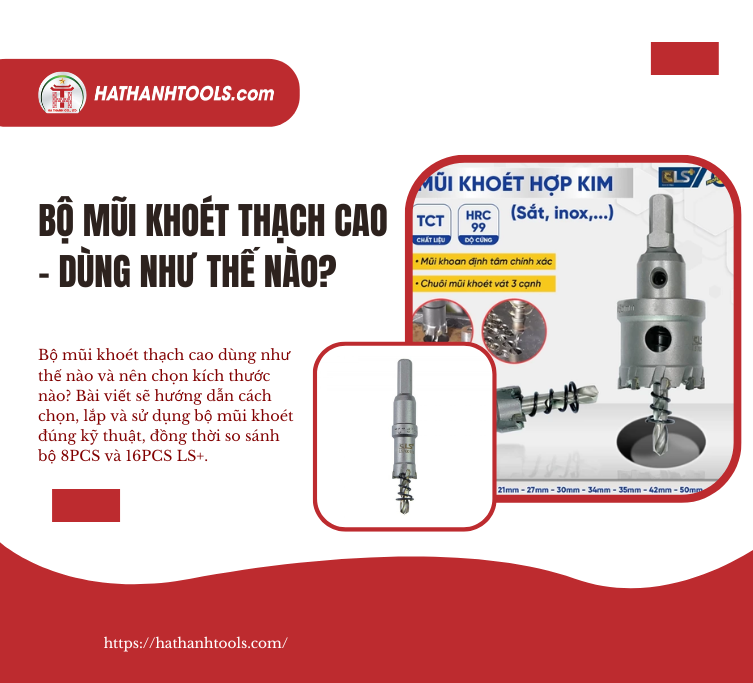
How to use a plasterboard hole saw kit? This is a common question among electricians, interior fitters, plasterboard ceiling contractors, and DIY enthusiasts. Compared to standard drill bits, hole saws have a special design that creates large-diameter circular holes, perfect for tasks such as installing recessed downlights, electrical outlets, junction boxes, wiring conduits, or furniture details.
Using the right plasterboard hole saw kit not only creates clean, perfectly-sized holes but also prevents chipped edges, machine vibration, or material damage. Conversely, choosing the wrong diameter, securing the saw improperly, or forcing the drill too hard can lead to poor-quality holes.
At Hathanhtools.com, our Wood & Plasterboard Hole Saw category offers various options such as LS+ Carbide TCT Hole Saws, LS+ HSS Fast Cut Hole Saws, LS+ 8PCS Wood & Plasterboard Hole Saw Kit, and LS+ 16PCS Wood & Plasterboard Hole Saw Kit. Each type is designed for specific materials and user needs.
This article will help you understand what a plasterboard hole saw kit is, what it is used for, how to use it correctly, whether to choose the 8PCS or 16PCS kit, and the common mistakes to avoid during operation.
What Is a Plasterboard Hole Saw Kit? What Is It Used For?
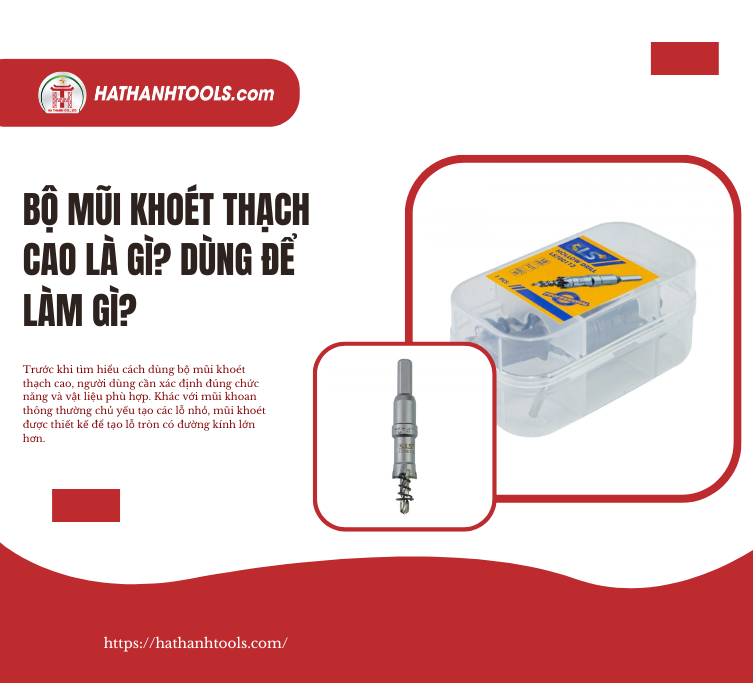
Before learning how to use a plasterboard hole saw kit, users need to understand its exact functions and compatible materials. Unlike standard drill bits, which primarily create small holes, a hole saw is designed to cut larger circular holes.
This accessory is widely used in electrical installations, interior fitting, plasterboard ceiling work, and tasks requiring technical openings in wood or lightweight materials.
A plasterboard hole saw kit typically contains multiple hole saw blades of various sizes. This allows users to choose the perfect diameter matching downlights, outlets, pipes, or other fixtures instead of purchasing individual saws.
For professionals, a multi-size kit saves time searching for tools and provides more flexibility when handling jobs with diverse diameter requirements.
Structure of a Wood & Plasterboard Hole Saw Kit
A wood and plasterboard hole saw typically consists of a saw blade with a serrated edge, a pilot drill bit (center bit), a mandrel (arbor shaft), and the hole saw cups.
The serrated edge cuts and removes material in a circular path. The teeth are consistently distributed around the circumference of the blade to ensure a clean cut corresponding to the hole saw's diameter.
The pilot drill bit secures the starting position, helping users drill exactly on the marked spot. As the pilot bit penetrates the material, it prevents the outer hole saw cup from slipping or wandering off-target.
The mandrel (arbor shaft) connects the hole saw assembly to the drill. When installed, the mandrel must be securely tightened and centered to minimize vibration during operation.
In a multi-size kit, each blade cup has a different diameter. Users can select the size based on the specific requirements of the hole they need to make.
This design makes the wood hole saw kit an incredibly convenient choice for creating uniform circular holes in wood, MDF, plasterboard, and other lightweight materials.
Which Materials Can a Plasterboard Hole Saw Cut?
Not all hole saws are meant for all materials. Choosing the right type prevents tooth damage and improves cut quality.
For the LS+ wood and plasterboard hole saw kits, the suitable materials include:
-
Plasterboard (Gypsum board).
-
Natural wood.
-
MDF.
-
Plywood.
-
Thin plastic.
-
Lightweight walls and other suitable thin materials.
These are common materials in interior decoration, residential electrical wiring, and shopfitting.
For plasterboard, the hole saw kit creates circular cutouts for downlights, electrical boxes, or utility access. For wood and MDF, it assists in boring holes for furniture hardware, cables, hinges, and other large-diameter requirements.
However, it is crucial to distinguish plasterboard hole saws from heavy-duty metal hole saws. If you need to cut through iron, steel, stainless steel, or aluminum, you should choose the LS+ TCT Carbide Hole Saws or LS+ HSS Fast Cut Hole Saws designed for those specific metals.
What Applications Are Hole Saw Kits Used For?
A plasterboard hole saw kit supports many practical jobs, particularly in electrical work and interior finishing.
Typical applications include:
-
Cutting holes for recessed downlights.
-
Cutting holes for electrical outlets.
-
Creating cable routing paths.
-
Boring holes for utility junction boxes.
-
Making openings for small pipes.
-
Installing plasterboard ceilings.
-
Processing wood and MDF.
-
Installing furniture accessories.
-
Creating utility holes on lightweight panel boards.
For example, when working on a plasterboard ceiling and installing multiple recessed lights, using a multi-size wood and plasterboard hole saw kit allows the installer to easily select the correct cup size.
How to Use a Plasterboard Hole Saw Kit Correctly
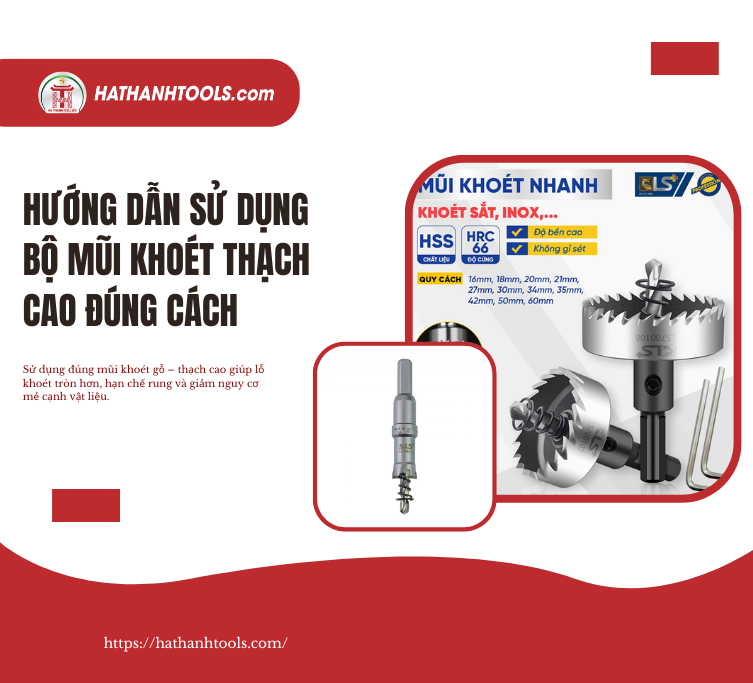
Using the wood & plasterboard hole saw correctly ensures rounder cuts, minimizes vibration, and reduces the risk of chipping the edges.
For best results, users should follow a systematic process starting from determining the diameter, assembling the kit, to operating the drill.
Step 1 – Choose the Right Hole Saw Size
This is the first and most critical step in ensuring quality results.
Before selecting a plasterboard hole saw, determine the exact diameter of the hole you need.
For instance, when installing a recessed downlight, check the manufacturer's cut-out specification. Do not rely solely on the fixture's outer dimensions, as the mounting body usually requires a smaller, specific diameter.
Similarly, when cutting holes for wall outlets or junction boxes, double-check the actual dimensions before picking your hole saw blade cup.
If using the LS+ 8PCS hole saw kit, you can choose from sizes ranging from 19 to 51 mm.
If your work demands intermediate sizes and larger diameters, the LS+ 16PCS kit with a 16–64 mm range offers more extensive options.
Step 2 – Mount the Pilot Drill and Saw Cup to the Drill
Once you have the correct size, mount the pilot bit and the hole saw blade cup onto the arbor mandrel.
Double-check that all components are correctly seated and securely locked before starting.
The hole saw must be perfectly aligned with the drill shaft. If it is misaligned or loosely tightened, the spinning motion can cause severe wobble, degrading the hole quality and making the drill hard to control.
Before squeezing the trigger, double-check the entire assembly and the drill.
If you notice any tilt in the blade, a loose arbor, or a misaligned pilot bit, stop immediately to adjust them.
Step 3 – Drill at a Suitable Speed and Keep the Drill Perpendicular
Place the pilot bit tip precisely on your marked center point.
When starting, run the drill at a steady speed to let the pilot bit create a guiding point before engaging the outer hole saw teeth.
Keep the drill as perpendicular (90 degrees) to the surface as possible. An uneven angle can result in a slanted cut or increased vibration.
Avoid pushing too hard. Excessive force does not mean faster cutting. On the contrary, forcing the tool can stall the drill, trigger vibration, or shatter the material.
Especially when using plasterboard hole saws, control your pressure carefully as plasterboard is prone to chipping under unstable handling.
Step 4 – Remove the Plug and Inspect the Hole Edge
Once the cut is complete, let the drill stop completely before removing the plug (waste material) trapped inside the cup.
Never attempt to extract the plug with your hands while the drill is still spinning.
After that, inspect the hole's diameter and edges. If the hole is accurately sized, and the edges are clean without major fracturing, your job is successfully done.
For high-aesthetic finish jobs like custom cabinetry or light fixtures, check the surrounding surface quality before finalizing the installation.
How Do the 8PCS and 16PCS Plasterboard Hole Saw Kits Differ?
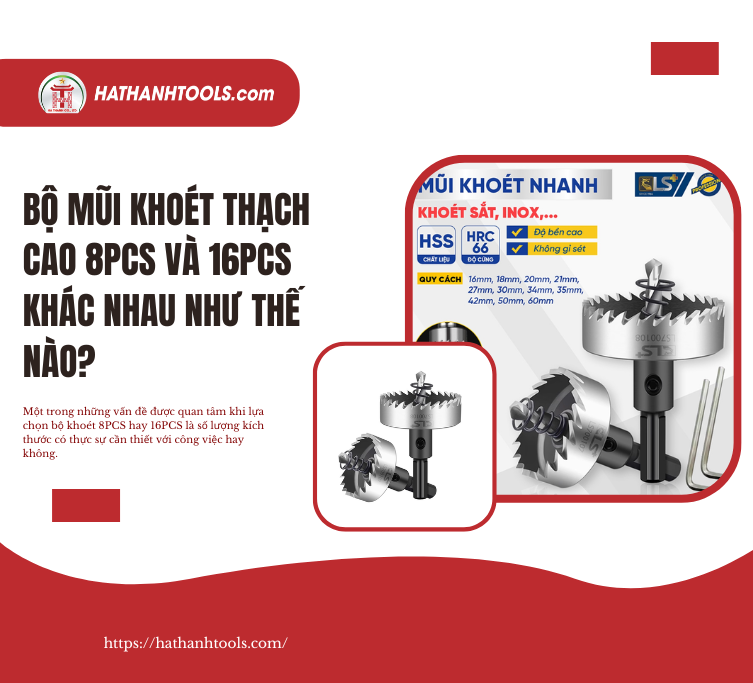
A key consideration when choosing between an 8PCS and a 16PCS hole saw kit is whether the extra sizes are genuinely needed for your specific line of work.
The primary differences lie in the number of hole saw cups, diameter ranges, and operational flexibility.
LS+ 8PCS Wood & Plasterboard Hole Saw Kit
The LS+ 8PCS Wood & Plasterboard Hole Saw Kit includes 8 diameters:
19 – 22 – 25 – 29 – 32 – 38 – 44 – 51 mm.
This size range focuses on the most common diameters needed for everyday basic hole-cutting jobs.
The 8PCS kit is ideal for:
-
Homeowners.
-
DIY hobbyists.
-
General repair technicians.
-
Basic electrical installations.
-
Furniture assembly with standard-sized cutouts.
The main advantage of the 8PCS kit is its compactness, straightforward selection, and capability to meet most standard needs.
If you primarily cut holes of common sizes and rarely change diameters, this is a highly practical and budget-friendly choice.
LS+ 16PCS Wood & Plasterboard Hole Saw Kit
On the other hand, the LS+ 16PCS Wood & Plasterboard Hole Saw Kit offers 16 sizes from 16 to 64 mm:
16 – 19 – 22 – 25 – 29 – 32 – 35 – 38 – 41 – 44 – 48 – 51 – 54 – 57 – 60 – 64 mm.
Compared to the 8PCS set, the 16PCS version offers multiple intermediate sizes.
This is incredibly beneficial for electricians, cabinet makers, or contractors who frequently face varying hole diameter specifications on the job.
For example, if a construction project requires multiple types of downlights, junction boxes, or cable openings, the 16PCS kit ensures you have the exact match ready at hand.
Should You Choose the 8PCS or 16PCS Kit?
Deciding between the 8PCS and 16PCS plasterboard hole saw kits should depend on your work frequency and job diversity.
-
Homeowners and DIYers: The 8PCS kit is recommended if you only perform occasional residential repairs and standard installations.
-
Electricians and interior fitters: You can choose either 8PCS or 16PCS depending on how often you encounter non-standard hole sizes.
-
Professional contractors with diverse needs: The 16PCS kit is the superior choice, providing a wider range from 16 to 64 mm.
A larger kit is not automatically better for everyone. What matters most is whether the sizes included match your project requirements.
Common Mistakes When Using Plasterboard Hole Saws
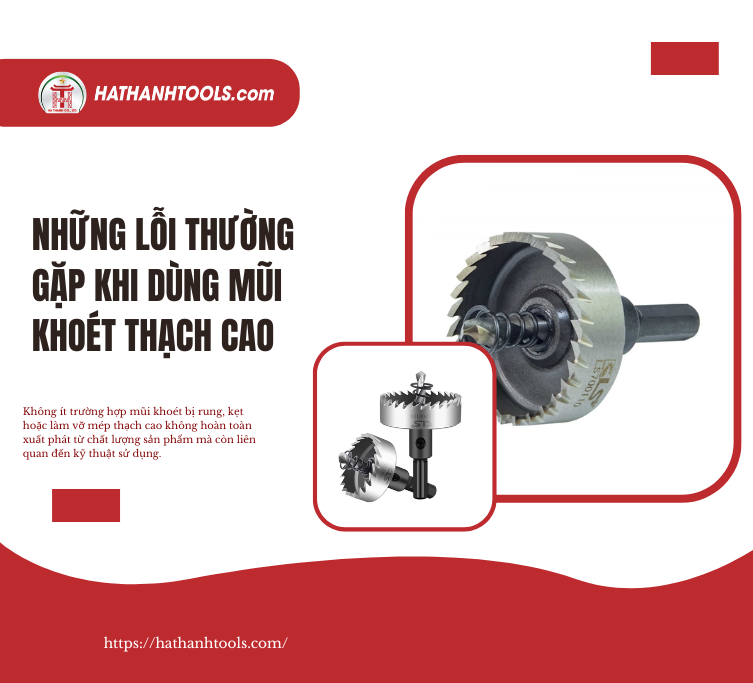
Many issues like hole saw wobble, binding, or shattered plasterboard edges are not caused by product quality, but rather by user technique.
Understanding these common errors will help you protect your tools from damage and achieve pristine holes.
Hole Saw Vibrating or Off-Center Wobble
Wobble or severe vibration is one of the most common issues when using wood and plasterboard hole saws.
Causes may include:
-
Loose blade installation.
-
Mandrel shaft not tightened properly.
-
Misaligned pilot drill bit.
-
Off-center saw cup.
-
Unstable drill grip.
-
Drill tilted relative to the cutting surface.
To prevent this, always inspect the assembly before starting and maintain a steady grip throughout the drilling process.
Torn or Chipped Hole Edges
If the edges of the plasterboard are heavily chipped or rough, it is usually due to improper drill speed, too much downforce, or unstable posture.
Specifically, forcing the drill downward too aggressively shatters the material instead of letting the teeth shave it away cleanly.
When using a plasterboard hole saw, start slow, maintain a steady hand, and let the teeth do the cutting work.
For delicate or thin panels, managing your drill pressure is even more crucial.
Overheating or Rapid Dulling of the Hole Saw
Rapid overheating occurs when drilling non-stop, applying excessive force, or cutting incompatible materials.
Each hole saw is engineered for specific materials. Utilizing a wood-plasterboard hole saw on unsuitable substrates will severely degrade cutting performance and blade lifespan.
Therefore, identify your target material beforehand and select the exact tool type meant for it.
For extended projects, control your speed and pressure, giving the tool adequate cooling breaks rather than running it continuously under heavy loads.
Can a Plasterboard Hole Saw Kit Be Used for Metal?
This is a common question when looking at plasterboard hole saw kits.
In principle, you should never use a wood/plasterboard hole saw on metal unless the product is explicitly rated for it.
Wood, plasterboard, and metal have vastly different material properties. Metals like iron, steel, stainless steel, or aluminum require heavy-duty blades with high heat resistance, wear resistance, and the specific geometry for cutting tough metals.
If you need to cut metals, consider:
-
LS+ HSS Fast Cut Hole Saws: suitable for thin iron, thin stainless steel, aluminum, wood, and plastics within product limits.
-
LS+ Carbide TCT Hole Saws: engineered for iron, steel, stainless steel, aluminum, and harder materials; the carbide tips offer excellent heat resistance, precise cuts, and minimal vibration when used correctly.
Thus, selecting between a metal hole saw or a plasterboard hole saw must be directly based on the workpiece material rather than just the target hole size.
If you are looking for plasterboard hole saw kits, wood & plasterboard hole saws, wood boring bits, or other LS+ accessories for personal use or business, check out the extensive catalog at Hathanhtools.com.
Contact Information
Ha Thanh One Member Co., Ltd – HCMC Branch
Hotline: 0902 8888 02
Address: 35 Nguyen An Khuong, Ward Cholon, Ho Chi Minh City
Email: cskh@hathanhtools.com
Website: https://hathanhtools.com
Tax Code: 0100108529-006