CLASSIFICATION OF COMMON DRILL BIT TYPES – GUIDE TO CHOOSING THE RIGHT ONE FOR EACH MATERIAL
Drill bits are one of the most crucial accessories when using drill machines in mechanical engineering, construction, furniture making, electrical/plumbing installations, and residential repairs. However, not all drill bits can be used for every material. Iron drill bits, stainless steel drill bits, wood drill bits, concrete drill bits, wall masonry bits, or multipurpose drill bits all differ in their cutting heads, flutes, shank designs, chip evacuation channels, and manufacturing materials.
Understanding common drill bit types will help users avoid choosing the wrong bit, drilling slowly, creating inaccurate holes, or prematurely dulling, bending, or breaking their bits. Especially for mechanics, builders, hardware stores, and contractors, selecting the right drill bit also saves significant time and material costs.
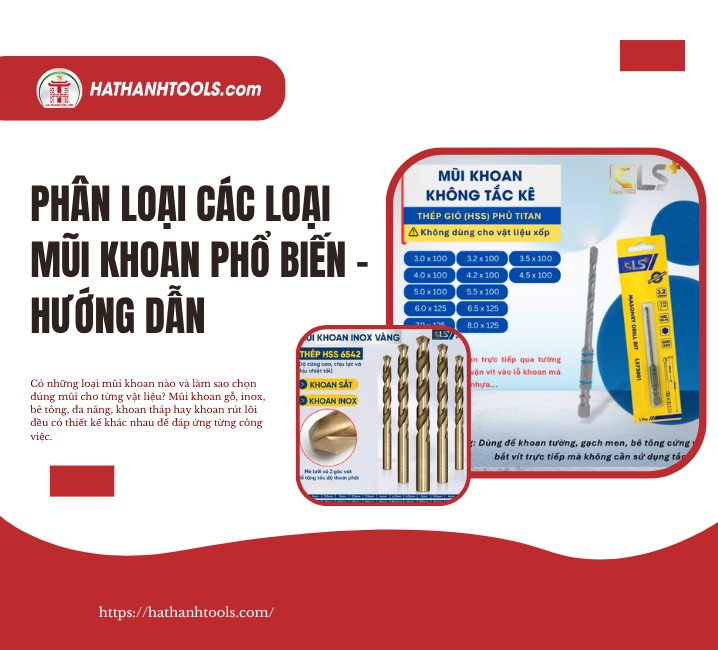
At Hathanhtool.com, the LS+ drill bit catalog is divided into various lines based on specific needs, such as the yellow HSS 6542 stainless steel drill bits, multipurpose drill bits, SDS-plus concrete drill bits, steel-penetrating concrete drill bits, 2-stage wood drill bits, step drill bits, spiral step drill bits, and dry core drill bits.
How Are Common Drill Bit Types Classified?
The easiest way to distinguish among drill bits is to look at the material to be drilled and the requirements of the hole to be created. Wood requires good centering and chip evacuation; metal needs a cutting edge capable of resisting heat and wear; while concrete requires an impact-resistant carbide tip and a flute design suitable for rotary hammers.
Do not simply assume that choosing the right diameter is enough to drill. An 8 mm drill bit designed for metal will not be the optimal choice for concrete. Conversely, a concrete drill bit with a carbide tip and impact-resistant design is not suitable for replacing a specialized bit when machining stainless steel.
Therefore, when classifying drill bits, users should simultaneously consider the material, diameter, length, machine type, and shank standard. This is the crucial foundation for determining how to choose the right drill bit.
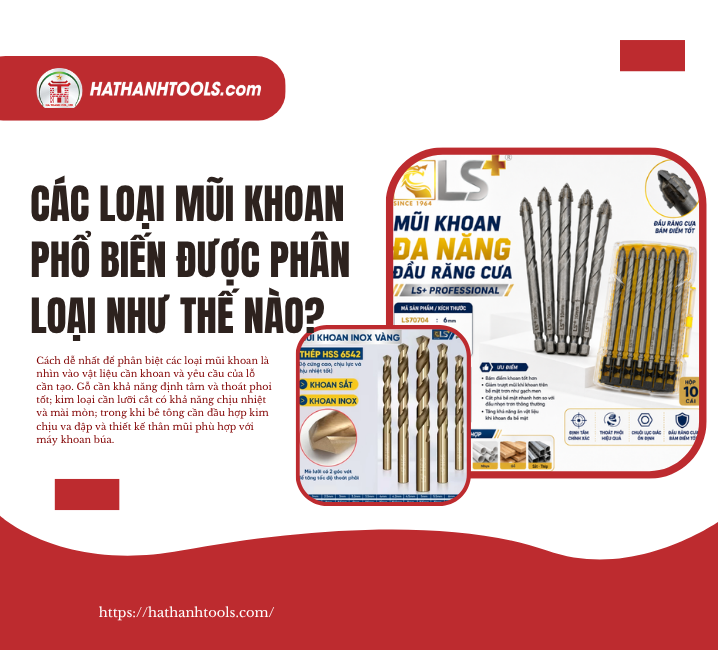
Metal – Stainless Steel Drill Bits
Iron and stainless steel drill bits are among the most commonly used categories in mechanics, fabrication, machine repair, electrical cabinet manufacturing, and metal component installation. Among them, stainless steel is generally much harder to drill than regular steel due to its heat-generation properties, requiring better control of speed and feed pressure.
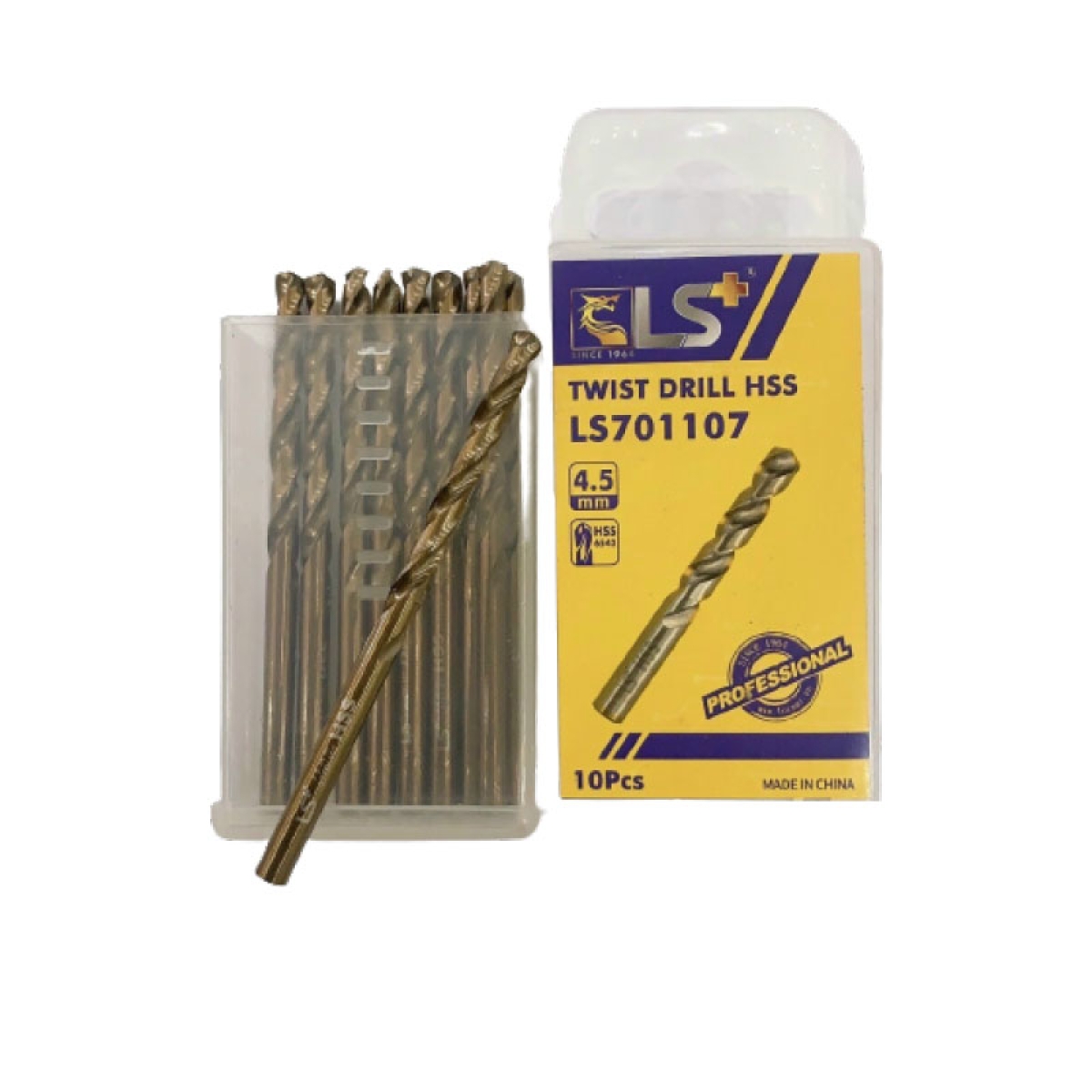
A prominent choice in the Hathanhtool.com catalog is the LS+ Yellow HSS 6542 Stainless Steel Drill Bit. The product is made of High-Speed Steel (HSS 6542), featuring a split-point design on the cutting tip for better chip evacuation, and is titanium-coated to increase wear resistance and durability when working on stainless steel, steel, aluminum, and other hard metals.
The LS+ yellow stainless steel drill bit line is available in various packaging specifications. The 10-piece pack includes sizes from 1 mm to 9 mm, while the 5-piece pack offers sizes from 9.5 mm to 13 mm. This allows users to easily choose according to the required hole diameter, from small holes for screws and electronic component mounting to larger holes for mechanical fabrication.
For those who frequently machine metal, HSS drill bits are an essential concept to understand. HSS stands for High-Speed Steel, which is commonly used to manufacture metal drill bits due to its ability to maintain hardness at higher working temperatures compared to regular carbon steels.
If looking for stainless steel drill bits for professional machinists, users should pay attention to the bit material, coating, chip removal capacity, diameter, and drilling parameters rather than just looking at the outer color.
Wood Drill Bits
In carpentry and furniture making, wood drill bits must meet different requirements compared to metal bits. A hole drilled in wood not only needs to have the correct diameter but also must have relatively clean edges, minimize tear-out, prevent material splitting, and provide excellent chip clearance.
Hathanhtool.com currently offers straight shank wood drill bits LS+ and LS+ 2-stage wood drill bits, catering to different woodworking needs. The website's catalog lists a dedicated wood drill bit category alongside metal and concrete bit lines.
Among them, the LS+ 2-stage wood drill bit is designed with large chip flutes and a flat-bottom step-drilling head, supporting fast, clean, and precise drilling and counterboring. The two-stage design is also ideal for jobs requiring holes with stepped diameters, such as for dowel joints or hardware installation.
The product comes with multiple shank options, such as hex shanks, round shanks, and straight shanks, allowing users to choose according to their machine and chuck type. According to the catalog information, these bits are suitable for wood, plastic, and MDF, targeting carpenters and DIY enthusiasts.
When choosing wood drill bits, users should pre-determine the hole diameter, depth, and finishing requirements. If drilling a standard hole, a regular wood drill bit is a reasonable choice. If a stepped hole is needed to accommodate screw heads or hardware, a 2-stage wood drill bit offers distinct advantages.
Concrete and Reinforced Concrete Drill Bits
Unlike wood and metal, concrete is hard, brittle, and can contain stones or rebar inside. Therefore, concrete drill bits are typically designed with carbide tips and spiral flutes to support material fracturing while evacuating dust out of the hole.
SDS-Plus concrete drill bits LS+ are among the specialized product lines on Hathanhtool.com. Made from premium heat-treated alloy steel, they possess excellent hardness and load capacity; the shank features detent grooves, and the surface is rust-proof coated. The catalog offers various sizes from 6 × 110 mm to 25 × 350 mm.
This is an ideal choice when drilling concrete, brick walls, and other hard materials in construction or repair. When choosing masonry drill bits, users must distinguish brick or lightweight walls from solid concrete to select the correct bit and machine setting.
For reinforced concrete, the situation is more complex. In this case, the LS+ cross-tip SDS steel-penetrating concrete drill bit is a more specialized option. The product uses premium alloy steel combined with a hard carbide tip and a cross-tip (4-cutter) design to boost drilling performance.
Therefore, when searching for steel-penetrating concrete drill bits, do not just look at the diameter. It is essential to check the machine type, shank standard, bit length, and the composition of the material to be drilled.
Multipurpose Drill Bits
Multipurpose drill bits are developed to handle tasks involving various materials without the need to constantly swap bits. However, "multipurpose" does not mean a single bit can completely replace all specialized bits.
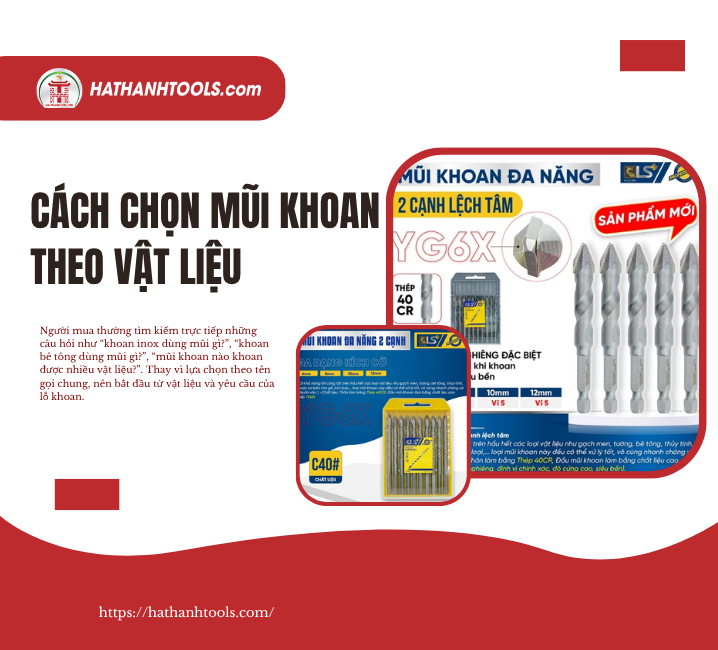
The LS+ catalog currently features multiple variations, such as 2-cutter multipurpose drill bits, 2-cutter eccentric multipurpose drill bits, 4-cutter multipurpose drill bits, 4-cutter hex-shank multipurpose drill bits, and serrated-tip multipurpose drill bits.
The LS+ 2-cutter multipurpose drill bit series features a YG6X carbide tip and a 40Cr body, designed for surfaces like wood, metal, and brick walls. The 2-cutter design increases cutting performance and keeps the bit steadier during operation.
For the LS+ 2-cutter eccentric multipurpose drill bit, the eccentric design enhances cutting force and provides excellent centering. The YG6X tip combined with a 40Cr body aims to achieve fast drilling and prevent slipping. Available sizes include 6, 8, 10, and 12 mm.
Meanwhile, the LS+ 4-cutter multipurpose drill bit uses a 40Cr body and a YG6X carbide tip. The 4-cutter design assists with centering, reduces vibration, and minimizes slipping on compatible surfaces.
The premium LS+ 4-cutter hex-shank multipurpose drill bit series features a hexagonal shank, convenient for use with compatible quick-change chucks. The website currently lists sizes 3, 4, 5, 6, 8, 10, and 12 mm, along with a 5-piece set.
Another notable line is the serrated-head/anchor-free multipurpose drill bit, designed for masonry, ceramic tile, and concrete applications within the product scope. This line features sizes such as 3 × 100 mm, 4 × 100 mm, 5 × 100 mm, 6 × 125 mm, 8 × 125 mm, and 10 × 148 mm.
Specialized Drill Bit Types You Should Know
In addition to the basic lines, common drill bits on the market also include many specialized designs for enlarging holes, creating holes with multiple diameters, or drilling large holes.
While regular drill bits have a single fixed diameter, specialized lines like step drill bits, multi-stage bits, spiral step bits, or core bits are used in entirely different ways. Understanding the characteristics of each type will help users avoid buying the wrong product and optimize work efficiency.
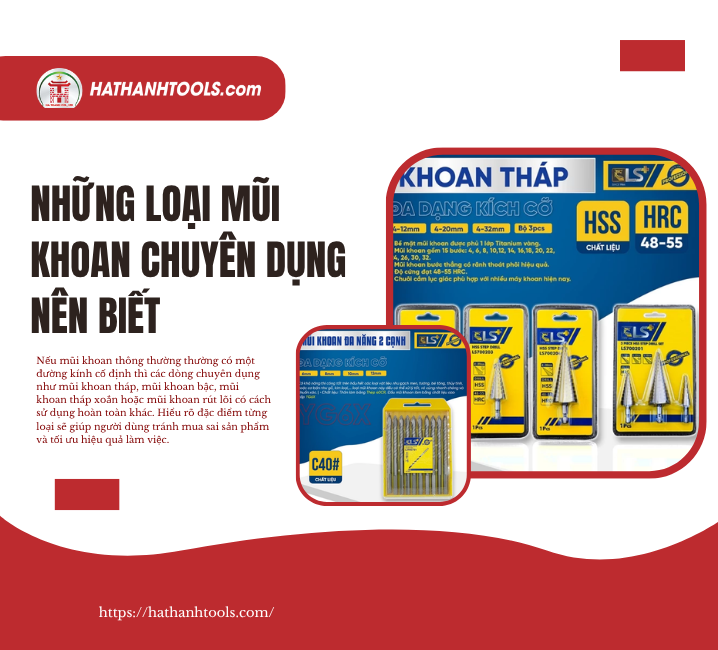
Step Drill Bits
Step drill bits feature multiple diameter steps on a single bit. The biggest advantage is that users can enlarge holes to various sizes without having to constantly swap drill bits.
LS+ step drill bits are made of Titanium-coated High-Speed Steel (HSS), with a declared hardness of 48–55 HRC. The product range includes 4–12 mm, 4–20 mm, and 4–32 mm steps, as well as a 3-piece set. The hexagonal shank ensures a secure grip in compatible chucks.
This is an ideal choice for tasks requiring hole enlargement in thin metal, plastic, or wood during installation and repair. In particular, electricians, electrical cabinet installers, and maintenance technicians can leverage the convenience of multiple diameters on a single bit.
When looking for HSS step drill bits, you should check the diameter range the bit offers to ensure it meets your specific hole size requirements.
Spiral Step Drill Bits
A common question is: "Are spiral step drill bits good?" The answer depends on the specific use case. This bit type is designed to enlarge holes across multiple diameters, with spiral flutes that facilitate better chip evacuation.
The LS+ spiral step drill bit utilizes titanium-coated HSS steel, with a declared hardness of 48–55 HRC, available in 4–12 mm, 4–20 mm, and 4–32 mm ranges. The spiral design expels chips rapidly, while the hex shank provides a secure hold in compatible drill chucks.
So, can a step drill bit drill through stainless steel? The product is designed for various applications on materials such as steel, aluminum, copper, plastic, wood, and thin sheet metal, depending on working conditions. However, for thick stainless steel or high-precision machining, users should prioritize specialized HSS 6542 stainless steel drill bits instead of relying on a step bit for every scenario.
For maintenance work, hole enlargement in electrical panels, or thin metal sheets, step bits usually excel due to their ability to create multiple hole sizes with a single tool.
2-Stage Wood Drill Bits
2-stage wood drill bits are a notable choice for woodworking, furniture making, or DIY projects. Unlike standard wood drill bits, the two-stage design allows for drilling a hole with a countersunk/counterbored step for fasteners or hardware installation.
The LS+ 2-stage wood drill bit features large chip flutes and a flat-bottom counterbore head. This design supports rapid drilling and clean countersinking, while reducing wood splitting within its suitable application range. The product can be used on wood, plastics, and MDF.
When choosing wood drill bits, determine beforehand whether you need a through hole, blind hole, or stepped hole. If you need a stepped counterbore to sink screw heads or flush-mount assembly parts, the 2-stage bit offers a clear advantage.
Dry Core Drill Bits
Core drill bits are a specialized category for creating large-diameter holes in construction materials such as concrete, brick, and stone.
The LS+ dry core drill bit utilizes a premium alloy steel body with a declared hardness of 92 HRC. The segmented cutting edge features sintered diamond abrasive grains to support core drilling in hard materials. The catalog currently includes sizes such as 56 × 250 mm, 56 × 370 mm, 63 × 250 mm, and 63 × 370 mm.
This dry core drill bit series is ideal for construction projects requiring large holes, such as piping, HVAC, electrical/plumbing installations, or equipment mounting. However, before use, always verify compatibility between the bit, the machine, and actual construction site conditions.
How to Choose Drill Bits by Material
Buyers often search directly for questions like "what drill bit to use for stainless steel?", "what drill bit for concrete?", or "which drill bit drills multiple materials?". Instead of choosing based on generic names, it is best to start from the material and the specific requirements of the hole.
The actual catalog of Hathanhtool.com currently offers HSS 6542 stainless steel bits, 2-cutter and 4-cutter multipurpose bits, SDS-plus concrete bits, cross-tip steel-penetrating concrete bits, wood bits, step bits, spiral step bits, and dry core bits.
Which HSS Drill Bit Should You Choose for Iron and Stainless Steel?
If you need to drill stainless steel, steel, or aluminum, the HSS drill bit category should be prioritized. In particular, the LS+ yellow HSS 6542 stainless steel drill bit offers advantages in its high-speed steel composition, titanium coating, and chip evacuation design. This specialized line is highly superior to using a generic multipurpose bit for all tasks.
When working with stainless steel, users should carefully control machine speed and feed pressure. Do not force high speeds just to drill faster, as the heat generated can compromise the bit's durability.
The required diameter should also be pre-determined. Small holes require small-diameter bits; large holes require the exact final size or step-drilling if the work conditions require it.
Should You Choose Brad Point or 2-Stage Bits for Woodworking?
The choice depends on the shape of the hole you want to create. If you only need a standard hole, a regular wood drill bit is a straightforward choice. If you need to create a stepped hole to accommodate screw heads or connection hardware, a 2-stage wood drill bit is more suitable.
With natural wood, MDF, or plastic, pay attention to chip clearance and drill pressure. Do not press too hard from the beginning, as this can tear the hole edges or damage the surface.
Which Bit Should You Use for Wall and Concrete Drilling?
-
For brick walls or standard masonry surfaces, consider a masonry drill bit or a suitable multipurpose bit. If drilling into concrete, switch to specialized concrete drill bits with carbide tips and shanks compatible with your machine.
-
For reinforced concrete, use steel-penetrating concrete bits when the job and equipment meet the technical requirements. The LS+ cross-tip SDS-plus series is designed specifically for this application.
-
For large holes in concrete, brick, or stone, a core drill bit is a much more specialized option than a standard concrete bit.
When Should You Use Multipurpose Drill Bits?
Multipurpose drill bits are ideal for maintenance, repair, installation, and situations where you must work on various surfaces. For example, a technician might need to drill through wood, drywall, and some metal surfaces within the same job.
However, if the work is continuously focused on stainless steel, hard concrete, or highly specific materials, specialized bits should be used. This is a key principle in drill bit selection: multipurpose bits offer convenience, while specialized bits deliver optimal performance and precision.
Guide to Making Your Drill Bits Last Longer and Reduce Breakage
Choosing from common drill bit types is only the first step. The lifespan of a bit also depends on machine speed, feed force, material stability, installation correctness, and working modes.
A high-quality drill bit used at the wrong speed or with off-center pressure can still dull, overheat, or break quickly. Therefore, users should pair the right bit selection with proper drilling techniques.
Select the Right Speed for the Diameter and Material
Do not assume that higher speed always means faster drilling. With metals, especially stainless steel, excessive speeds generate extreme heat and dramatically shorten bit life.
Larger diameter bits require lower speeds than smaller bits. Before drilling, refer to your machine's manual and the material properties.
For HSS drill bits, controlling speed is critical when drilling metal continuously. For concrete bits, ensure you use the exact drilling mode for which both the machine and bit were designed.
Secure the Material and Locate the Center Point
Before drilling, accurately mark the desired hole position. For metals, use a center punch to make a starting indentation and prevent the bit from walking across the surface.
The workpiece must also be clamped securely. A vibrating metal sheet or loose wooden board can cause the bit to wander, drill off-center, or pose safety hazards during operation.
For multipurpose drill bits, precise centering helps exploit the advantages of the tip design and reduces slipping on smooth surfaces.
Cooling When Drilling Metal
When drilling stainless steel or carbon steel for extended periods, heat management is crucial. Use a suitable cutting fluid or cooling agent according to the material and machining process to reduce heat build-up.
Specifically with stainless steel bits, do not allow the tool to run continuously under high-heat conditions. If the bit becomes abnormally hot, inspect the speed, feed pressure, chip formation, and cooling method.
Common Mistakes That Ruin Drill Bits Quickly
Some common mistakes that significantly reduce drill bit lifespan include:
-
Using the wrong drill bit type for the material.
-
Selecting the wrong drilling mode on the machine.
-
Using a bit incompatible with the chuck.
-
Applying excessive force or off-center pressure.
-
Running at excessively high speeds when drilling metal.
-
Failing to use coolant during continuous stainless steel or carbon steel drilling.
-
Failing to clean out chips and dust after use.
-
Continuing to use the bit when the cutting tip is dull or damaged.
-
Using hammer mode with bits not designed for impact.
-
Choosing the wrong bit length, making the drilling process awkward.
These mistakes might seem minor but can escalate material costs, particularly for workshops that use drill bits at a high frequency.
Classification Table of Common Drill Bits by Application
|
Application / Need |
Suitable Bit Type |
Key Considerations |
|
Drilling iron, steel |
HSS drill bits |
Select correct diameter and speed |
|
Drilling stainless steel |
HSS 6542 stainless steel bit |
Control heat and feed force |
|
Drilling wood |
Wood drill bits |
Prioritize centering, chip clearance |
|
Drilling stepped wood |
2-stage wood drill bits |
Suitable for stepped-diameter holes |
|
Masonry/wall drilling |
Masonry/suitable multipurpose bit |
Check surface hardness |
|
Drilling concrete |
SDS-Plus concrete drill bits |
Match correct machine shank |
|
Drilling reinforced concrete |
Steel-penetrating concrete bits |
Use correct machine and mode |
|
Drilling multiple materials |
Multipurpose drill bits |
Ideal for repairs and installations |
|
Enlarging multiple diameters |
Step/multi-stage drill bits |
Single bit with multiple diameter steps |
|
Enlarging metal holes |
Spiral step drill bits |
Aids chip evacuation |
|
Drilling large holes |
Core drill bits |
Check dimensions and machine specs |
How to Identify the Right Drill Bit Before Purchasing
When faced with too many common drill bit options, users can apply a simple checklist: first identify the material, then determine the diameter, check the machine type, and finally select the shank standard.
For instance, if you need to drill stainless steel, start with an HSS 6542 stainless steel bit. If drilling concrete, switch to an SDS-plus concrete bit. If drilling concrete likely containing rebar, consider a steel-penetrating concrete bit. If you need to drill various materials during general repairs, a multipurpose bit might be the more flexible choice.
For furniture makers, wood drill bits and 2-stage wood bits will meet different structural requirements. Meanwhile, electricians, machinists, or maintenance technicians may focus more on step drill bits and spiral step bits.
The most critical point is not to select a bit based solely on low cost. A proper bit with a long service life that helps complete jobs quickly can save significantly more than constantly replacing cheap but unsuitable bits.
If you need consulting on common drill bits, don't know which bit to use for stainless steel or concrete, or need help matching a bit to your current machine, contact Hathanhtool.com for support based on your exact materials, dimensions, and real-world needs.
“Get wholesale quotes – packaging specifications – consultation on the right catalog for your store – collaboration policies, and nationwide supply.”
Contact Information
Ha Thanh One Member Company Limited - HCMC Branch
Hotline: 0902 8888 02
Address: 35 Nguyen An Khuong, Cho Lon Ward, Ho Chi Minh City
Email: cskh@hathanhtools.com
Website: hathanhtools.com
Tax Code: 0100108529-006